Tuesday, June 26, 2007

On the logic of pricing an artwork at 100 million dollars

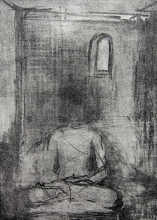
Skull II, 1887, Van Gogh, Oil on canvas

There is no point in recounting the current brouhaha over the cost of Damien Hirst’s latest artwork or who its final buyer might be (the artwork "For the Love of God" is a life-size cast of a human skull in platinum and covered by 8,601 pave-set diamonds weighing 1,106.18 carats. It is still available in the marker for an asking price of 100 million dollars. It took about 20 million dollars to create).


What was instructive and was on my mind for all of last week was the interview that Mr. Hirst gave on artnet (linked here) and the following advice for up and coming artists. In this he essentially tells you the reason for charging the work 5 times its cost price and I must say that the reasoning is fairly solid. I don’t like the guy too much, but after this interview, I decided to pay a little more attention to what he says...

Copied here are parts of the interview that struck me the most. The interviewer was Joe La Placa of artnet.

At the time of writing this article, no less than six potential clients were competing to purchase For the Love of God. One client, wishing to remain anonymous, if successful in purchasing the piece, had already organized a two year tour, calculating he’d make a large percentage of the purchase price back from exhibition fees.


Joe La Placa: For The Love of God has a huge sale price of $100 million. . .

Damien Hirst: It’s too cheap! People really want it.

Joe La Placa: £50 million is too cheap?

Damien Hirst: Definitely! If the Crown Jewels were on the market, they’d sell for a
hell of a lot more than that. It’s just one of those objects.

Joe La Placa: Yes, but in relation to what other contemporary art has sold for, this
is over the top, particularly for a living artist.

Damien Hirst: Not really. What do you mean, living artist? That’s a bit of a fucking red herring really, isn’t it, a living artist? I mean, art lasts for thousands of years; it’s been going on for thousands of years and a human’s lifetime is less than a hundred years. There are only a few artists alive, relatively speaking. And the art market is, what, 2000 years old and beyond, of artistic activity? You need to forget about the living artist and just talk about art.

When I got into the art world, I consciously wanted to change it. I found it really annoying because it seemed like a kind of club where people would sell cheaply to investors and they’d make the money. Collectors would take the art off the artists and, because they came in early and they gave the artist a little bit of money, later, when the artwork got resold, it would be the collector who made the big money in the secondary market. And I always thought that was fucking wrong. I’m the artist, the primary market. And I want the money to be in the primary market.

I’ve always said it’s like going into Prada and buying a coat for two quid and then selling it next door a charity shop for 200 quid. It’s totally fucking wrong! Why are they doing it that way round? Art should be expensive the first time around. There shouldn’t be all these old boys making loads of money on the secondary market.

Joe La Placa: So you’re saying it’s the artists who should make the lion’s share of the money, not the dealers or collectors?

Damien Hirst: Right. We should have learned from what happened to Van Gogh. Art has a kind of value now! People fall for that old fucking vintage trick, don’t they? "Oh, it’s a vintage antique, so it must be expensive." But that’s another priority. When you go in someone’s house and see a painting on the wall, a new painting should be much more exciting than an old painting . . . and that should be where the money is spent.

I am sure that gallery owners and speculative hedge fund managers would not like it if this kind of a feeling took root. Imagine most of the galleries in Chelsea would be charging the final price of the artwork guaranteeing the artist maximum benefits and the buyer maximum pleasure from owning the artwork while simultaneously denying the buyer postprandial pleasure in selling the artwork for 5 times the original price in the futures market...


Of course, the above will never happen, but it always good to indulge in a bit of wishful thinking.

Friday, June 22, 2007

Painting Post: Born!


Title: Born!

Medium: Oil on MDF

Size: 48" X 48"

Our second son was about a minute old when I took this picture of him. I painted this from the resulting photograph. He is now a month old.

Thursday, June 21, 2007

BP Portrait competition at National Portrait Gallery, London

I had been following the BP Portrait competition for quite some time now and they announced their winner a couple of days back.
‘Michael Simpson' by Paul Emsley won top honors. The painting is indeed excellent, a nice mix of light and dark with a brooding countenance of the old artist. He almost looks like he wants to leap out and grab you from the shadows…

Paul Emsley (b.1947) lives and works in Bradford on Avon, near Bath. Paul has exhibited widely and won several prizes. His portrait is a large close-up of the head of 67-year-old artist Michael Simpson, whom Emsley often meets bychance in Bradford on Avon, each time struck by his appearance. “I find his face and head visually interesting and with a strong presence,” he says. “I feel it is essentially European, particularly carrying something of the history of Eastern Europe.” Simpson, who is portrayed with his white hair contrasting strongly with a dark background, has Russian ancestry and studied at the Royal College of Art in the 1960s. Michael Simpson is painted in oil on board and measures 137 x 112 cm.
I was a bit surprised this time to see that the four finalists chosen were all ‘realist’ type painters in this age of abstraction. You can see the complete list of painting that was short listed here.

I liked the winning entry immensly, but my favorite in the lot was the one below… A self portrait by the Canadian artist Jaemi Hardy.


Note: Images ripped from the National Portrait Gallery website.

A shorter name for this blog.

I have been mulling this for a while now and decided that now is as good a time as any other with respect to shortening the name of this blog. From the mouthful 'Musings On Neurology And Lenitives In Simplistic Art' (my OK attempt to expand the name MONALISA and still make sense), I have shortened the name to 'Simplistic Art'.

The original long winded name approximately conveyed my interests in recording random thoughts on neurology, its intersection with the arts and also serve as a showcase for my paintings. Of late, I have not been getting the dedicated time that is required to understand the nuances of neurology. I have been concentrating on the art world and on my paintings a lot lot more (and enjoying it immensely)... This also makes the 'neurology' part of the blog-name superfluous as the posts on this specialized subject seem to be dwindling. I would still continue to post the occasional bit about neurology/science every once in a while (if I get the time), but I would want to concentrate more on art as that is where my primary interests lie... Simplistic refers to the fact that art in my view should be simplistic (in a non-condescending, non-derogatory way) on the outside but still yield deeper layers of meaning on introspection and inspection.
PS: (The cartoon above has been shamelessly lifted off the net - I know, I know. I should not be doing these things...)

Tuesday, June 19, 2007

Creationistas running amok

I thought I will keep news of the creation museum in the comments section of this blog where Tree alluded to some of the whimsical aspects of this museum, but some of the stuff in the news recently really got to me so much that I had to post some of it here….


Some introduction first: Designed by a former Universal Studios exhibit director Patrick Marsh, this state-of-the-art 60,000 square foot museum called the creation museum (in Petersburg, Kentucky) purports to bring the pages of the Bible to life. It touts that the universe is about 6000 years old and God went ahead and created the whole thing in about 6 days. That is all ok (religious license), but what is galling is the fact that it purports to use scientific evidence to prove the above two assertions (and many others)...

Just how they use the scientific evidence is indeed fascinating - if you care to read on...

Patrick Marsh, used to work at Universal Studios in Los Angeles and then in Japan before he saw the light, opened his soul to Jesus, and was born anew. "The Bible is the only thing that gives you the full picture," he says. "Other religions don't have that, and, as for scientists, so much of what they believe is pretty fuzzy about life and its origins”

How do they explain dinosaurs? Since there are undoubtedly dinosaur bones and since, according to the Creationists, the world is only 6,000 years old – (a calculation devised by the 17th-century Bishop Ussher, counting back through the Bible to the creation, a formula more or less accepted by the museum) - dinosaurs have been shoehorned in along with the Babylonians, Egyptians and the other ancient civilizations. Patrick also said: "We do believe there were dinosaurs on the ark. They could have been small when they came on".

OK, please explain the Grand canyon: No problem: The canyon was created in a couple of months by the deluge that resulted from Noah's Flood.

What about the fossils then? Patrick Marsh had this piece of illuminating advice where he not only takes science and whacks it on its butt but also manages to give New Yorkers a sideswipe along the way: “There are no such things as fossils. Humans are basically as you see them today. Those skeletons they've found, what's the word? ... they could have been deformed, diseased or something. I've seen people like that running round the streets of New York."

Final footnote:
It also seems that they have a lot of promotional video and instructional material that you can use to study the story of Adam and the garden of Eden and the romps within. Turns out that one of the men picked by the Creation Museum to play Adam leads quite a different life outside the Garden of Eden - he is a porn star!! Eric Linden owns a pornographic web site called "Bedroom Acrobat." Of course, as soon as they learnt of the dreadful transgressions committed the videos were pulled out...


Don’t get me wrong, I have nothing against the Bible or the ideas expressed (in fact some of the Hindu religious texts contain some equally outlandish ideas), but when money is used to subvert science and the minds of gullible museum goers (children especially), it irks me to no end.

Sunday, June 17, 2007

Hari


Title: Hari
Medium: Oil on gessoed MDF
Size: 48" X 48"

Our son Hari Sunil Nair turned three today.

Friday, June 15, 2007

Run for your lives - it is abstraction!!

Steve Durbin of Art and Perception has a good eye for photography. He photographs a lot of nature in and around his home in Montana. He knows about my interest in painting faces and about three months back on a whim he asked me if I saw any faces in this picture of his. He had photographed rocks outcroppings (I must say some of the shapes were pretty eerie looking) at an area known as the Devil’s Garden at the Arches National Park. Poetically he plans to call these 'Bones of the Earth' - a fascinating concept as the rocks indeed function as the 'bones' of our mater earth...

Original picture

I looked at the picture and told him that I indeed did see some faces staring back at me. Last week, he asked me if I could have a go at painting faces that I saw in the rocks and this is what happened.
I took the original image above, inverted it completely, studied the contrast levels by looking at areas that contain the greatest shifts in contrast and decided to paint faces that I saw in the inverted rocks.

Inverted rocks

'Zephyrus Cupid and Phyche', Oil on canvas, 24 " X 36"

I remember thinking that each of us sees the nature around us in different ways and this was just one way to look at it. I also remember thinking looking up to the sky on cloudy days and trying to decipher and attribute the wondrous figures that form ever so ephemerally in the ethereal reaches of the upper atmosphere and then so suddenly shift away in the winds. I saw Zephyrus Cupid and Phyche playing on the canvas when it was complete.

Monday, June 11, 2007

Results from my showing at the East Brunswick arts festival:

Well, I must say that the art show at East Brunswick, NJ (talked about it here) where I got a chance to exhibit some of my works went off very well. I ended up getting a second prize in the judge’s selection at the end of the show and this particular painting (image below) was what garnered the second prize. The first prize went a fantastic piece of a wooden sculpture where the artist managed to show a contorted antelope twisting its way out of a gnarled tree trunk... It was visually stunning.


I exhibited here more with a reason to find out what people thought about my work and how people would react to the same when my art was exhibited in public and the answers that I encountered are worth mentioning. Here is a sampling of some of them:

Husband and wife walking around: “Wow! these works are so big - and a little creepy if you ask me”. Notices me overhearing and the wife quickly nudges husband, they both quietly walk on…

Art aficionado: “Can you tell me the significance of the Indian Lady and why you decided to paint her lips a dark vermillion?”
I go through an explanation and I notice a certain glaze settling over the person eyes… I need to do a better job at explanations… Guess I need to adhere to the ‘Keep it Simple, Stupid’ philosophy…

General well meaning couple: “Don’t you paint anything smaller? I wish you did. They are very beautiful and the colors are striking

Officious looking gay couple: “This will look good on a corporate lobby. I do not think this will look good in our living room.”

Businessman in a suit: “How much do these go for?” (It sounded as if he were referring to bargain vegetables at a supermarket) - I told him that this was not for sale - he snorted and left.


Husband and wife team (looking obviously well off), the husband more interested in buying and the wife more interesting in enjoying the artwork: Man asks: “Are these for sale?” I reply: No, I wanted to only exhibit them. Man : “What?! they are not for sale.” (Gives me a look of "How dare you - you little cheeky thing" and stomps off - leaving wife in a confused state of appreciating the artwork single or following her spouse - she finally decides that it is better to take the latter course).

Two art students from the University of Rutgers: "Hey, that portrait of the ‘Coolie’ looks like you." I did not know if I should be flattered or hurt.

Young shy Indian girl: "Could you please explain the technique used?" After I took some time and explained the technique, she said that she would try it and let me know how it turns out. I said I would be happy to help.

On the whole, I think it was a good exhibition, well received and I got a lot of useful feedback and comments. The main thing I took away was that people were responding to the artwork and I think that is a very important first test that I seem to be passing.

Tuesday, June 05, 2007

On Origins - some video

The following website has a fairly detailed rendering of how humankind actually went about colonizing the earth. I watched the three minute video that tracks the migration of human beings from the 'cradle of civilization' - sub Saharan Eastern Africa from about 165,000 years ago. I remember thinking that a lot of this has been pieced together based on fossil evidence whose bedrock relies on the fact that there is no older fossil of a human being on the earth other than the one found in sub-Saharan Africa.
What if in the future someone discovers an even older fossil of a human at some other location - we would then have to reconsider and revamp the entire migration theory that humans emerged from Africa. The evidence that this whole thing rests on is pretty flimsy but nonetheless it is definitely a valid theory with fossil proof and we have to accept it for now…
I also noticed that the region where I am from (Southern India) was populated roughly 90,000 years ago. If you have the time, you should also check out the actual website of Bradshaw Foundation - they have some very commendable articles on human evolution.

Monday, June 04, 2007

An arts festival where I would be showing...

It has been a while since I posted - but rest assured - the time has been well spent in making sure that our newborn son is doing well (as is my wife).


I wanted to highlight the fact that this weekend, I will be participating in my first juried show - at the Annual Fine Arts festival at East Brunswick, NJ on June 9th (Saturday). I will be at exhibit space # 59. For those of you who are in the area, please drop by if you get a chance.

Details: FINE ARTS FESTIVAL (SATURDAY - JUNE 9, 2007 (rain date June 10) 10:00 a.m. - 5:00 p.m. EAST BRUNSWICK MUNICIPAL POND, Ryders Lane, East Brunswick, NJ 08816

Wednesday, May 16, 2007

Post hiatus

Posts may be a bit spotty over the next couple of weeks. I am off to the hospital to assist my wife in whatever way I can during the birth of our second child...
"We had soared beneath these mountains
Unresting ages; nor had thunder,
Nor yon volcano's flaming fountains,
Nor any power above or under
Ever made us mute with wonder..."
Percy Bysshe Shelley, Prometheus Unbound: A Lyrical Drama in Four Acts.

Sunday, May 13, 2007

Painting post: Stomach Clock

I finished this one up over the weekend...
Title: 'Stomach Clock'

Size: 36" X 48"

Medium: Oil on canvas

The painting was a result of studying the photograph of a boy snapped by a Bulgarian photographer Dechobek.

Friday, May 11, 2007

Musings on the 'other 90%'


It was with glee that I initially read about an exhibition that opened this month at the Cooper-Hewitt National Design Museum in New York. The exhibition titled "Design for the other 90%" highlights the trend among enterprising designers to create affordable and socially responsible objects for 90% of the world’s population that may not have the creature comforts that the rest of us are used to... This is certainly commendable that these entrepreneurs are out there thinking about the 'other 90%'. On reflecting a little more on the term 'other 90%' it struck me as being excessively paternalistic and smacked of a little bit of condescension by the smug 10%.

My nascent thoughts were further solidified when I ran into the following story by Binyavanga Wainaina (editor of Kwani? - an African literary magazine...) this morning when his essay in the June issue of Harpers caught my eye. I have reproduced a part of the essay here. Read it till the very end... It makes you think.

"I once won a windup radio. I was living in South Africa, and had entered a radio competition coming up with some witty slogan. I received the radio gratefully. I was happy to discover that my radio was perfect. The winding up did not require much muscle power. The radio lasted for ages. It looked retro and retro was starting to look rather good to me. This was the early 90s. I was very broke at the time. My new possession offered me a way to imagine myself: a suffering saint, a frugal writer with his frugal radio. Frugal, not impoverished. Certainly not a failure. My radio lent nobility to being broke.

It also lent nobility to ingenuity. It was invented by Trevor Baylis, a kindly English swimming pool salesman who had seen a program about AIDS in Africa on the TV. Radio was the best way to educate people about the disease, he learned, but electricity was unreliable and batteries were expensive. "There was a need for an educational tool that did not rely on electricity... [and] Trevor picked up on the word 'need.'" His windup radio was the perfect invention for its stated purpose, and it received several awards from the BBC, including Best Product Design. It also won Baylis an Order of the British Empire. He was all over South African television and radio.

I don't know what became of it. I lost track of the thing about the time I moved. I had made a small killing in some dodgy marketing deal, so I bought new clothes, packed up, and moved to Cape Town. You didn't hear anything about the windup radio after a while, and I didn't know anyone else who had one.

But Baylis's Freeplay Radios still exist. You will find them among new age fisher folk in Oregon; neo blue-collar sculptors working out of lofts in postindustrial cities; back to earthers in Alberta; Social Forum activists and neo Grizzly Adams types everywhere. Angst ridden victims, all. But the enthusiasts of the windup radio suffer not from poverty or lack of information but from wealth, vague guilt, and too much information.
They are the only people who can find nobility in a product that communicates to its intended owner: you are fucked."

Picture above: Ceramic Water Filter, Cambodia Designers: Dr. Fernando Mazariegos, Ron Rivera (Potters for Peace), and International Development Enterprises (IDE) Cambodia Manufacturer: Local private factory set up by IDE Cambodia, 2006 Ceramic clay, plastic container, colloidal silver paint Dimensions: 3.5’ h x 2’ w x 2’ d. Image ripped from the museum website.

Tuesday, May 08, 2007

Sir Charles Bell, Sylvester Stallone and Mona Lisa – what is the connection…

Nerves are really bundles of cables (actually nerve cells) that run from our brains to various parts of our body that enable us to perceive, feel and interact with all the stimuli that confront our bodies over our waking and sleeping lives. There are nerves that sense (sensory) and nerves that help us move (motor). The most important among these nerves are the ones that emerge from our brains (also called cranial nerves) as opposed to ones that emerge from our spine. The cranial nerves (about 12 in number) control everything from smell, vision, hearing, tasting to our digestion.. Two hundred years back, very little of this was known and it was left to individual motivated anatomists and surgeons to discover during their treatment of illnesses to reach conclusions about various nerves and the tasks that they perform inside our bodies.

Sir Charles Bell (above), born in 1774 was such a person. He died last month a hundred and sixty five years ago. He was a surgeon, neuro-anatomist, and artist all rolled into one. Bought up by his mother in rural England (his father died young), he was taught to appreciate the visual arts at a very young age. He enrolled for medical school and was so good at human anatomy that at 25 he wrote a dissection book ‘A System of Dissection’ that went to press almost immediately. As soon as he completed medical school, he decided to open up a school to teach anatomy only to be disbarred from affiliation to his alma mater because they feared that he was competition. By and by he went onto publish 'Essays on the Anatomy of Expression in Painting' and 'A New Idea of the Anatomy of the Brain and Nervous System'. His surgical experience was bought to the fore during the Battle of Waterloo where he got to treat a huge number of facial gunshot wounds and their effects on the human face. This led him to study the nerves that effect the human facial expressions and musculature. This also led him to prove that cranial nerve number seven was responsible for controlling the expression on a human face. I think this insight was gleaned from his study of art, but I am sure that medical historians would attribute it to his medical training. All of the grimaces, laughter and the expressions that we see in everyday life is really controlled by this single nerve... Society decided to honor him by naming a motor disease after him called 'Bells Palsy'. This is a degeneration of the abovementioned seventh cranial nerve that causes motor problems with any one side of the human face. Charles Bell was later knighted and went onto carry on a distinguished career in the arts and medicine until he died in 1842.


The one person that I can think of who expresses this syndrome is Sylvester Stallone. The macho looking expression stems from his inability to correctly articulate some portions on the left side of his face in response to his perception of emotions.


C'mon, what is a story without a punchline…


Some speculate that the curious and enigmatic smile of the Mona Lisa might be the result of Bell’s palsy. A very careful examination reveals an asymmetric smile (very subtle but noticeable) very consistent with symptoms associated with unilateral (single sided) motor nerve lesions commonly associated with Bell Palsy.

Mona Lisa is in good company. Among others John McCain, Andrew Lloyd Weber and John Travolta live with this condition…

Sunday, May 06, 2007

Painting Post: Pilgrim

I completed this over the weekend...

Title: 'Pilgrim'

Size: 3 feet wide X 4 feet high

Medium: Oil on canvas

This was inspired and based on a photograph of an Indian boy in Haridwar, India by the famed photographer Steve McCurry... (famous for this photo)

Thursday, May 03, 2007

Painting Post: Headload Worker from India

Title: 'Coolie'

Size: 3 feet wide X 4 feet high

Medium: Oil on canvas

I completed this over the last three weeks...

Some context:
Headloading is a form of transport of goods and services that primarily involve a human being as the load bearer. The good or service to be transported is bundled and carried over the person’s head and is balanced by the individual while walking from one point to the other.
The weight of a typical head load carried by men and women around parts of India, Ghana and Lesotho is about 30 kilos. The average distance walked by some of these individuals is around 20 kilometers. Materials carried by the men and women range from water (primarily by women), bricks (men at construction sites) and vegetables (sold by men and women).

A short excerpt from a research article is useful (link posted below):

'The most striking feature that emerged from the research is the extraordinary amount of time and energy that the women expend to collect and transport water from the source to the home. Secondly, the primary means of transporting water is headloading. In addition, many villages continually face an acute shortage of potable water. Lack of access to safe drinking water, the effects of headloading on women's health, lack of access to adequate transport facilities and the burden of women's household responsibilities all have a detrimental effect on women's income earning abilities. The general welfare of the family suffers as a result'

Headloading is a particular issue for transporting water and other resources. The consequences of this are:
• It limits the amount of water women can transport at one time
• They are forced to make several daily trips to the water source
• They lose valuable time and energy in collecting water
• Household duties and children are neglected
• Women suffer chronic backache, foot pains and fatigue
• Skin and other types of diseases caused by lack of sanitation
• Young girls growth and development stunted

It should also be remembered that when the water levels are low, women spend much time and energy pulling the water up from the well. They may also have to wait in a queue at a standpost. The women expressed that they would like pipelines carrying water to their homes...


Links:

EVERYBODY LOVES A GOOD DROUGHT: Stories from India's Poorest Districts. By P. Sainath. New Delhi: Penguin Books. 1996. xiii, 470 pp. (B&W photos. ) Rs. 295, paper. ISBN 0-14-025984-8.

Travels with Sainath, Being an Indian Diary, First of Three Parts: Why Indian Farmers Kill Themselves; Why Lange's Photographs are Phony. By ALEXANDER COCKBURN

Wikipedia article on Palagummi Sainath

Non-Motorised Transport and its socio-economic impact on poor households in Africa Cost-benefit analysis of bicycle ownership in Uganda

India: Women, water, and transport in arid areas (IFRTD)

Monday, April 30, 2007

Jon Stewart talk to Bill Moyers.

Rarely do I wade into politics here (as there are a lot of other people who do such a good job at it), but I could not resist putting up this video of an interview of Jon Stewart (host of The Daily Show on Comedy Central) by Bill Moyers (PBS Radio).
Among other viewpoints expressed, I liked his views on the loss of innocence...

Sunday, April 29, 2007

Spring is good.

Rejuvenating, fresh leaves and great mornings...

Wednesday, April 25, 2007

On the network effect expanding the collective intelligence of our race.


Robert Metcalfe, the individual who invented the Ethernet and the famous Metcalfe's Law (on the power of networks) has a terrific article out on Forbes that talks about the paradox behind the enormous computing power of today’s supercomputers and how they still cannot hold a light against the power of the human brain even if the perceived computing power of the former exceeds the latter by orders of magnitude.
The comparison is between a chip that has about 10^11 transistors clocked at about 10^10 times per second and the brain that does its intelligent computing with about 10^11 neurons and 10^16 synapses that talk at a rate of 10^3 times per second.
Doing the quick math, this means technically the chip and the brain have about the same number (10^11) of transistors (neurons in the brain) - but since the chip is clocked about 6-7 orders of magnitude (10^10/10^3) higher than the brain, it should naturally follow that the chip is about 6-7 times more 'intelligent'.
He uses his network law to explain this seeming paradox taking into account other factors like the numbers of interconnections between neurons rather than just use the number of computations per second as a static factor. He makes sure not to include the as yet poorly understood contribution of glial cells...

Nice read, but now I have a bit of a headache (not too sure if my neurons overclocked in trying to understand it).

Note: Image ripped from my print copy of the Forbes magazine..

Children draw the darnest things...

Title: Undecided; Artist: Aswin, Anusha and Hari; Material: Color pencils, wax crayons and oil on canvas; Size: 4 feet wide X 3 feet high

The last weekend of March was a cold and a dark one. Spending a lazy weekend at home is not my kind of relaxation. I decided to haul a couple of my cousins visiting our family for a quick trip to the Jane Voorhees Zimmerli Art Museum at Rutgers University (about 15 minutes from our home). It is a fairly good museum by New Jersey standards and we were fortunate to run into works by the Indian artist Natvar Bhavsar who was having a retrospective there. His work was characterized by very large abstract forms and shapes thickly overlaid by oil, encaustic and sand. My cousins were very excited on seeing the abstract art although they could not make much of it.. We also visited a hall that exhibited abstract American artwork (1960s - 1980s) and also imbibed some brilliant Soviet non-Conformist art of the 1970s. By the way, the Soviet art representation at this museum is outstanding…

They asked me a lot of questions on what each of the paintings meant and how we could read meanings into diffuse forms on the canvas. I am not so sure if I gave them proper perspectives, but from their faces they seemed a little confused. After about three hours at the museum, we headed back home all charged up on artwork and abstractions… They then decided that they were going to create a quick piece of artwork if I were to lend them a canvas to work on… (considering their original plans on watching a Spiderman movie that night, I thought the museum visit really set their creative juices flowing). I told them the ground rules were that I would not participate in the painting process, but would offer suggestions and oil paints whenever needed. I told them to open their minds, forget what they learned at school and just express their thoughts on the canvas (easy words to say - I still cannot seem to practice it). They initially asked for color pencils and wax crayons and then proceeded to fill the canvas with words and phrases that they were taught at school with smaller pictures dotting the periphery and the centers of the canvas a la Basquiat style. I then handed them dabs of oil paints mixed with linseed and proceeded to give them disposable brushes with which to apply the oil at spots they felt would highlight aspects of what they had drawn into the background.

What they had created is pictured above. Of course the artwork was helped by bits of finishing touches added on by my three year old son (who had proceeded to hijack one corner of the canvas entirely to himself - the dark splotches at the top right corner was his handiwork). At the end of the exercise they felt elated, forgot about Spiderman and wanted to work on another canvas right away. It was about 10:30pm and I told them that it was late for bed and we could work on another one the next time they visited our home. I was very excited to see the activity and the energy that my cousins displayed on developing the artwork. In retrospect, I am also a little alarmed that I might have demolished some of the careful teachings in artwork that their teachers were imparting at school beginning with forms like drawing a house, sunrise and animals. I am not so sure if I did the right thing in exposing them to abstract art at so young an age. My cousin’s names were Aswin and Anusha. He was 9 and she was 8. My son Hari will turn 3 in a couple of months.

Tuesday, April 24, 2007

Performance art for mental illness:


We all know that mental illness still has an attached social stigma. Public education that furthers facts as regards the same is always more welcome... Like someone said, mental illness is not really an illness, it is just another mental state an individual is capable of experiencing. I do not fully subscribe to that viewpoint especially in light of the recent shootings, but I like the approach taken by performance artist Arnd Drossel who gained quite some eyeballs when he decided to get into a steel metal ball and roll acoss a German town in his quest for increasing awareness about psychiatric patients. He seemed to have rolled into a tiger pen at a German zoo today causing quite a stir…

You can read more about his exploits here and here
The eye of the tiger, or perhaps more importantly the teeth, are a little too close for comfort. But Arnd Drossel appears to have at least baffled the beasts, if not tamed them, with his spherical steel enclosure.

Through his project, the 38-year-old Drossel hopes to bring attention to the plight of people suffering psychiatric illnesses. He began his journey in Dorsten, the town of his birth, on April 17. Planning to cover around 20 kilometers a day, Drossel hopes to finish his journey by April 28. He's even planning on sleeping in the ball.

The cause is also personal for Drossel who suffered his own bout of severe depression a year ago. He came upon the idea of a ball because he felt it would signify the inner balance that’s needed for recovery. Drossel is collecting financial donations on his journey that will be used to further the cause.

Constructed out of 250 bent stainless steel rods, the sphere weighs about 120 kilograms (265 pounds).
I ripped the image above from today's online edition of The Daily Mail.

Monday, April 23, 2007

Brain honing:


Sharpbrains is a good site/blog for those who are interested in keeping up with the latest in making sure that their brains are honed to perfection with puzzles, tips and challenges for developing cutting edge clarity. For others (like me), the following are important bits of information culled from one of their postings on how we keep ourselves mentally alert... (Note: Italicized words are not mine - from the Sharpbrains website)

Guaranteed brain cell killers:

- High-levels of anxiety and stress, that are guaranteed to distract us from our main goals and waste our limited mental energies.
- A very repetitive and routine-driven life, lacking in novelty and stimulation. We have brains to be able to learn and to adapt to new environments


3 mental exercises that everyone should be doing daily...

- For stress management: a 5-minute visualization, combining deep and regular breathings with seeing in our mind's eye beautiful landscapes and/ or remembering times in our past when we have been successful at a tough task

- For short-term memory: try a series subtracting 7 from 200 (200 193 186 179...), or a series involving multiplication (2,3 4,6 6,9 8,12...) or exponential series (2 4 8 16 32 64...) the goal is not to be a math genius, simply to train and improve our short-term memory. Another way is to try and remember our friends telephone numbers.

- In general: try something different every day, no matter how little. Take a different route to work. Talk to a different colleague. Ask an unexpected question. Approach every day as a living experiment, a learning opportunity.


On the excessive use of use-it-or-lose-it philosophy or how good is doing something like Sudoku in keeping our brains sharp?
- "Use it or lose it" may be misleading if we think that "It" is just one thing. The brain is composed of many different areas that focus on different things. Doing a crossword puzzle only activates a small part of the brain. The 3 key principles for good brain exercises are: novelty, variety and constant challenge. Not that different from cross-training our bodies.

- The first time we do a crossword, or sudoku or knitting, that is great, because it forces us to learn. But when doing it is completely routine, the marginal benefit is very limited. Nowadays neuropsychologists do not recommend paper-based activities but computer-based brain exercise software programs, since they can provide a variety of new activities all the time, always tailored with a proper increasing level of challenge.

Friday, April 20, 2007

Sign of the times: Intellidating - Dating the brainiac way


Looks like revenge of the nerds on steroids. Washington Post recently ran an article that talks about a new trend in Manhattan - called - intellidating... It is matchmaking for people who find courtship through discussions and debates about art, literature, history and the likes. It definitely seems like a better thing to do rather than explore the texture of cold cobblestones stone drunk at 2am Saturday morning every weekend (which is another alternative for youngsters finding mates)...

In New York and other northeastern urban centers, including Washington and Boston, gray matter is the new black of the hip social scene. Thousands of young singles and couples are eschewing the perfunctory dinner and a movie for a growing circuit of late-night museum prowls, Oxford-style debates with pre-feud cocktail parties and book readings with cash bars and after-hour bands. In New York, even spelling bee nights have popped up as a romantic twist for the chic, unmarried and grammatically gifted.

It is, observers of the trend say, a visceral backlash to life in a Paris Hilton world. It's a chance to impress a mate, or a potential date, by flexing a body part that has lost ground in recent years to biceps and pecs -- the brain.

"Intellidating," first coined in England in 2002, sprang from "Intelligence Squared," a live discussion series launched by a couple of British moguls whose professed aim was to make debating "sexy." The concept leapt across the pond to New York last year with the American version of Intelligence Squared -- IQ2US -- launched by philanthropist and businessman Robert Rosenkranz. A 45-minute cocktail reception precedes each debate, after which comes a cranial lucha libre where, on one night, author Michael Crichton sparred with other panelists on global warming. For the right set, it can be quite the aphrodisiac.


I guess this is a further sign that the world is getting ever more specialized and potential single people want to choose exactly the right partner… Not too sure if this is a good sign or not…

By the way, if you did not notice, it also looks like Yuppie (a shortening of ‘young urban professional’) is out and yocos (the Post explained that yoco's are young cosmopolitans) is in… I thought yuppie was cooler.

Paper: Utilization of neural network and agent technology combination for distributed intelligent application and services. A thesis by Jouni Huhtinen

Thursday, April 19, 2007

Some light reading: Scientifically Accurate Brain Art - and quilted at that:


Developmental psychologist Marjorie Taylor and psychiatrist Karen Norberg give a whole new meaning to knitting and its representational glories by producing this piece of artwork from wool (yes, which is correct - wool.) You can see more of their art from wool and PET scans at http://www.neuroscienceart.com/

Image above - Title: "Karen Norberg #1" Year: 2006 Material: Colored Wool
The two were drawn to the niche independently. Taylor, a professor at the University of Oregon, Eugene, had been making quilts on the side for years before she turned her needle to neuroscience. Struck by the cover images of journals like Cerebral Cortex, she began reproducing them in fabric; creating pieces that--for example--show positron emission tomography scans of the brain's response to hearing or seeing words.

Karen Norberg who works at the National Bureau of Economic Research in Cambridge, Massachusetts, says she began knitting a brain to kill time when she was undergoing clinical training in child psychiatry. The product now resides at the Boston Museum of Science.

"Building a brain with yarn and knitting needles turns out to follow many of the same pathways as actual brain development," says Norberg.

Monday, April 16, 2007

Thursday, April 12, 2007

Coming to a video store near you - Mona Lisa starring in...:


At the Max-Planck-Institut für Informatik in Saarbrücken Germany, a group of researchers led by Dr. Volker Blanz have created a program that will have implications in the fields of filmmaking and pornography (yes, you did hear that right..) and to a lesser extent to artists like me interested in painting the human face in all of its glories...

Their program takes a 2 dimensional image of a human face and using certain best fit algorithms can create a 3 dimensional model of the same face with expressions added to the face...Just think, now you could have accurate computer rendered models in high definition of how Mona Lisa would have looked if she were smiling, frowning, laughing or crying. Extending this further into the future - even a time lapse videography of Mona Lisa walking down the street. I do not even want to think how the porn industry might want to manipulate technology like this to satisfy individual perverse fantasies... Interesting technology nevertheless.

- The Morphable Face Model captures the variations of 3D shape and texture that occur among human faces. It represents each face by a set of model coefficients, and generates new, natural-looking faces from any novel set of coefficients, which is useful in a wide range of applications in computer vision and computer graphics.
- In this framework, it is easy to control complex facial attributes, such as gender, attractiveness, body weight, or facial expressions. Attributes are automatically learned from a set of faces rated by the user, and can then be applied to classify and manipulate new faces.
- Given a single photograph of a face, we can estimate its 3D shape, its orientation in space and the illumination conditions in the scene. Starting from a rough estimate of size, orientation and illumination, our algorithm optimizes these parameters along with the face's internal shape and surface colour to find the best match to the input image. The face model extracted from the image can be rotated and manipulated in 3D.

You can get to a very mathematical description of the process that he uses here or you can view an animated clip of his experiments on images of Audrey Hepburn here.. I liked the video a lot. I am still trudging through the paper...
Some other papers of interest...
3D Videorealistic Facial Animation by Tony Ezzat, with Prof. T. Poggio and V. Blanz
Probing the Visual Representation of Faces With Adaptation : A View From the Other Side of the Mean by Fang Jiang, Volker Blanz and Alice J. O’Toole

Wednesday, April 11, 2007

Painting post: Sandhya Ragam


Excerpted from the American Association of Homes and Services for the Aging (aahsa)

- By 2026, the population of Americans ages 65 and older will double to 71.5 million and about 12 million older Americans will need long-term care.
- In the next 8 years, the number of Americans ages 85 and older will increase by 40%.
- Among people turning 65 today, 69 percent will need some form of long-term care
- There are more than 1.9 million nursing home residents in the United States. This represents less than 6% of the total number of Americans over the age of 65. It suggests that the vast majority of elderly will most likely spend their final years in their community residence.


I did not want to do a Debbie, but sometimes statistics wake us up to reality…

I am sure that I will see a lot of colleagues in my generation go through the assisted living / nursing home circuit. Sometimes I think that the term assisted living makes fun of old people the same way some refer euphemistically to short people as vertically challenged...

Luckily the oldest member in our family does not need to go through the assisted living route. Various members of our extended family take turns looking after her. She may be the last of a breed that have the privilege to be taken care of by their families. I painted this from a color photograph that I took of her after she had kindly agreed to pose for me.

Title: “Sandhya Ragam”*
Size: 2.5 ft X 2 ft (30 inches X 24 inches)
Medium: Oil on canvas

*'Sandhya Ragam' literally translated is a Malayalam word for evening melody.

Tuesday, April 10, 2007

2007 Science and Engineering Visualization Challenge:


About a month and a half remain before time runs out (May 31st 2007) for submissions to the 2007 Science and Engineering Visualization Challenge jointly hosted by the National Science Foundation (NSF) and journal Science.

From the blurb on their site:
You can do science without graphics. But it’s very difficult to communicate it in the absence of pictures. Indeed, some insights can only be made widely comprehensible as images. How many people would have heard of fractal geometry or the double helix or solar flares or synaptic morphology or the cosmic microwave background, if they had been described solely in words? Judges appointed by the NSF and the journal Science will select winners in each of five categories: photographs, illustrations, informational graphics, interactive media and non-interactive media. The winners will be published in a special section of the Sept. 28, 2007 issue of the journal Science and Science Online and on the NSF Web site.

I really enjoyed their previous years submissions (2006 here and 2005 here)

Image above: 'The Synapse Revealed'
Credit: Graham Johnson, Graham Johnson Medical Media (I very much liked his portfolio)
Description: Deep inside the brain, a neuron prepares to transmit a signal to its target. To capture that expectant, fleeting moment with painstaking detail, science illustrator Graham Johnson based his elegant, highly accurate drawing on ultra-thin micrographs of sequential brain slices. The brain contains billions of neurons, whose network of chemical messages form the basis of all thought, movement and behavior. Johnson’s illustration tells the story of one such signal, a synaptic millisecond that is both eye-catching and accurate in scale and shape.

Sunday, April 08, 2007

Grim visions?? - the world 30 years from now:


An interesting report worth a close read was released last week by England's Defense Ministry that talks about the world in about 30 years time from now...

Among the predictions:

-By 2035, an implantable "information chip" could be wired directly to the brain. A growing pervasiveness of communications technology will enable states, terrorists or criminals, to mobilize "flashmobs", with an ability to concentrate forces quickly in a small area.

-An electromagnetic pulse will probably become operational by 2035 able to destroy all communications systems in a selected area or be used against a "world city" such as an international business service hub

-The middle classes could become a revolutionary class, taking the role envisaged for the proletariat by Marx.
"The world's middle classes might unite, using access to knowledge, resources and skills to shape transnational processes in their own class interest". Marxism could also be revived, it says, because of global inequality. An increased trend towards moral relativism and pragmatic values will encourage people to seek the "sanctuary provided by more rigid belief systems, including religious orthodoxy and doctrinaire political ideologies, such as popularizm and Marxism".

-By 2010 more than 50% of the world's population will be living in urban rather than rural environments, leading to social deprivation and "new instability risks", and the growth of shanty towns. By 2035, that figure will rise to 60%.

-The global population is likely to grow to 8.5 billion in 2035, with less developed countries accounting for 98% of that.

-The massive population growth will mean the Middle East, and to a lesser extent north Africa, will remain highly unstable

-Tension between the Islamic world and the west will remain, and may increasingly be targeted at China "whose new-found materialism, economic vibrancy, and institutionalized atheism, will be an anathema to orthodox Islam".

-Iran will steadily grow in economic and demographic strength and its energy reserves and geographic location will give it substantial strategic leverage to turn "into a vibrant democracy".

-Acts of extreme violence, supported by elements within Islamist states, with media exploitation to maximize the impact of the "theatre of violence" will persist

-Climate change could lead to a reduction in north Atlantic salinity by increasing the freshwater runoff from the Arctic. "The drop in temperature might exceed that of the miniature ice age of the 17th and 18th centuries."

It also talks about the growing economic importance of India and China, the militarization of space, and even what it calls "declining news quality" with the rise of "internet-enabled, citizen-journalists" and pressure to release stories "at the expense of facts".
Yes, the Marxism and the Iran thing caught me a bit by surprise... Climate if not added is sacrilege, terrorist, population and violence related blurbs are fairly easily predicted. I liked the one about the chip in the brain bit...

Friday, April 06, 2007

Posts on Art and Perception (A&P):
My latest posts on A&P are here and here. One of them deals with the increased role that museums and curators could play engendering societal change whilst the other explores earthly topics like framing artworks.
Left: Sculpture by a contemporary artist: Title: ‘Domination’ Materials: Railway track, wax apple, plastic crocodile and glue.
PS: I believe this was created as a parody on the apparent
meaninglessness of some pieces of current art.

Tuesday, April 03, 2007

Rationalizing abrupt change and Chautauquas:
A friend asked me recently on what my favorite book was and I remember telling him that among others, a book that was one of my favorites but least understood was the one by Douglas Hofstadter (a physics Ph.D who won the 1980 Pulitzer Prize), the author of Gödel, Escher, Bach: an Eternal Golden Braid.

From a Time magazine article:
The book was called ‘Gödel, Escher, Bach: An Eternal Golden Braid’ -- Gödel being the Austrian mathematician Kurt Gödel; Escher, the fantastical Dutch artist M.C. Escher; and Bach, the Baroque composer Johann Sebastian Bach. It was a very odd book, a rattlebag of art, mathematics, music, philosophy, symbolic logic, computers, genetics, paradoxes, palindromes and Zen koans among many, many other things.

Hofstadter's unique intellectual makeup is rooted in his childhood. His father was Robert Hofstadter, who won the Nobel Prize for Physics in 1961. Hofstadter might have grown up to be a straight-up physicist like his dad if it hadn't been for his younger sister Molly. When Hofstadter was 12, it became clear that she had grave neurological problems--she never learned to speak or understand language. "When Molly's unfortunate plight became apparent, it all started getting connected to the physical world. It really made you think about the brain and the self, and how the brain determines who the person is." says Hofstadter


I also know just from reading about Douglas and the thoughts expressed in this book that he is a hard nosed realist/pragmatist with his feet firmly in the ground as regards the validity and veracity of the truth as expressed in the formalisms set out in music theory, art and mathematics. Imagine my surprise when I read that after his wife's death (Carol Hofstadter) he now believes that she continues to live on in him, with her mind persisting in his brain like software running on his hardware. I was equally shocked to read that Robert M. Pirsig author of Zen and the Art of Motorcycle Maintenance, (that cult classic that spawned so many metaphysical journeys into the definition of the word ‘quality’) recently came to believe his murdered son was reincarnated and lives as his daughter who was born later.

It is surprising to think that some of the cornerstones (pragmatism, reason, logic) by which these people live their lives are suddenly turned 180 degrees around when intense personal loss affects them. On a similar vein, people who are deeply religious have been known to eschew their gods when they lose something that is deeply deeply personal. It is almost as if people believe in a doctrine as long as the good times continue. At the instant the favorable times end, they tend to rationalize the abrupt change with a complete rearrangement of their most basic tenets. All this seems inexplicable now, but I am sure that brian research of the future will have an answer, but for now it does remain fascinating...

Hofstadter sees in Gödel's work a structural parallel to the mystery that is the human mind. The brain, which is merely a squishy agglomeration of madly firing neurons, shouldn't by rights be able to think--it shouldn't be able to wake up, twist around, become aware of itself, and in doing so become an "I," but it does. Just like Gödel's mathematics, the mind is a strange, self-referential loop--it's a mirage, Hofstadter writes, but "a very peculiar kind of mirage ... a mirage that perceived itself, and of course it didn't believe that it perceived a mirage, but no matter--it still was a mirage."

Hofstadter has written a new book (out last week titled "I am a strange loop") that expands upon the theory of the self and the mind and also the contributions that Carol (his late wife) lent him emotionally. Time magazine called it not just a work of rigorous thinking but also an extraordinary tribute to the memory of romantic love.
Sobering sign of the times:
Last week I read a pretty sobering essay in the New York Times that neatly laid out the fact that for the first time, the income earned by the top 300 thousand in our country was equal to the income earned by the bottom 150 million.

Tuesday, March 27, 2007

Painting post of a tangata whenua:


Thomas Hobbes, the English philosopher referred to them variously as ‘savages’, ‘aboriginal’ and ‘primitives’. A prevailing Hobbesian view tended to believe that the early colonizers of new worlds had a duty to civilize and modernize the indigenes or the local populace that they encountered. This story of conquest, subjugation and partial recognition has been repeated multiple times around the world. The story rings true from the Tuaregs of West Africa to the Inuit of North America to the Ādivāsīs of India to the Chukchi of the Arctic (among others).
This painting that I completed of an unknown indigenous person represents just that - the product of an environment that partly recognizes them, yet keeps on the fringes in settlements and reservations designed so that the ‘indigenous’ cause minimal disruptions to our daily lives.

Title: ‘Tangata whenua’
Size: 4 feet high X 3 feet wide
Medium: Oil on canvas

Tangata whenua is a Māori word for original people belonging to a place, local people, hosts

Saturday, March 24, 2007

Posts on Art and Perception (A&P):
My previous posts on A&P are here and here. Both were really digressions on strong symbology that we are confronted with in our daily lives...

Thursday, March 22, 2007

Sign of the times...?
If a 250 pound off-duty male police officer savagely beats up a frail female bartender publicly for not serving him because he was too drunk, we can only imagine what a person like that would do to people behind closed doors... I was shocked on reading this...
Dr. Kinga Araya - Performance artist:

Oftentimes art tries to send a message through shocking people visually. Performance art is one that is august in this category. Dr. Kinga Araya - a Polish born artist currently doing a post-doctoral fellowship at the University of Pennsylvania in Philadelphia opened her new exhibition titled Paroxysms, at Art-Image in La Maison de la culture de Gatineau as part of the National Arts Centre's wide-ranging Quebec Scene festival.
The photographs are a little painful to watch (and to make I suppose)..

She seems to have photographed herself in strange positions in her apartment, hanging from a door, worming her way inside a kitchen cabinet and other like impressions..
The images are powerful and at the same time open to interpretations of abuse, discomfort in domestic roles or even the feeling of being left alone in a foreign country. You could view more of them and a collection of her other photographs here...

I have lifted one of the images from her website (the images actually come in diptychs with her and without her...)

I think her photographs are very interesting and she has quite an expansive repertoire...

Wednesday, March 21, 2007

Space exploration - Off topic - but exciting:

Having worked as a scientist at the Indian Space Research Organization for about four years, I know a little bit about the difficulty when it comes to launching satellites into space (let alone get a rocket to fly properly). It is with a mixture of trepidation and awe that I now follow the adventures of a rocket launching company SpaceX (a small one founded by the previous owner of Internet startup Paypal) in putting their rockets into space. Yesterday one of their rockets lifted off from the Kwajalein Atoll in the Pacific Ocean’s Marshall Islands and fell a bit short of its mission when the launch had to be aborted about 186 miles above the earth...

"The second test launch of Falcon 1 took place today at 6:10 pm California time. The launch was not perfect, but certainly pretty good. Given that the primary objectives were demonstrating responsive launch and gathering test data in advance of our first operational satellite launch later this year, the outcome was great. Operationally responsive (ie fast) launch has become an increasingly important national security objective, so demonstrating rapid loading of propellants and launch in less than an hour, as well as a rapid recycle following the first engine ignition are major accomplishments."

It is nevertheless a story of great courage and foresight that the founders of this company display everyday. Read more about their travails and future travels here. I am sure our children will live in a world where spaceflight will be akin to taking a transatlantic flight, but I hope fledging steps like the ones above will be remembered…

Saturday, March 17, 2007

Painting post:

Title: 'Odi Profanum Vulgus'
Size: 4 feet high X 3 feet wide
Medium: Oil on canvas

This painting is a comment on the process of ivory tower based decision making in vogue in our country... I completed this last night.

Thursday, March 15, 2007

Chuck Close interview:
Chuck Close, one of my favorite living artists talked to Charlie Rose on PBS a couple of nights back and I had to post the link to the video. It is fascinating and it teaches a lot - not just about painting, but his overall philosophy itself. Highly recommended and a classic...
Link to the video here (if for some reason you do not get it there, it is on Charlie Roses' website).

Wednesday, March 14, 2007

Keys to detecting autism - important research areas:

Consider the following statistics from the Autism Society of America about the prevalence of autism in our society:

-Occurs once in 150 births
-Affects 1 to 1.5 million Americans
-During the 1990's U.S. population increase by 13% where cases of autism increased by 172%
-$90 billion annual cost
-90% of costs are in adult services
-Cost of lifelong care can be reduced by 2/3 with early diagnosis and intervention
-In 10 years, the annual cost will be $200-400 billion

I had been working on a ‘autism research list’ sometime back using resources on the internet and have summarized here research areas that require a high degree of innovation (and which bear chances for failure) here. Bear in mind that some of these are of such importance that it would warrant repeated attempts to achieve goals of treating autism effectively.

Over the next 1 - 3 years:
1. Development of biomarkers (e.g. blood tests that produce a gene expression assay of specific marker molecules that could tell us if the individual shows a proclivity to show autistic traits later in her/his life) to provide the biological characterization of autism
2. Develop repeated randomized and controlled studies that document the efficiencies gained out of pharmacological, behavioral and other treatments that target symptoms associated with autism (what works and what does not)

Over the next 4 - 6 years:
1. Studies investigating the benefit of specific treatments and factors that will help explain why certain treatments work for some individuals with autism and not for others.
2. Identification of genes most susceptible to characteristics of autism including the development of animal models of autism (After specific genes are determined that conclusively tell us the individuals susceptibility to autism, researchers can then study the expression of these genes to determine how these genes work at various levels to “turn on” symptoms of autism)
3. Community based studies to identify environmental factors (e.g. viruses, medications, lifestyle factors, environmental chemicals) that contribute to the development of autism and their associated developmental windows identified. This should include studies of the specific mechanisms by which environmental factors work to contribute to specific neurodevelopment difficulties

Long term (7 - 10 years)
1. Development of criteria and methods to improve the number of young children with autism that develop meaningful, functional speech by the time of entry into elementary school.
2. Genetic and non-genetic causes of autism and their interactions identified (genes that increase vulnerability to autism will need to be identified, and environmental factors will need to be determined, along with findings that indicate the increased risk and mechanisms of each of these identified determinants.)
3. Molecular neurobiology and neurochemistry research that will help inform scientists about brain molecules that may be appropriate targets for drug therapies (this will include multi disciplinary research into involving other research areas like targeted drug delivery and disrupted neuron network identification using techniques like diffusion tensor imaging).

Of most importance, if there was some magic bullet by which we could detect signs of impending autism in our children (specifically in the one to three year olds), it would mean a whole lot to compensating for the disabilities that are manifested later in life. This can be very effectively done by taking advantage of the growing brain’s plasticity. It is very well known that neurological insults suffered during very early years can virtually be erased if the insult occurs during early formative years of age one to three. Researchers like David Amaral Ph.D at the U.C. Davis's Medical Investigation of Neurodevelopment Disorders Institute are doing precisely some of these things. Dr. Amaral seems to think that not all individuals who have autism are 'doomed at birth' (as is commonly believed), in fact he believes that certain hidden vulnerabilities (like an abnormal gene) could trigger the disorder due to specific environmental occurrences that the child must have been subjected to earlier.

Read about some of his research here and here and here.

Friday, March 09, 2007

Post on Art and Perception:
I got some very interesting feedback on my recent contribution to Art and Perception..
Here is a link...

Tuesday, March 06, 2007

Painting post: Exploitation in Rwanda


Statistics are sobering but none caught my attention more so than when I ran into a website called the Sisters of Rwanda here (http://sistersofrwanda.org/). This is an NGO run out of Rwanda by Jared N Miller (a partner in The Incubator Group, a private equity firm out of Nashville) and Joseph Ayienga (Pastor from Kenya).
The NGO is actively involved in helping prostitutes (former and current) on the streets of Kigali, Rwanda lead better lives by teaching them about better opportunities and slowly but surely convincing them to stay off the streets.

The numbers that caught my eye were the results of this group interviewing random samplings of women in and around Kigali. Some averages taken from interviewing groups of 50 women were as follows: (from their website)

-5 Men per day
-7 Days per week
-3 Weeks off per year
-A condom was used less than half of the time
-If a man pays 5,000 RWF ($9.00 USD) he doesn’t have to use a condom. If a man pays 1,000 RWF – 3,000 RWF ($1.80 USD - $5.40 USD), the girl has some bargaining power and can get them to use one about half the time. The more the man pays, the less likely he is to use a condom.

They had images of women on their site that bespoke a kind of suffering that I could hardly imagine and I decided to paint one of them. This is what I have created and I decided to call it "5 Men a day 7 days a week 49 weeks a year". The painting is 3 feet wide and 4 feet high.


Thursday, March 01, 2007

Ancient Art principles: Redux

I was recently reading a book by neuroscientist V.S. Ramachandran where he argues that Chola bronzes from ancient India were mocked at by the Victorian Englishmen as artistically primitive and unrealistic. They were unrealistic in the sense that the waist was too narrow, hips too wide and their breasts too large. They in fact decided that art like this was not art at all and labeled it primitive art. Professor Ramachandran goes on to say that some of the Victorians labeled the art thus based on prevailing standards of Western art (some of which was rooted in realism and stemmed from classical Greek and Renaissance art).

Today most people will readily tell you that most expressions of art is not really about realism and is not about creating a replica about what is out there in the world - rather it is a figurative way of communicating message(s) in an appropriate way to the viewer. He makes the assertion (a bit specious in my view) that the ancient Cholas really knew about this dictum long ago and that was the reason why they did not create ‘realistic’ statues but accentuated the hips and breasts of the goddesses such that they could abstractly communicate beauty of the female form (one among the many such subjects they tackled) to the common people.

On a related note, a finding by scientists at Harvard and Princeton shows that intricate decorative tile-work found in medieval architecture across the Islamic world appears to exhibit advanced decagonal quasicrystal geometry (mathematical concepts discovered by mathematicians and physicists just 30 years back). (Reported in the current issue of the journal Science)
“In their journal report, Mr. Lu and Dr. Steinhardt concluded that by the 15th century, Islamic designers and artisans had developed techniques to construct nearly perfect quasi-crystalline Penrose patterns, five centuries before discovery in the West. Some of the most complex patterns, called “girih” in Persian, consist of sets of contiguous polygons fitted together with little distortion and no gaps. Running through each polygon (a decagon, pentagon, diamond, bowtie or hexagon) is a decorative line. Mr. Lu found that the interlocking tiles were arranged in predictable ways to create a pattern that never repeats — that is, quasi crystals.” - excerpt from the New York Times (02/27)

This has oftentimes led me to wonder how many of our prevailing art movements could have roots in techniques practiced by our ancient ancestors. Have you come across any examples of this kind?
PS: The picture above is of Parvati, consort of Lord Shiva, circa 1000 AD, Tamil Nadu, India