

Monday, January 21, 2008
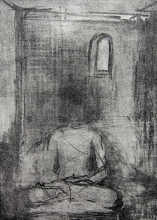
A painting in progress
One of the largest attempted thus far. About a third is complete. Finished, it should be nine feet across and six feet high. Let's see...


Sunday, January 20, 2008
A wrong rite
According to a foundation that performs over 200 female circumcision's (I would rather call it mutilation) each weekend in Bandung Indonesia, there are three “benefits” to circumcising girls.
- “One, it will stabilize her libido,”
- “Two, it will make a woman look more beautiful in the eyes of her husband.
- Three, it will balance her psychology.”
A report of this deplorable practice in Indonesia and a slideshow here.
It is now reported that this horrifying procedure is slowly gaining a quiet following among newly arrived immigrants in the US and England.
Picture courtesy: The New York Times.

- “One, it will stabilize her libido,”
- “Two, it will make a woman look more beautiful in the eyes of her husband.
- Three, it will balance her psychology.”
A report of this deplorable practice in Indonesia and a slideshow here.
It is now reported that this horrifying procedure is slowly gaining a quiet following among newly arrived immigrants in the US and England.
Picture courtesy: The New York Times.

They do the darnest things...
This weekend found a little bit of family gathered at our home. The kids and I had one of those unplanned art sessions where some acrylic paint and canvas paper can do wonders.
Yes, kids do the darnest things...
 Aswin Unni (age 9), 'Mirror Grid', Acrylic on canvas paper, 8" X 6"
 Hari Nair (age 3), 'Birds', Acrylic on canvas paper, 8" X 6"
 Aswin Unni (age 9), 'A Parrot', Digital art
 Hari Nair (age 3), 'Spiderman's tracks', Digital art
Yes, kids do the darnest things...
 Aswin Unni (age 9), 'Mirror Grid', Acrylic on canvas paper, 8" X 6"
 Hari Nair (age 3), 'Birds', Acrylic on canvas paper, 8" X 6"
 Aswin Unni (age 9), 'A Parrot', Digital art
 Hari Nair (age 3), 'Spiderman's tracks', Digital art
Friday, January 18, 2008

Thursday, January 17, 2008
The R word
For the first time in recent memory, ninety percent of the headlines on the bloomberg news site talked about falls, drops, losses, slumps, writedowns, cuts, crash lands and tumbles... (see screenshot below).
A recession is not a good thing - for us or for the world at large (even if a large part of it was precipitated by our scheming banks - yes, I was referring to the subprime mess).

A recession is not a good thing - for us or for the world at large (even if a large part of it was precipitated by our scheming banks - yes, I was referring to the subprime mess).

Gallery visit: Jonathan LeVine Gallery
Jonathan LeVine Gallery in Chelsea is known for representing artists who are not really mainstream but getting there. I personally like this gallery for the interesting, out-of-the-ordinary exhibits that have become their trademark. Most of the shows involve large scale paintings featuring fantastical environments straddling equal parts reality, absurdity, graffiti and comic. Their current three artist show is worth a visit.
The main room features Jonathan Viner. His paintings focus on themes of survival where individuals use aspects of their personality or environment to survive (I know this is a oft beaten artistic track, but his technique trumps stereotypes). The characters (mostly painted from live models) employ a variety of devices to survive : they run away from trouble, take stock of the world from afar, fight or strip naked. The paintings were a mixture of Weimar’s Otto Dix, Old Master imagery and psychoanalysis.
The project room featured two artists. Xiaoqing Ding from China and Esao Andrews from Arizona. I can’t seem to decide whose works I like better. Is it the Chinese lady’s works with its sexual innuendoes referencing mythology and fairytales done in a ‘cheap Chinese calendar’ style or was it the undertones of despair and brooding perpetuated by Esao’s paintings? - I am not sure, but, both the painters seem to have a lot of talent and imagination.
Xiaoqing Ding obtained her MFA from the Hoffberger School of Painting, Maryland and Esao Andrews has a BFA in illustration from SVA. Jonathan Viner has a BFA from the Rhode Island School of Design and is based out of New York.
 Jonathan Viner, The Ladies' Demands, Oil on Panel, 48" x 36"
 Jonathan Viner, The Courier's Kevlar, Oil on Panel, 36" x 24"
 Jonathan Viner, Look Away III, Oil on Panel, 36" x 24"
 Jonathan Viner, Look Away II, Oil on Panel, 36" x 24"
 Jonathan Viner, Rinse, Repeat, Oil on Panel, 20" x 16"
 Jonathan Viner, Madamoiselles de Hoboken, Graphite on Paper, 11” x 14”
 Esao Andrews, Separate Lives, Oil on Wood, 32” x 24”
 Esao Andrews, The Scourge, Oil on Wood, 24” x 16”
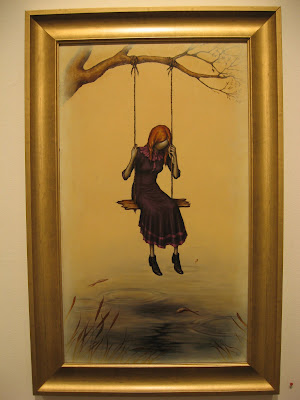 Esao Andrews, Thought, Oil on Wood, 32” x 19”
 Xiaoqing Ding, Little Drop of Poison, Egg tempera, Silverpoint and Pastel on Paper, 40” x 32”
 Xiaoqing Ding, Once Upon a Time, Egg tempera, Silverpoint and Pastel on Paper, 40” x 32”
The main room features Jonathan Viner. His paintings focus on themes of survival where individuals use aspects of their personality or environment to survive (I know this is a oft beaten artistic track, but his technique trumps stereotypes). The characters (mostly painted from live models) employ a variety of devices to survive : they run away from trouble, take stock of the world from afar, fight or strip naked. The paintings were a mixture of Weimar’s Otto Dix, Old Master imagery and psychoanalysis.
The project room featured two artists. Xiaoqing Ding from China and Esao Andrews from Arizona. I can’t seem to decide whose works I like better. Is it the Chinese lady’s works with its sexual innuendoes referencing mythology and fairytales done in a ‘cheap Chinese calendar’ style or was it the undertones of despair and brooding perpetuated by Esao’s paintings? - I am not sure, but, both the painters seem to have a lot of talent and imagination.
Xiaoqing Ding obtained her MFA from the Hoffberger School of Painting, Maryland and Esao Andrews has a BFA in illustration from SVA. Jonathan Viner has a BFA from the Rhode Island School of Design and is based out of New York.
 Jonathan Viner, The Ladies' Demands, Oil on Panel, 48" x 36"
 Jonathan Viner, The Courier's Kevlar, Oil on Panel, 36" x 24"
 Jonathan Viner, Look Away III, Oil on Panel, 36" x 24"
 Jonathan Viner, Look Away II, Oil on Panel, 36" x 24"
 Jonathan Viner, Rinse, Repeat, Oil on Panel, 20" x 16"
 Jonathan Viner, Madamoiselles de Hoboken, Graphite on Paper, 11” x 14”
 Esao Andrews, Separate Lives, Oil on Wood, 32” x 24”
 Esao Andrews, The Scourge, Oil on Wood, 24” x 16”
 Esao Andrews, Thought, Oil on Wood, 32” x 19”
 Xiaoqing Ding, Little Drop of Poison, Egg tempera, Silverpoint and Pastel on Paper, 40” x 32”
 Xiaoqing Ding, Once Upon a Time, Egg tempera, Silverpoint and Pastel on Paper, 40” x 32”
Breadwinning was the only option...
An excerpt from the book The Logic of Life by Tim Harford.
The logic of comparative advantage highlighted something that most men — except economists — have found it hard to get their heads around: there is no reason to believe that men were breadwinners because they were any good at it. They might simply have been breadwinners because getting them to help around the house would have been even worse.
Read a compelling take about how the institution of divorce actually helps women on Slate here...
The logic of comparative advantage highlighted something that most men — except economists — have found it hard to get their heads around: there is no reason to believe that men were breadwinners because they were any good at it. They might simply have been breadwinners because getting them to help around the house would have been even worse.
Read a compelling take about how the institution of divorce actually helps women on Slate here...
Wednesday, January 16, 2008
Journey of the U.S. dollar
A fascinating essay over at the Atlantic Online on subsidizing American life by dollars from China while simultaneously holding down living conditions in China so that the vicious cycle continues... A must read.
The following poignant excerpt from the essay traces the journey of the U.S. dollar from a customer’s hand in America to a factory in China and back again to bond auctions here.
Let’s say you buy an Oral-B electric toothbrush for $30 at a CVS in the United States. I choose this example because I’ve seen a factory in China that probably made the toothbrush. Most of that $30 stays in America, with CVS, the distributors, and Oral-B itself. Eventually $3 or so—an average percentage for small consumer goods—makes its way back to southern China.
When the factory originally placed its bid for Oral-B’s business, it stated the price in dollars: X million toothbrushes for Y dollars each. But the Chinese manufacturer can’t use the dollars directly. It needs RMB—to pay the workers their 1,200-RMB ($160) monthly salary, to buy supplies from other factories in China, to pay its taxes. So it takes the dollars to the local commercial bank—let’s say the Shenzhen Development Bank. After showing receipts or waybills to prove that it earned the dollars in genuine trade, not as speculative inflow, the factory trades them for RMB.
This is where the first controls kick in. In other major countries, the counterparts to the Shenzhen Development Bank can decide for themselves what to do with the dollars they take in. Trade them for euros or yen on the foreign-exchange market? Invest them directly in America? Issue dollar loans? Whatever they think will bring the highest return. But under China’s “surrender requirements,” Chinese banks can’t do those things. They must treat the dollars, in effect, as contraband, and turn most or all of them (instructions vary from time to time) over to China’s equivalent of the Federal Reserve Bank, the People’s Bank of China, for RMB at whatever is the official rate of exchange.
With thousands of transactions per day, the dollars pile up like crazy at the PBOC. More precisely, by more than a billion dollars per day. They pile up even faster than the trade surplus with America would indicate, because customers in many other countries settle their accounts in dollars, too.
The PBOC must do something with that money, and current Chinese doctrine allows it only one option: to give the dollars to another arm of the central government, the State Administration for Foreign Exchange. It is then SAFE’s job to figure out where to park the dollars for the best return: so much in U.S. stocks, so much shifted to euros, and the great majority left in the boring safety of U.S. Treasury notes.
And thus our dollar comes back home. Spent at CVS, passed to Oral-B, paid to the factory in southern China, traded for RMB at the Shenzhen bank, “surrendered” to the PBOC, passed to SAFE for investment, and then bid at auction for Treasury notes, it is ready to be reinjected into the U.S. money supply and spent again—ideally on Chinese-made goods.
At no point did an ordinary Chinese person decide to send so much money to America. In fact, at no point was most of this money at his or her disposal at all. These are in effect enforced savings, which are the result of the two huge and fundamental choices made by the central government.
 Tim Noble & Sue Webster, Metal fucking rats with heart shaped tail, 22" x 25" x 7", Welded scrap metal and light projector, 2007
The following poignant excerpt from the essay traces the journey of the U.S. dollar from a customer’s hand in America to a factory in China and back again to bond auctions here.
Let’s say you buy an Oral-B electric toothbrush for $30 at a CVS in the United States. I choose this example because I’ve seen a factory in China that probably made the toothbrush. Most of that $30 stays in America, with CVS, the distributors, and Oral-B itself. Eventually $3 or so—an average percentage for small consumer goods—makes its way back to southern China.
When the factory originally placed its bid for Oral-B’s business, it stated the price in dollars: X million toothbrushes for Y dollars each. But the Chinese manufacturer can’t use the dollars directly. It needs RMB—to pay the workers their 1,200-RMB ($160) monthly salary, to buy supplies from other factories in China, to pay its taxes. So it takes the dollars to the local commercial bank—let’s say the Shenzhen Development Bank. After showing receipts or waybills to prove that it earned the dollars in genuine trade, not as speculative inflow, the factory trades them for RMB.
This is where the first controls kick in. In other major countries, the counterparts to the Shenzhen Development Bank can decide for themselves what to do with the dollars they take in. Trade them for euros or yen on the foreign-exchange market? Invest them directly in America? Issue dollar loans? Whatever they think will bring the highest return. But under China’s “surrender requirements,” Chinese banks can’t do those things. They must treat the dollars, in effect, as contraband, and turn most or all of them (instructions vary from time to time) over to China’s equivalent of the Federal Reserve Bank, the People’s Bank of China, for RMB at whatever is the official rate of exchange.
With thousands of transactions per day, the dollars pile up like crazy at the PBOC. More precisely, by more than a billion dollars per day. They pile up even faster than the trade surplus with America would indicate, because customers in many other countries settle their accounts in dollars, too.
The PBOC must do something with that money, and current Chinese doctrine allows it only one option: to give the dollars to another arm of the central government, the State Administration for Foreign Exchange. It is then SAFE’s job to figure out where to park the dollars for the best return: so much in U.S. stocks, so much shifted to euros, and the great majority left in the boring safety of U.S. Treasury notes.
And thus our dollar comes back home. Spent at CVS, passed to Oral-B, paid to the factory in southern China, traded for RMB at the Shenzhen bank, “surrendered” to the PBOC, passed to SAFE for investment, and then bid at auction for Treasury notes, it is ready to be reinjected into the U.S. money supply and spent again—ideally on Chinese-made goods.
At no point did an ordinary Chinese person decide to send so much money to America. In fact, at no point was most of this money at his or her disposal at all. These are in effect enforced savings, which are the result of the two huge and fundamental choices made by the central government.
Tim Noble & Sue Webster, Metal fucking rats with heart shaped tail, 22" x 25" x 7", Welded scrap metal and light projector, 2007Weekend museum visit...
Last weekend found my wife, our sons and me at the Montclair Art Museum in Montclair, NJ. This is a little bit of a project that we have on the side that involves visiting all of New Jersey’s museums (can be done over a small part of one’s lifetime whereas a similar undertaking for the state of New York would require several lifetimes)… Montclair Art Museum was not the greatest considering standards set by museums like Newark or Rutgers but they did have some art that did stand out from the usual gilt edged period stuff that gathers dust at a lot of our state museums. Of course, in addition, the already high entrance fees for such a small museum did not make much sense either… They did have a fairly extensive superheroes exhibit that featured drawings for comics and collages as preparation for comic book designs that would definitively catch the interest of print illustrators. I was not very much into that kind of stuff, but some superhero life size mockups had our three year old son salivating and both of us tried imitating Spiderman deploying his extensive webbing to the bemused look of the museum security guards.
Some pictures from the weekend…
 Richard La Barre Goodwin (1840 - 1910), String of Game Birds, ca. 1892, Oil on canvas.
His work is distinctive for his many subjects that feature cabin doors decorated with hunting and other outdoor equipment. Trompe d'oeil in nature, his work really startled us for its simplicity, realism and the life of after lived animal lives
 William Couper (1853 - 1942), Crown for the Prince, 1896, Marble
Some pictures from the weekend…
 Louise Nevelson (1899 - 1988), Black Zag A, 1968, Wood, found objects, pigment, plastic laminate.
Louise Berliawsky Nevelson was a Ukrainian-born American artist. She was known for abstract expressionist sculpture that primarily featured box like objects grouped together to explore form and three dimensional space. She primarily worked from found objects and everyday discards.
In her words:”When you put together things that other people have thrown out, you’re really bringing them to life – a spiritual life that surpasses the life for which they were originally created."
Note: Her work reminded me strongly of the work of another artist that I have the distinct pleasure of knowing online: Corrine Bayraktaroglu, whose artwork that featured a homage to Louise’s work is here. Corrine's entire portfolio here.
 Richard La Barre Goodwin (1840 - 1910), String of Game Birds, ca. 1892, Oil on canvas.
His work is distinctive for his many subjects that feature cabin doors decorated with hunting and other outdoor equipment. Trompe d'oeil in nature, his work really startled us for its simplicity, realism and the life of after lived animal lives
 William Couper (1853 - 1942), Crown for the Prince, 1896, Marble
I know that marble sculptures is not going to turn any heads, but William Couper's sculpture of this Greek maiden wreathing an olive crown for an Olympian victor is timeless as well as symptomatic of most of the 'class based' art' that was prevalent around the end of the nineteenth century.
 Chakaia Booker, rubber tires and stainless steel.
Chakaia Booker, rubber tires and stainless steel. My personal favorite piece from the show. She slices, twists, strips, and rivets rubber and radials to create exaggerated textures, prickled edges, and torqued forms. The resulting sculpture had a strange life of its own, pulsing behind the façade of dirty old rubber tires and radials. She was fantastic.
 Herbert Ferber (1906 - 1991), Jay III, 1970, Bronze.
 Herbert Ferber (1906 - 1991), Jay III, 1970, Bronze.
 He was an Abstract expressionist sculptor and dentist. He actively practiced dentistry between 1930 and 1950. His best-known sculptures are open, hollow forms in soldered and welded metal and also roofed sculptures ― some parts of which hung from the ceiling while other parts rose from the floor.
 Alan Houser (1914 - 1994), Earth Mother, Bronze, 1981 (Cast 1986)
 George Inness, The Lackawanna Valley, 1855, Oil on canvas.
The Montclair museum has a great collection of that late nineteenth century landscape artist George Inness. Some of the works have been made maudlin by today’s standards by the prevalence of landscape paintings in our malls, but a couple of these stand out for their stunning originality at a time when the Hudson River artists insisted on an almost total detail replication to beauty and the attendant forces of nature that shape it. This artist would have had principles very close to Thoreau (just looking at the artworks and his writings on display there – an ecstasy in the joy of nature and its unity with the material and non-material world).
 George Inness, Evening Landscape, 1863, Oil on canvas
 Alan Houser (1914 - 1994), Earth Mother, Bronze, 1981 (Cast 1986)
 George Inness, The Lackawanna Valley, 1855, Oil on canvas.
The Montclair museum has a great collection of that late nineteenth century landscape artist George Inness. Some of the works have been made maudlin by today’s standards by the prevalence of landscape paintings in our malls, but a couple of these stand out for their stunning originality at a time when the Hudson River artists insisted on an almost total detail replication to beauty and the attendant forces of nature that shape it. This artist would have had principles very close to Thoreau (just looking at the artworks and his writings on display there – an ecstasy in the joy of nature and its unity with the material and non-material world).
 George Inness, Evening Landscape, 1863, Oil on canvas
Tuesday, January 15, 2008
Art movements, specialization and the attention economy
Holland Cotter in a Times review for an exhibition devoted to the 'Pattern and Decoration' art movement up at the Hudson River Museum in Yonkers calls the concept of art movements dead.
We don’t do art movements anymore. We do brand names (Neo-Geo); we do promotional drives (“Painting is back!”); we do industry trends (art fairs, M.F.A students at Chelsea galleries, etc.). But now the market is too large, its mechanism too corporate, its dependence on instant stars and products too strong to support the kind of collective thinking and sustained application of thought that have defined movements as such.
Yes, I tend to agree that the idea of broad based art movements might be archaic in today's attention deficient world, but movements still abound: albeit in a smaller, more focused way. Today's ‘attention economy’ tends to offer something to everyone. Sometimes, the quirkiest of art appeals to a select few while others may find solace in the banal. Access to multiple avenues and their specialized agendas are very much possible in today’s specialized world. This is not a characteristic limited only to art, but of all expressions of our existence today – be it the sciences, religion or sex. Take the case of computer based art where seemingly simplistic art generated from animated gifs have their own following, or take the case of ab-ex video art pioneered by the likes of Jeremy Blake and one sees the definite existence of specialized sub-genres that might have their own select followings. Another example might be the concept of ‘subversion’ where an original concept is subverted to instill current or artist-desired-values while still feeding off the wake left by the original’s aura.
Of course, broad art movements of the type defined by Mr. Cotter might be gone, but in its place are tens of hundreds of mini and micro art movements all around us waiting to be discovered and then either rejected or adopted by the elusive eyeball.
Herbert Simon defined a concept of attention economics in the following (source: Wikipedia):
"...in an information-rich world, the wealth of information means a dearth of something else: a scarcity of whatever it is that information consumes. What information consumes is rather obvious: it consumes the attention of its recipients. Hence a wealth of information creates a poverty of attention and a need to allocate that attention efficiently among the overabundance of information sources that might consume it"
Rephrasing the above with the word ‘art’ taking the place for the word ‘information’ makes for an instructive statement.
"...in an art-rich world, the wealth of art means a dearth of something else: a scarcity of whatever it is that art consumes. What art consumes is rather obvious: it consumes the attention of its recipients. Hence a wealth of art creates a poverty of attention and a need to allocate that attention efficiently among the overabundance of art sources that might consume it"
In fact, you could replace the word ‘information’ in the first paragraph with any of the following words ‘religion’, ‘sex’, ‘medicine’ or ‘science’ and still arrive at a coherent paragraph that rings true and pays homage to specialization…
We don’t do art movements anymore. We do brand names (Neo-Geo); we do promotional drives (“Painting is back!”); we do industry trends (art fairs, M.F.A students at Chelsea galleries, etc.). But now the market is too large, its mechanism too corporate, its dependence on instant stars and products too strong to support the kind of collective thinking and sustained application of thought that have defined movements as such.
Yes, I tend to agree that the idea of broad based art movements might be archaic in today's attention deficient world, but movements still abound: albeit in a smaller, more focused way. Today's ‘attention economy’ tends to offer something to everyone. Sometimes, the quirkiest of art appeals to a select few while others may find solace in the banal. Access to multiple avenues and their specialized agendas are very much possible in today’s specialized world. This is not a characteristic limited only to art, but of all expressions of our existence today – be it the sciences, religion or sex. Take the case of computer based art where seemingly simplistic art generated from animated gifs have their own following, or take the case of ab-ex video art pioneered by the likes of Jeremy Blake and one sees the definite existence of specialized sub-genres that might have their own select followings. Another example might be the concept of ‘subversion’ where an original concept is subverted to instill current or artist-desired-values while still feeding off the wake left by the original’s aura.
Of course, broad art movements of the type defined by Mr. Cotter might be gone, but in its place are tens of hundreds of mini and micro art movements all around us waiting to be discovered and then either rejected or adopted by the elusive eyeball.
Herbert Simon defined a concept of attention economics in the following (source: Wikipedia):
"...in an information-rich world, the wealth of information means a dearth of something else: a scarcity of whatever it is that information consumes. What information consumes is rather obvious: it consumes the attention of its recipients. Hence a wealth of information creates a poverty of attention and a need to allocate that attention efficiently among the overabundance of information sources that might consume it"
Rephrasing the above with the word ‘art’ taking the place for the word ‘information’ makes for an instructive statement.
"...in an art-rich world, the wealth of art means a dearth of something else: a scarcity of whatever it is that art consumes. What art consumes is rather obvious: it consumes the attention of its recipients. Hence a wealth of art creates a poverty of attention and a need to allocate that attention efficiently among the overabundance of art sources that might consume it"
In fact, you could replace the word ‘information’ in the first paragraph with any of the following words ‘religion’, ‘sex’, ‘medicine’ or ‘science’ and still arrive at a coherent paragraph that rings true and pays homage to specialization…

Monday, January 14, 2008
Sign of our times...
Some time back, Simplistic lamented on our trend to shut oneself out of the normal world and live in one’s own creation using digital music players. Walking around like automatons with those ubiquitous white buds strapped to the ears, we see more and more of this sect avidly listening to music or whatever that comes blathering out of those hand held devices. If ever you make the mistake to unknowingly ask them a question in the middle of their reveries, you may count yourself lucky if they condescend to answer you with a mixture of defiance, nonchalance and irritation coupled with a 'you, luddite!' stare.
If the above does not manage to insulate society, then a new gadget unveiled last week at the Consumer Electronics Show called MPH (Music Playing Holster) from TASER will guarantee the complete removal of the individual from everyday life. This device from TASER (yes, those guns that stun or sometimes kill unsuspecting individuals who are unfortunate enough to be jolted by the law or by fellow citizenry – yes, anyone can get one) comes with a MP3 player built in.
In addition to enjoying the music, one can also enjoy visual displays of wild contortions of unfortunate individuals who could be TASERED by the device (which can deliver about 50,000 volts of pure electricity in a split second). Well, next time, before you disturb that individual with those cutesy buds shape-fitted over their ears, think deeply and ponder if you would like to be jolted to the extreme realities of our current times. For those who are color conscious, these ‘mp3 guns’ come in pink, original color (not sure what that means) and leopard skin color.
In other sign of the times, the venerable Associated Press declared that Britney’s woes were very newsworthy:
“The Associated Press is bolstering its entertainment news coverage — and for many readers and viewers, Britney Spears is nothing if not entertaining. An internal memorandum from The A.P.’s Los Angeles bureau dictating coverage of the troubled pop star was published by several media blogs on Tuesday, prompting some punch lines at the news service’s expense. “Now and for the foreseeable future, virtually everything involving Britney is a big deal,” Frank Baker, the Los Angeles assistant bureau chief, wrote on Tuesday morning, three days after Ms. Spears was released from the hospital where she had been admitted in the wake of a custody dispute.”
 British School, 19th century, 'A Knighting Ceremony', 49.5 by 81 cm, Lithograph
 American School, 2008, 'Stun Gun that plays sweet music to your ears', Metal parts, hard drive, plastic and battery
If the above does not manage to insulate society, then a new gadget unveiled last week at the Consumer Electronics Show called MPH (Music Playing Holster) from TASER will guarantee the complete removal of the individual from everyday life. This device from TASER (yes, those guns that stun or sometimes kill unsuspecting individuals who are unfortunate enough to be jolted by the law or by fellow citizenry – yes, anyone can get one) comes with a MP3 player built in.
In addition to enjoying the music, one can also enjoy visual displays of wild contortions of unfortunate individuals who could be TASERED by the device (which can deliver about 50,000 volts of pure electricity in a split second). Well, next time, before you disturb that individual with those cutesy buds shape-fitted over their ears, think deeply and ponder if you would like to be jolted to the extreme realities of our current times. For those who are color conscious, these ‘mp3 guns’ come in pink, original color (not sure what that means) and leopard skin color.
In other sign of the times, the venerable Associated Press declared that Britney’s woes were very newsworthy:
“The Associated Press is bolstering its entertainment news coverage — and for many readers and viewers, Britney Spears is nothing if not entertaining. An internal memorandum from The A.P.’s Los Angeles bureau dictating coverage of the troubled pop star was published by several media blogs on Tuesday, prompting some punch lines at the news service’s expense. “Now and for the foreseeable future, virtually everything involving Britney is a big deal,” Frank Baker, the Los Angeles assistant bureau chief, wrote on Tuesday morning, three days after Ms. Spears was released from the hospital where she had been admitted in the wake of a custody dispute.”
 British School, 19th century, 'A Knighting Ceremony', 49.5 by 81 cm, Lithograph
 American School, 2008, 'Stun Gun that plays sweet music to your ears', Metal parts, hard drive, plastic and battery
Saturday, January 12, 2008
Sepia Suburbia

A nutty joke I read online...
There was a man who loved to make up puns. One day a local magazine sponsored a pun-contest.The man entered the contest ten different times in the hope that at least one of his puns would win. Unfortunately, no pun in ten did.
Friday, January 11, 2008
Unblinded with science
A fascinating article in the British Medical Journal dispels some commonly held myths that we harbor about health, medicine and their intertwined hand-me-down tales. Among the myths debunked are the ones listed below. I have heard of most of them except for the one about fingernails and hair growing after a person passes on. The study gave reasonable scientific explanations debunking each of these myths. My personal favorite is the much touted myth that we use only 10 percent of our brains - modern fMRI has clearly shown that we use nearly all parts of our brains - putting it to use in actions that have efficiencies of 10 percent is another matter altogether... Plus, having this knowledge will come in handy the next time that burly security guard tells you to turn that cell phone off in a hospital… Throw some science at the person while singing that classic 80’s one hit wonder “She Blinded Me with Science”…
Myths explained to be untrue:
- People should drink at least eight glasses of water a day
- We use only 10% of our brains
- Hair and fingernails continue to grow after death
- Shaving hair causes it to grow back faster, darker, or coarser
- Reading in dim light ruins your eyesight
- Eating turkey makes people especially drowsy
- Mobile phones create electromagnetic interference in hospitals.
Despite their popularity, all of these medical beliefs range from unproved to untrue. While some of these myths simply do not have evidence to confirm them, others have been studied and proved wrong. The venerable journal also reports that even physicians sometimes believe medical myths contradicted by scientific evidence and stresses the need for more objective evidence based medicine.
 Madeline von Foerster, 'O Rubor Sanguinis', Acrylic on panel in wood frame, 27" X 21"
Myths explained to be untrue:
- People should drink at least eight glasses of water a day
- We use only 10% of our brains
- Hair and fingernails continue to grow after death
- Shaving hair causes it to grow back faster, darker, or coarser
- Reading in dim light ruins your eyesight
- Eating turkey makes people especially drowsy
- Mobile phones create electromagnetic interference in hospitals.
Despite their popularity, all of these medical beliefs range from unproved to untrue. While some of these myths simply do not have evidence to confirm them, others have been studied and proved wrong. The venerable journal also reports that even physicians sometimes believe medical myths contradicted by scientific evidence and stresses the need for more objective evidence based medicine.
Madeline von Foerster, 'O Rubor Sanguinis', Acrylic on panel in wood frame, 27" X 21"No trickle down here
I have a post over at Art and Perception on exploitative aspects of art - especially those charging five figure numbers for photographs of people in disadvantaged situations.
There is nothing patently wrong about the price - hey, that's why they built the gallery in the first place - but the question as to what percentage of this amount goes back to the disadvantaged who willingly posed for the artist. Visiting Yossi Milo gallery and looking at the hyena men set me thinking about this.
Related statistic: Percentage of American's who said they were among the 'have-nots' in 1988 and 2007, respectively: 17, 34 (Source: Harpers Index)
 Andy Werhol, Dollar Sign, 1981, Synthetic polymer paint and silkscreen ink on canvas, 90" x 70"
There is nothing patently wrong about the price - hey, that's why they built the gallery in the first place - but the question as to what percentage of this amount goes back to the disadvantaged who willingly posed for the artist. Visiting Yossi Milo gallery and looking at the hyena men set me thinking about this.
Related statistic: Percentage of American's who said they were among the 'have-nots' in 1988 and 2007, respectively: 17, 34 (Source: Harpers Index)
 Andy Werhol, Dollar Sign, 1981, Synthetic polymer paint and silkscreen ink on canvas, 90" x 70"
 Thursday, January 10, 2008


Art sans provenance
The other day, we were visiting a rare books store when a painting hanging in a dusty corner caught our eye. Even if the price was north of our limited means, we did buy the piece. The piece did not come with any provenance or authorship (guess some of you are shuddering by now). We did not know if it were the colors, or the appearance of some kind of an exotic market place in a far off land or the muted appearance of a garrison town in the distance, it sure appealed to my wife and me. Looking closer, I found that the unknown artist applied the oil paint in think dabs that seemed to be suspended between a decision to stay on the surface or drip over the canvas. Almost encaustic.
Note: Buying art without provenance is really not a great idea unless the art appeals to one so much and one does not plan on holding it with speculative interests. The following articles are relevant: What to look for in art and A provenance primer.

Note: Buying art without provenance is really not a great idea unless the art appeals to one so much and one does not plan on holding it with speculative interests. The following articles are relevant: What to look for in art and A provenance primer.

Wednesday, January 09, 2008
Chelsea outing on a warm January day
Yesterday was one of the warmest days in January. I decided to take a quick jaunt through some promising shows in Chelsea and here is what we have...
Stellan Holm gallery had a group exhibition of oil and acrylic paintings from international artists that were larger than life titled, well: 'Larger Than Life'. The black and white face of Emilie (picture below) painted by Martin Borowski stood out from the other paintings on display there for its attention to detail and a Chuck Close type airbrushing that must have been done to attain this level of realism. Of course, it would not have looked any different from a large scale blowup of Emilie’s face using a high definition black and white photograph, but a self same attempt in acrylic takes balls.
George Billis Gallery is showing the works of Daniel Phill. The works are primarily wild flowers done in lush acrylic. For some reason, I tend to detest flower pictures because of the repetitious and cloying sense of the subject… However, this one stood out for its artful transition between the abstract and the figurative accentuated with the help of heavy impasto. The artist is said to pour, drip, smear and scrape paints of varying viscosities (that was from the gallery statement - sounded original and clichéd for some reason)... I guess too much of abstraction is not playing too well with a lot of people... hence, a safer and a more understandable bet for potential buyers might be to look for artists who work in the middle ground of 'abstraction and realism'. I see a lot of this kind of 'middle ground' work nowadays… All said, I did like these paintings a lot…
Gallery Henoch is showing the paintings of Stephen Wright. After seeing Lucian Freud at the MoMA last week, I must say that it takes quite a bit to be awed by more paintings of white peoples’ skin and flesh, but, I must say: I was still taken in by this one. White epidermal bounty with all of its attendant frailties, garnishes and warts reveled by the harsh gaze of the studio lamp rendered in full frontal display on canvas is in abundance here. His style reminded me of academic painters for some reason – just the right tones and the workmanship on canvas…
Kent Gallery is showing works by Mike Cockrill who continues his explorations of children’s psyche as they pass the transitions between youth and adolescence. The correct lingo for that stage is now defined by the word tweens – (guess they are growing into a market segment all by themselves – otherwise why coin a new term for them?)... The works are sexually charged and aims to bring back repressed childhood memories. With the ever present danger of advertisers trying very hard to get young pre-pubescent girls (and sometimes boys) to strut their wares, it is indeed a statement that the artist is making with these paintings. The effects of innocuous indoctrination of sexual mores veiled under adverts for items of mass consumption into the younger minds doubtless will have real consequences for the future when we would live in a world governed by them. Get ready for more cultural cataclysms in our old ages. Mike Cockrill’s style was a bit sloppy but high on ideas and surrealism.
Pictures from Group exhibition at Stellan Holm
 Martin Borowski, 'Emilie', 2007, Acrylic on linen, 74" X 132"
 Brendan Cass, 'Dutch Landscape', 2007, Acrylic on canvas, 84" X 132"; Note: Heavy impasto. Between abstraction and the literal. Full of color, the artist is said to draw from photographs in travel brochures. Not too sure what is up with the blue gash in the middle of this huge canvas. Not very appealing, but the rest of it was lush enough for me...
 Till Gerhard, 'Holle der Saison', Oil on canvas, 90" X 118"
Pictures from Daniel Phill at George Billis
 Daniel Phill, ‘Banksia’, Acrylic on canvas, 41” X 61”
 Daniel Phill, ‘Frisson’, Acrylic on canvas, 37” X 61”
 Daniel Phill, ‘Ipomoea’, Acrylic on canvas, 61” X 49”
Pictures from Stephen Wright at Gallery Henoch
 Stephen Wright, ‘Figure’, Oil on Canvas, 66” X 30”
 Stephen Wright, ‘Mid-Century Modern’, Oil on Canvas, 46” X 44”
 Stephen Wright, ‘Figure, Robe, Sofa’, Oil on Canvas, 66” X 44”
Pictures from Mike Cockrill at Kent
 Mike Cockrill, 'The Best Pumpkin', 2006, Oil on canvas, 56" x 44"
 Mike Cockrill, 'The Broken Fence', 2007, Watercolor and pencil on paper, 19" x 25"
Stellan Holm gallery had a group exhibition of oil and acrylic paintings from international artists that were larger than life titled, well: 'Larger Than Life'. The black and white face of Emilie (picture below) painted by Martin Borowski stood out from the other paintings on display there for its attention to detail and a Chuck Close type airbrushing that must have been done to attain this level of realism. Of course, it would not have looked any different from a large scale blowup of Emilie’s face using a high definition black and white photograph, but a self same attempt in acrylic takes balls.
George Billis Gallery is showing the works of Daniel Phill. The works are primarily wild flowers done in lush acrylic. For some reason, I tend to detest flower pictures because of the repetitious and cloying sense of the subject… However, this one stood out for its artful transition between the abstract and the figurative accentuated with the help of heavy impasto. The artist is said to pour, drip, smear and scrape paints of varying viscosities (that was from the gallery statement - sounded original and clichéd for some reason)... I guess too much of abstraction is not playing too well with a lot of people... hence, a safer and a more understandable bet for potential buyers might be to look for artists who work in the middle ground of 'abstraction and realism'. I see a lot of this kind of 'middle ground' work nowadays… All said, I did like these paintings a lot…
Gallery Henoch is showing the paintings of Stephen Wright. After seeing Lucian Freud at the MoMA last week, I must say that it takes quite a bit to be awed by more paintings of white peoples’ skin and flesh, but, I must say: I was still taken in by this one. White epidermal bounty with all of its attendant frailties, garnishes and warts reveled by the harsh gaze of the studio lamp rendered in full frontal display on canvas is in abundance here. His style reminded me of academic painters for some reason – just the right tones and the workmanship on canvas…
Kent Gallery is showing works by Mike Cockrill who continues his explorations of children’s psyche as they pass the transitions between youth and adolescence. The correct lingo for that stage is now defined by the word tweens – (guess they are growing into a market segment all by themselves – otherwise why coin a new term for them?)... The works are sexually charged and aims to bring back repressed childhood memories. With the ever present danger of advertisers trying very hard to get young pre-pubescent girls (and sometimes boys) to strut their wares, it is indeed a statement that the artist is making with these paintings. The effects of innocuous indoctrination of sexual mores veiled under adverts for items of mass consumption into the younger minds doubtless will have real consequences for the future when we would live in a world governed by them. Get ready for more cultural cataclysms in our old ages. Mike Cockrill’s style was a bit sloppy but high on ideas and surrealism.
Pictures from Group exhibition at Stellan Holm
 Martin Borowski, 'Emilie', 2007, Acrylic on linen, 74" X 132"
 Brendan Cass, 'Dutch Landscape', 2007, Acrylic on canvas, 84" X 132"; Note: Heavy impasto. Between abstraction and the literal. Full of color, the artist is said to draw from photographs in travel brochures. Not too sure what is up with the blue gash in the middle of this huge canvas. Not very appealing, but the rest of it was lush enough for me...
 Till Gerhard, 'Holle der Saison', Oil on canvas, 90" X 118"
Pictures from Daniel Phill at George Billis
 Daniel Phill, ‘Banksia’, Acrylic on canvas, 41” X 61”
 Daniel Phill, ‘Frisson’, Acrylic on canvas, 37” X 61”
 Daniel Phill, ‘Ipomoea’, Acrylic on canvas, 61” X 49”
Pictures from Stephen Wright at Gallery Henoch
 Stephen Wright, ‘Figure’, Oil on Canvas, 66” X 30”
 Stephen Wright, ‘Mid-Century Modern’, Oil on Canvas, 46” X 44”
 Stephen Wright, ‘Figure, Robe, Sofa’, Oil on Canvas, 66” X 44”
 Pictures from Mike Cockrill at Kent
 Mike Cockrill, 'The Best Pumpkin', 2006, Oil on canvas, 56" x 44"
 Mike Cockrill, 'The Broken Fence', 2007, Watercolor and pencil on paper, 19" x 25"
Meanwhile... sunspotting continues...
 Sunil, 'Sunset on Jan 8 08', Digital photograph
 The Star Market by Marie Howe
The people Jesus loved were shopping at the Star Market yesterday.
An old lead-colored man standing next to me at the checkout
breathed so heavily I had to step back a few steps.
Even after his bags were packed he still stood, breathing hard and
hawking into his hand. The feeble, the lame, I could hardly look at them:
shuffling through the aisles, they smelled of decay, as if the Star Market
had declared a day off for the able-bodied, and I had wandered in
with the rest of them—sour milk, bad meat—
looking for cereal and spring water.
Jesus must have been a saint, I said to myself, looking for my lost car
in the parking lot later, stumbling among the people who would have
been lowered into rooms by ropes, who would have crept
out of caves or crawled from the corners of public baths on their hands
and knees begging for mercy.
If I touch only the hem of his garment, one woman thought,
could I bear the look on his face when he wheels around?
Published in the Jan 14, 08' issue of the New Yorker magazine.
Tuesday, January 08, 2008
Political ceilings and women
A lot of us were recently privy to the lives of two women at the upper rungs of their respective political situations. Unfortunately, one of them is no longer with us. She was killed off by an assassin for daring to come back and stand for elections in a country trying to hide a poor record of individual rights and freedoms. The other woman is very much with us, struggling to re-assert her candidacy for becoming the leader of what is currently the most powerful nation. The former is of course, Benazir Bhutto and the latter is the redoubtable Hillary Clinton. It has been said in some quarters that the late Ms. Bhutto would have stood a very good chance of winning elections in her nation if she had been allowed to complete her course.
It indeed is a run of irony that in a predominantly male dominated nation (Pakistan) that is overrun with the vile nexus of corruption, terrorism and quasi dictatorship, a lady should stand a very good chance of winning the national polls, while the United States who trumpet things like equal freedoms for the sexes, low governmental corruption and a model of representative democracy, the leading lady should struggle so hard to even convince people that she indeed is electable and palatable. Oftentimes, I hear from colleagues back in India, who claim that India, Pakistan and Burma are much more pluralistic and inclusive than the United States given the fact that we are not able to muster a lady for high office.
However, reading a paragraph in a recent opinion piece in the Times written by Reason magazine editor Kerry Howley helps us get a better perspective of the seeming paradox. In her words:
Like it or not, the road to female advancement often begins at the altar. History books are thick with examples of women who broke political barriers because their family connections afforded them the opportunity.
If you’ve ever wondered why India, Indonesia, Myanmar, Pakistan and the Philippines seem readier to elect women than does the United States, here’s your answer: Societies that value a candidate’s family affiliation, and therefore have a history of nepotistic succession, are often open to female leadership so long as it bears the right brand. Benazir Bhutto, Indira Gandhi and Daw Aung San Suu Kyi, among many others, slashed through gender barriers on the strength of their family names. In the United States, where a poll last year found that 14 percent of people still admit they would not vote for a woman, nepotistic advancement for women in politics was most common early in the 20th century.
Social psychologists have found that women in leadership roles are typically seen as either warm, likable and incompetent, or cold, distant and competent. To be a strong, competent woman is to be something culturally unattractive, which probably says something about why few American women even aspire to political office. Worldwide, even popular female politicians — Margaret Thatcher, Golda Meir, Angela Merkel — are slapped with the moniker “iron lady.”
It does seem like there is more than what meets the eyes – that Asian countries are more tolerant of their women as long as they come with a corresponding rider - the lady in question advertises a certain branding (like a family moniker), the tolerance remains. In the United States, we have passed the age of branding (of course, it was very much the norm - as the essay shows). That does not mean that we stand free, high, moral and clear. We have not passed onto an age where ‘gender free’ competition (like that term or not) is the norm although we have made some amazing strides when it comes to ‘race free’ competition. Gloria Steinem in today’s Times puts it better:
Gender is probably the most restricting force in American life, whether the question is who must be in the kitchen or who could be in the White House. This country is way down the list of countries electing women and, according to one study, it polarizes gender roles more than the average democracy. So why is the sex barrier not taken as seriously as the racial one? The reasons are as pervasive as the air we breathe: because sexism is still confused with nature as racism once was; because anything that affects males is seen as more serious than anything that affects “only” the female half of the human race; because children are still raised mostly by women (to put it mildly) so men especially tend to feel they are regressing to childhood when dealing with a powerful woman; because racism stereotyped black men as more “masculine” for so long that some white men find their presence to be masculinity-affirming (as long as there aren’t too many of them); and because there is still no “right” way to be a woman in public power without being considered a you-know-what.
We will get there, but it sure is going to be a long hard haul on an uncertain road filled with crevices that promise a lot of stumbles as we get there... Oh, and by the way, India, Pakistan and Burma still have some catching up to do.
Note: List of Kerry Howley’s articles here.
 Sunil, 'Incipient Femdom', 14" X 12", Ink and charcoal on paper
It indeed is a run of irony that in a predominantly male dominated nation (Pakistan) that is overrun with the vile nexus of corruption, terrorism and quasi dictatorship, a lady should stand a very good chance of winning the national polls, while the United States who trumpet things like equal freedoms for the sexes, low governmental corruption and a model of representative democracy, the leading lady should struggle so hard to even convince people that she indeed is electable and palatable. Oftentimes, I hear from colleagues back in India, who claim that India, Pakistan and Burma are much more pluralistic and inclusive than the United States given the fact that we are not able to muster a lady for high office.
However, reading a paragraph in a recent opinion piece in the Times written by Reason magazine editor Kerry Howley helps us get a better perspective of the seeming paradox. In her words:
Like it or not, the road to female advancement often begins at the altar. History books are thick with examples of women who broke political barriers because their family connections afforded them the opportunity.
If you’ve ever wondered why India, Indonesia, Myanmar, Pakistan and the Philippines seem readier to elect women than does the United States, here’s your answer: Societies that value a candidate’s family affiliation, and therefore have a history of nepotistic succession, are often open to female leadership so long as it bears the right brand. Benazir Bhutto, Indira Gandhi and Daw Aung San Suu Kyi, among many others, slashed through gender barriers on the strength of their family names. In the United States, where a poll last year found that 14 percent of people still admit they would not vote for a woman, nepotistic advancement for women in politics was most common early in the 20th century.
Social psychologists have found that women in leadership roles are typically seen as either warm, likable and incompetent, or cold, distant and competent. To be a strong, competent woman is to be something culturally unattractive, which probably says something about why few American women even aspire to political office. Worldwide, even popular female politicians — Margaret Thatcher, Golda Meir, Angela Merkel — are slapped with the moniker “iron lady.”
It does seem like there is more than what meets the eyes – that Asian countries are more tolerant of their women as long as they come with a corresponding rider - the lady in question advertises a certain branding (like a family moniker), the tolerance remains. In the United States, we have passed the age of branding (of course, it was very much the norm - as the essay shows). That does not mean that we stand free, high, moral and clear. We have not passed onto an age where ‘gender free’ competition (like that term or not) is the norm although we have made some amazing strides when it comes to ‘race free’ competition. Gloria Steinem in today’s Times puts it better:
Gender is probably the most restricting force in American life, whether the question is who must be in the kitchen or who could be in the White House. This country is way down the list of countries electing women and, according to one study, it polarizes gender roles more than the average democracy. So why is the sex barrier not taken as seriously as the racial one? The reasons are as pervasive as the air we breathe: because sexism is still confused with nature as racism once was; because anything that affects males is seen as more serious than anything that affects “only” the female half of the human race; because children are still raised mostly by women (to put it mildly) so men especially tend to feel they are regressing to childhood when dealing with a powerful woman; because racism stereotyped black men as more “masculine” for so long that some white men find their presence to be masculinity-affirming (as long as there aren’t too many of them); and because there is still no “right” way to be a woman in public power without being considered a you-know-what.
We will get there, but it sure is going to be a long hard haul on an uncertain road filled with crevices that promise a lot of stumbles as we get there... Oh, and by the way, India, Pakistan and Burma still have some catching up to do.
Note: List of Kerry Howley’s articles here.
 Sunil, 'Incipient Femdom', 14" X 12", Ink and charcoal on paper
 Bigthink - with a fervent hope that submitters think big
Billy Collins reading his poetry 'Questions About Angels' on a new website purporting to be the youtube for big thinkers...
Not too sure how they plan on filtering the eventual porn that is going to creep in once the site becomes more popular... For now, it seems like a good idea.
Not too sure how they plan on filtering the eventual porn that is going to creep in once the site becomes more popular... For now, it seems like a good idea.
Subscribe to:
Posts (Atom)