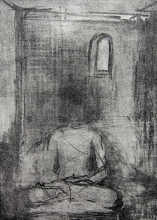
Stages - A poem
When I was in my mother’s belly, they battered her stomach down
(they had wished for a boy and my mother said it was a girl)
When I was a toddler, they tried to kill me
(my father went into a rage the time I knocked over a vase)
When I was a child, they used a crude scissor at my clitoris
(it bled a lot, but the ceremony was successful)
When I turned a teenager, I was gang raped once
(I did complain, but the policeman did not believe me)
When I finally got married, I was raped again.
(this time at least it was within the confines of marriage)
When I had my first child - a girl, I was mildly tortured
(a year later, thank god; I was blessed with a son)
When I had grandchildren, my children would curse me
(my son bellowed about medical costs - thank god I was partly deaf)
Now I am have withered and wrinkled and am ready to go away
(thank you, lord - I am so ready).
Showing posts with label Poem. Show all posts
Friday, February 27, 2009
Friday, February 06, 2009
Friday poem
Days Inn from Linda Smukler's Home In Three Days. Don't Wash.
It was astonishing to walk into room 233 at the Days Inn / the door open for us / to turn on the lights and to close the curtains / to see you first locked into that tan recliner as I sat on the (slightly darker) tan carpet / my back up against the coarse blue bedspread / to smell disinfectant and to drink bitter tea / to feel the minutes of our short afternoon slip away into nervousness and the prints on the off-white walls / then how you lay down on the bed / and I lay next to you / to kiss / no to talk / to get comfortable with each other again / we heard raised voices from somewhere / from the side or overhead / we couldn't figure out where / perhaps a meeting or ten TVs / screaming children or a gathering of boys to watch the football game / these were all possibilities as gradually the voices got so loud I called the front desk to complain / the desk clerk said the voices were coming from below something religious for sure / evangelists or a revival meeting / I told the clerk that I would call her back if we needed to move / then you asked me to turn off the hard lights and I did and lay back down next to you and then on top of you and I finally forgave myself for letting you wait at the train station / I remember you turned me over and how delirious I became at your touch and at a certain point I was overwhelmed with the desire to enter you and all the while beneath us they called on the Lord / they called for salvation / the desk called and out of breath I answered and said we were fine and did not want to move and it was true / the room had become as if lighted by candles and we lay on a sacred bier accompanied by hosannas and hallelujahs / and the chalice of your scent the icon of your face / the idols of your breasts in black lace / the staff of your finger in my ass and my cock in your cunt / our coming joined from below by shouts and applause and the exalted blessings of the possessed
Wednesday, February 04, 2009
I read about Treblinka yesterday – a poem
How many were dragged?
Did all of them hold hands?
Was there innate goodness?
How long is to the other side?
Why do the children last so long?
How many of them saw the truth?
Why do herds behave the way they do?
How many heard a whip lash overhead?
How many people does it take to satisfy?
How many sank tired into the frozen earth?
How many found it a beautiful place to die?
How many indulged in complete surrender?
Would the guards have been someplace else?
How long before they stopped following orders?
If you know, let me know.
Side note: I find German Chancellor Angela Merkel’s open criticism of the Vatican based Christian leader Joseph Alois Ratzinger commendable.
Did all of them hold hands?
Was there innate goodness?
How long is to the other side?
Why do the children last so long?
How many of them saw the truth?
Why do herds behave the way they do?
How many heard a whip lash overhead?
How many people does it take to satisfy?
How many sank tired into the frozen earth?
How many found it a beautiful place to die?
How many indulged in complete surrender?
Would the guards have been someplace else?
How long before they stopped following orders?
If you know, let me know.
Side note: I find German Chancellor Angela Merkel’s open criticism of the Vatican based Christian leader Joseph Alois Ratzinger commendable.
Labels:
Belzec,
death camp,
Majdanek,
Nazis,
Operation Reinhardt,
Poem,
Poetry,
Sobibór,
Treblinka
Tuesday, January 27, 2009
For Better or for Verse
By chance, of course ---- By Wendell Berry
(while attending the annual convocation of cause theorists and bigbangists at the local provincial research university, the mad farmer intercedes from the back row)
“Chance” is a poor word among
the mazes of causes and effects, the last
stand of these all-explainers who,
backed up to the first and final Why,
reply, “By chance, of course!” As if
that tied up ignorance with a ribbon.
In the beginning something by chance
existed that would bang and by chance
it banged, obedient to the by-chance
previously existing laws of existence
and banging, from which the rest proceeds
by logic of cause and effect also
previously existing by chance? Well,
when all that happened who was there?
Did the chance that made the bang then make
the Bomb, and there was no choice, no help?
Prove to me that chance did ever
make a sycamore tree, a yellow-
throated warbler nesting and singing
high up among the white limbs
and the golden leaf-light, and a man
to love the tree, the bird, the song
his life long, and by his love to save
them, so far, from all the machines.
By chance? Prove it, then, and I
by chance will kiss your ass.
From the February 2009 issue of Harpers Magazine.
(while attending the annual convocation of cause theorists and bigbangists at the local provincial research university, the mad farmer intercedes from the back row)
“Chance” is a poor word among
the mazes of causes and effects, the last
stand of these all-explainers who,
backed up to the first and final Why,
reply, “By chance, of course!” As if
that tied up ignorance with a ribbon.
In the beginning something by chance
existed that would bang and by chance
it banged, obedient to the by-chance
previously existing laws of existence
and banging, from which the rest proceeds
by logic of cause and effect also
previously existing by chance? Well,
when all that happened who was there?
Did the chance that made the bang then make
the Bomb, and there was no choice, no help?
Prove to me that chance did ever
make a sycamore tree, a yellow-
throated warbler nesting and singing
high up among the white limbs
and the golden leaf-light, and a man
to love the tree, the bird, the song
his life long, and by his love to save
them, so far, from all the machines.
By chance? Prove it, then, and I
by chance will kiss your ass.
From the February 2009 issue of Harpers Magazine.
Saturday, December 13, 2008
Saturday miscellany...
Aisha in Zimbabwe - a poem
Aisha is mother to her sister, Khadija,
their mother died of AIDS last year.
Aisha has a soft, round face,
lucky for her, she is H.I.V. negative.
She struggles to get drugs for Khadija,
who at 11 years is H.I.V. positive.
Last year, Aisha took her little sister,
(Khadija appears half her actual age)
to Parirenyatwa Hospital,
the nation's largest.
They waited in the vast courtyard,
amidst the hungry and the festering,
a hospital official finally notices them,
he calls them in and with a gravelly voice
tells them that some crucial test results
needed to qualify the little one for
medications were strangely misplaced.
They will need to come back later
and redo the tests once again.
On a later visit, Aisha is told
the machine used for the tests was broken.
A couple of weeks later, the hospital finally
closed. Of course, they were referred to
private doctors. Doctors who had demanded
payment in S.A. rand or U.S. dollars.
The girls could not do this,
they had no money.
Aisha used to escape the sadness
by going to school, two months ago
the teachers at her high school
stopped going to school.
Of her math teacher, Aisha wistfully says
"She didn't bid us farewell, she just left"
Aisha now barters her labor for food,
Khadija is too weak to work.
Last week, Aisha was overjoyed
She was starting a four-day job,
It did not matter that she was
bent over in a field, all day,
readying it for planting corn.
In exchange, she would get two pounds
of flour, a bottle of cooking oil
and clothes. She plans to keep a shirt
and blouse for Khadija. She prays that
Khadija will fit into the standard sizes.
Aisha needs to get her job done soon,
before the rains lash down on the red earth.
The same rains that will drip into
their little room during the
unannounced late monsoon bursts.
The girls pray together every night
they sleep in a tiny, windowless room.
A small room in a small house that
belongs to their mothers father.
A grandfather whose takes his share
of the little food that Aisha brings home.
Aisha also has an uncle living with them.
He is 45 years old. He is too lazy to work
and sometimes steals her cornmeal.
Like other girls, these two have dreams,
Aisha wants to be a doctor,
Khadija, a bank teller.
Aisha wants to be a doctor to help people
like her little sister, shriveling before her.
In her sleep, Khadija dreams… of growing up,
she dreams of having children, she also
dreams of becoming a bank teller and
repaying the unpayabe debts owed to
her older sister, asleep next to her
hugging her little, emaciated frame.
Note: I wrote this poem using lines adapted from a story about the cholera raging in Zimbabwe printed in yesterday's Times. I had attempted a similar 'poem adaption' exercise earlier here.
Photo by Uwe Ommer, a commercial photographer based in Paris.
Aisha is mother to her sister, Khadija,
their mother died of AIDS last year.
Aisha has a soft, round face,
lucky for her, she is H.I.V. negative.
She struggles to get drugs for Khadija,
who at 11 years is H.I.V. positive.
Last year, Aisha took her little sister,
(Khadija appears half her actual age)
to Parirenyatwa Hospital,
the nation's largest.
They waited in the vast courtyard,
amidst the hungry and the festering,
a hospital official finally notices them,
he calls them in and with a gravelly voice
tells them that some crucial test results
needed to qualify the little one for
medications were strangely misplaced.
They will need to come back later
and redo the tests once again.
On a later visit, Aisha is told
the machine used for the tests was broken.
A couple of weeks later, the hospital finally
closed. Of course, they were referred to
private doctors. Doctors who had demanded
payment in S.A. rand or U.S. dollars.
The girls could not do this,
they had no money.
Aisha used to escape the sadness
by going to school, two months ago
the teachers at her high school
stopped going to school.
Of her math teacher, Aisha wistfully says
"She didn't bid us farewell, she just left"
Aisha now barters her labor for food,
Khadija is too weak to work.
Last week, Aisha was overjoyed
She was starting a four-day job,
It did not matter that she was
bent over in a field, all day,
readying it for planting corn.
In exchange, she would get two pounds
of flour, a bottle of cooking oil
and clothes. She plans to keep a shirt
and blouse for Khadija. She prays that
Khadija will fit into the standard sizes.
Aisha needs to get her job done soon,
before the rains lash down on the red earth.
The same rains that will drip into
their little room during the
unannounced late monsoon bursts.
The girls pray together every night
they sleep in a tiny, windowless room.
A small room in a small house that
belongs to their mothers father.
A grandfather whose takes his share
of the little food that Aisha brings home.
Aisha also has an uncle living with them.
He is 45 years old. He is too lazy to work
and sometimes steals her cornmeal.
Like other girls, these two have dreams,
Aisha wants to be a doctor,
Khadija, a bank teller.
Aisha wants to be a doctor to help people
like her little sister, shriveling before her.
In her sleep, Khadija dreams… of growing up,
she dreams of having children, she also
dreams of becoming a bank teller and
repaying the unpayabe debts owed to
her older sister, asleep next to her
hugging her little, emaciated frame.
Note: I wrote this poem using lines adapted from a story about the cholera raging in Zimbabwe printed in yesterday's Times. I had attempted a similar 'poem adaption' exercise earlier here.
Sunday, October 26, 2008
Photo/Poem

God by Sandra Beasley
My god is a short god. My god wears jeans.
When he swims, he has a lazy breaststroke.
When he gardens, he uses his bare hands.
My god watches reruns of late night talk shows.
My god could levitate but prefers the stairs
and if available, the fireman’s pole. My god
loves bacon. My god’s afraid of sharks.
My god thinks the only way to define a country
is with water. My god thinks eventually,
we will come around on ear candling. My god
spits chaw. My god never flosses.
My god reads Proust. My god never
graduated. He smiles when astronauts reach
zero gravity and say My god, My god.
My god is knitting one very big sweater.
My god is teaching his terrier to beg.
My god didn’t mean for icebergs. My god
didn’t mean for machetes. Sometimes
a sparrow lands in the hands of my god
and he cups it, gently. It never wants to leave
and so, it never notices that even if it tried
my god has too good a grip, my god, my god.
Sunday, October 19, 2008
Poem/Photo
Rider by Mark Irwin
As I carried my mother from the hospital bed
across the room toward the chair by the window,
she played with my gold watch as if it were a toy,
flipping the strap up and down, then singing Giddyup,
Giddyup, but as I looked at her she did not smile
so I nodded my head, snorted, then put a pencil
in my mouth, as bit, and cantered about the room
till I was out of breath, puffing, and she patted me, saying,
Good boy, Good boy, so I pawed the carpet, slobbering a little
like her, as she waved and I nodded my mane
until this was how we said goodbye one spring
while the sun shrank to a white-hot bb among a thousand
others receding in the jeweled, black sky as the rivers
galloped away with her breath through the dark green land.
-- From the current issue of Georgia Review
As I carried my mother from the hospital bed
across the room toward the chair by the window,
she played with my gold watch as if it were a toy,
flipping the strap up and down, then singing Giddyup,
Giddyup, but as I looked at her she did not smile
so I nodded my head, snorted, then put a pencil
in my mouth, as bit, and cantered about the room
till I was out of breath, puffing, and she patted me, saying,
Good boy, Good boy, so I pawed the carpet, slobbering a little
like her, as she waved and I nodded my mane
until this was how we said goodbye one spring
while the sun shrank to a white-hot bb among a thousand
others receding in the jeweled, black sky as the rivers
galloped away with her breath through the dark green land.
-- From the current issue of Georgia Review
Labels:
Black and White photography,
euthanesia,
Georgia Review,
Photography,
Poem,
Poetry
Wednesday, October 15, 2008
Poem/Photo
You'er Alone the Swift Cried
You'er alone the swift cried
wringing out a wonderful dive
on the azure coast
remember it for yourself
like a cork shot
from a champagne bottle
you're someone important
the violin sang
someone like me
only bady tuned
you're silent
and dry
whispered the letter
the paper
you have to beware
of fireworks.
--- Translated from the Polish by Wayne Miller and Katarzyna Komorowska. From Volume 25 Number 1, 2005 edition of the Pleiades magazine
You'er alone the swift cried
wringing out a wonderful dive
on the azure coast
remember it for yourself
like a cork shot
from a champagne bottle
you're someone important
the violin sang
someone like me
only bady tuned
you're silent
and dry
whispered the letter
the paper
you have to beware
of fireworks.
--- Translated from the Polish by Wayne Miller and Katarzyna Komorowska. From Volume 25 Number 1, 2005 edition of the Pleiades magazine
Wednesday, September 03, 2008
Poem
Here the Birds’ Journey Ends by Mahmoud Darwish (1941 - 2008)
Here the birds’ journey ends, our journey, the journey of words,
and after us there will be a horizon for the new birds.
We are the ones who forge the sky’s copper, the sky that will carve roads
after us and make amends with our names above the distant cloud slopes.
Soon we will descend the widow’s descent in the memory fields
and raise our tent to the final winds: blow, for the poem to live, and blow
on the poem’s road. After us, the plants will grow and grow
over roads only we have walked and our obstinate steps inaugurated.
And we will etch on the final rocks, “Long live life, long live life,”
and fall into ourselves. And after us there’ll be a horizon for the new birds.
(Published in the Aug 25 08' edition of the New Yorker and translated, from the Arabic, by Fady Joudah.)
Here the birds’ journey ends, our journey, the journey of words,
and after us there will be a horizon for the new birds.
We are the ones who forge the sky’s copper, the sky that will carve roads
after us and make amends with our names above the distant cloud slopes.
Soon we will descend the widow’s descent in the memory fields
and raise our tent to the final winds: blow, for the poem to live, and blow
on the poem’s road. After us, the plants will grow and grow
over roads only we have walked and our obstinate steps inaugurated.
And we will etch on the final rocks, “Long live life, long live life,”
and fall into ourselves. And after us there’ll be a horizon for the new birds.
(Published in the Aug 25 08' edition of the New Yorker and translated, from the Arabic, by Fady Joudah.)
Thursday, August 14, 2008
Poem
FLEEING THE WAR ZONE
In the streets,
the blood spurts
from myriad deaths,
some avenged, some not.
Whenever they can, uncaring
scythes fill in for rusty daggers,
slicing skin to the unfeeling bone.
Inside, the scullions butcher the young
while petty clan fights dominate the lonesome
couple still squabbling over trifling fumbles. The
unclear whispers of the coming destruction are
eerily etched in the minds of the wary as
substantial legacies crumble with ease
and the whispering back benchers
deal hazy rumors while belching
rum at the local hole amidst
decorated war whores
belittling innocent
children.
In the streets,
the blood spurts
from myriad deaths,
some avenged, some not.
Whenever they can, uncaring
scythes fill in for rusty daggers,
slicing skin to the unfeeling bone.
Inside, the scullions butcher the young
while petty clan fights dominate the lonesome
couple still squabbling over trifling fumbles. The
unclear whispers of the coming destruction are
eerily etched in the minds of the wary as
substantial legacies crumble with ease
and the whispering back benchers
deal hazy rumors while belching
rum at the local hole amidst
decorated war whores
belittling innocent
children.
Labels:
Poem,
Poetry,
Russia Georgia war,
the gods of war
Tuesday, July 29, 2008
Friday, July 11, 2008
Bedtime stories
Most nights, I help our elder son settle into bed.
Oftentimes, it is a story, a made up riddle or just
silly histrionics employed to get him to sleep.
Old wine in new (I guess)… On most days, it is fun
mixed with a sense of duty; on others, those rare
days, this little ritual transforms into a chore.
A chore when other pressing exigencies filter
and clog the event horizon of my mind and
fill it with myriad competing thoughts. Sometimes
it’s ideas for a new painting, other times
work schedules that need to met on morrow,
sometimes, as plain as a domestic project.
On such days, I tell him gently (but firmly),
'be back in five minutes', and he needs to use
the time to fall asleep. On some nights
(that I try this ruse), it works; while on
others, I tiptoe back to see our wide eyed
little one awaiting my return eagerly.
Yesterday was one such night – a ‘chore’ night.
This time, I happened to remember that I
had to turn off the garden hose. This was
triggered just as soon as the fox managed
to reach over the gibbous moon and grab the
unsuspecting dinosaur by its callused tail.
Before my son enquired on the dinosaurs plight,
I told him I need to attend to something –
(for some reason it sounded phony). As soon as
he hears this, our son slowly turns to me and opens
his mouth (for what I am expecting to be an abject
remonstrance against my imminent disappearance).
Expecting the worst, I quickly admonish him to go
to sleep (soon enough) as I have work to do and he
cannot carry on with this forever. In clear, measured
words he tells me “Be careful, Acha’. Quizzically,
I looked at him and asked him why? Why should I
be careful walking out the home to turn off the hose.
He tells me that there are mosquitoes outside in
the night and he did not want them to bite me.
Oftentimes, it is a story, a made up riddle or just
silly histrionics employed to get him to sleep.
Old wine in new (I guess)… On most days, it is fun
mixed with a sense of duty; on others, those rare
days, this little ritual transforms into a chore.
A chore when other pressing exigencies filter
and clog the event horizon of my mind and
fill it with myriad competing thoughts. Sometimes
it’s ideas for a new painting, other times
work schedules that need to met on morrow,
sometimes, as plain as a domestic project.
On such days, I tell him gently (but firmly),
'be back in five minutes', and he needs to use
the time to fall asleep. On some nights
(that I try this ruse), it works; while on
others, I tiptoe back to see our wide eyed
little one awaiting my return eagerly.
Yesterday was one such night – a ‘chore’ night.
This time, I happened to remember that I
had to turn off the garden hose. This was
triggered just as soon as the fox managed
to reach over the gibbous moon and grab the
unsuspecting dinosaur by its callused tail.
Before my son enquired on the dinosaurs plight,
I told him I need to attend to something –
(for some reason it sounded phony). As soon as
he hears this, our son slowly turns to me and opens
his mouth (for what I am expecting to be an abject
remonstrance against my imminent disappearance).
Expecting the worst, I quickly admonish him to go
to sleep (soon enough) as I have work to do and he
cannot carry on with this forever. In clear, measured
words he tells me “Be careful, Acha’. Quizzically,
I looked at him and asked him why? Why should I
be careful walking out the home to turn off the hose.
He tells me that there are mosquitoes outside in
the night and he did not want them to bite me.
Saturday, April 19, 2008
Picture/Poem
I do not know much about gods; but I think that the river
Is a strong brown god—sullen, untamed and intractable,
Patient to some degree, at first recognised as a frontier;
Useful, untrustworthy, as a conveyor of commerce;
Then only a problem confronting the builder of bridges.
The problem once solved, the brown god is almost forgotten
By the dwellers in cities—ever, however, implacable.
Keeping his seasons and rages, destroyer, reminder
Of what men choose to forget. Unhonoured, unpropitiated
By worshippers of the machine, but waiting, watching and waiting.
His rhythm was present in the nursery bedroom,
In the rank ailanthus of the April dooryard,
In the smell of grapes on the autumn table,
And the evening circle in the winter gaslight.
- From The Dry Salvages (No. 3 of 'Four Quartets') by T.S. Eliot
Is a strong brown god—sullen, untamed and intractable,
Patient to some degree, at first recognised as a frontier;
Useful, untrustworthy, as a conveyor of commerce;
Then only a problem confronting the builder of bridges.
The problem once solved, the brown god is almost forgotten
By the dwellers in cities—ever, however, implacable.
Keeping his seasons and rages, destroyer, reminder
Of what men choose to forget. Unhonoured, unpropitiated
By worshippers of the machine, but waiting, watching and waiting.
His rhythm was present in the nursery bedroom,
In the rank ailanthus of the April dooryard,
In the smell of grapes on the autumn table,
And the evening circle in the winter gaslight.
- From The Dry Salvages (No. 3 of 'Four Quartets') by T.S. Eliot
Saturday, February 23, 2008
Photo/Poem
Snowstorm - a poem
Evening after work,
Radio blares ‘storm advisory for the northeast’.
I trundle along slowly,
thinking and planning that warm cup.
The ice slivers slide easily over
the oily veneer on the windshield.
Remnants of washer fluid,
sprayed unceremoniously
banish the pristine flakes.
The salt sprayer truck makes a sudden sharp turn
in my direction. Corrects itself,
and then passes on.
I swerve.
Avoid.
The washer fluid
still clears the pristine flakes...

Evening after work,
Radio blares ‘storm advisory for the northeast’.
I trundle along slowly,
thinking and planning that warm cup.
The ice slivers slide easily over
the oily veneer on the windshield.
Remnants of washer fluid,
sprayed unceremoniously
banish the pristine flakes.
The salt sprayer truck makes a sudden sharp turn
in my direction. Corrects itself,
and then passes on.
I swerve.
Avoid.
The washer fluid
still clears the pristine flakes...
Friday, February 15, 2008
A picture from last year and a poem from this.
Valentine's evening - a poem.Yesterday, I had left early
from work. The usual routine, the usual commute.
the ferry to Staten Island, train after and then drive home.
I read the Times,
hoping to hone
a newly found liberal jingosim.
Maybe it was the elections.
Two women sat adjacent to me,
one of them familiar,
a commute friend, as some would characterize,
good for the commute,
strangers at the car park.
She was thirtysh and full of make up.
The other, a dark haired older woman
sat eating her gram crackers.
The plastic pouch dangling
from one hand and
a tiny vial of nail protector in the other.
We got talking, I rarely do
but this was an unexpected early trip home.
I was feeling good.
My commute friend told me how she was going home
to her husband
then planning on validating Valentines at Red Lobsters.
She said ‘celebrate’ Valentine’s, but it seemed more like validation.
She had two children, one one and the other three years old.
They were planning on taking them along to dinner.
She said it would be a riot,
trying to get them to sit still
while they fight with the lobster,
bib, nutcracker, white meat and all.
She showed us pictures of her children,
beautiful, Anglo Saxon to the hilt.
The dark haired lady launched into her own story,
said she also has two children.
12 and 22.
Said she had the first when she was 13.
I said going out for Valentine’s should be easy for you,
the children will mind themselves.
She did not say anything to that.
I make for poor small talk...
She said that last Valentine’s,
her husband had pink rose petals
all over the floor
when she got home.
It made her cry.
She showed us pictures of her husband,
and a couple of grown up children.
The stereotypical middle class suburban black family.
I thought.
I did not really carry pictures in my wallet.
I made a mental note to do so,
not too sure why I did that.
Somehow I felt, all of this
was a bit too melodramatic.
I did not believe in a Valentine’s day
and was not really expecting to deliver Valentine plans
with a couple of women on the way home.
I sat on though, listening politely.
The ferry was nearing Staten Island and
with a final bit of polite banter
I asked
the lady with the dark hair,
her plans for this day.
She said that her husband died six months back,
he was a veteran of the Vietnam wars,
20 years her senior.
Leukemia it was.
It was lonely,
she said.
Especially on days like these.
She was planning on going
to the Calverton National Cemetery on Long Island
the next day.
She had taken the day off.
She said, she did get roses from Costco.
Red ones.
Wednesday, January 09, 2008
Meanwhile... sunspotting continues...
The Star Market by Marie Howe
The people Jesus loved were shopping at the Star Market yesterday.
An old lead-colored man standing next to me at the checkout
breathed so heavily I had to step back a few steps.
Even after his bags were packed he still stood, breathing hard and
hawking into his hand. The feeble, the lame, I could hardly look at them:
shuffling through the aisles, they smelled of decay, as if the Star Market
had declared a day off for the able-bodied, and I had wandered in
with the rest of them—sour milk, bad meat—
looking for cereal and spring water.
Jesus must have been a saint, I said to myself, looking for my lost car
in the parking lot later, stumbling among the people who would have
been lowered into rooms by ropes, who would have crept
out of caves or crawled from the corners of public baths on their hands
and knees begging for mercy.
If I touch only the hem of his garment, one woman thought,
could I bear the look on his face when he wheels around?
Published in the Jan 14, 08' issue of the New Yorker magazine.
Friday, October 19, 2007
Weekend rhythm
The helmet and the dandelion by Eduardas Mieželaitis (1919 – 1997)
Near a rotted old stump
Which the spring water washes
An old helmet rusts, gaunt,
And upon it, audacious,
Like a bold mountaineer
Climbs a wormlet.
Nearby A small bird for a nest
Scans the beach with its eye.
The last ice-splinters melt
And are turned into springs.
But what flower in the grass
To the old helmet clings?
From beneath its steel rim
Peers a frail dandelion.
Stroke its head with your hand –
It’s alive – undying...
Near a rotted old stump
Which the spring water washes
An old helmet rusts, gaunt,
And upon it, audacious,
Like a bold mountaineer
Climbs a wormlet.
Nearby A small bird for a nest
Scans the beach with its eye.
The last ice-splinters melt
And are turned into springs.
But what flower in the grass
To the old helmet clings?
From beneath its steel rim
Peers a frail dandelion.
Stroke its head with your hand –
It’s alive – undying...
Sunday, October 07, 2007
Weekend
we drove to Princeton yesterday,
on back roads,
slow and winding
with Kerouac on my mind.
he had not said,
that everybody was trying
to get into the act,
but that everybody were in it.
fall classes had begun,
my son chases after the squirrel,
is dismayed that it nimbly climbs the tree
while he cannot.
the ivy is green on the moss,
the walls hold promises,
optimism is fresh
as the students chase after.
we saw washed out widows
who go off to die,
an alumni had captured them
on film at the museum.
the squirrel, my son
students, trees
the moss, widows
the road home.
Yes, Kerouac was right,
everybody was not trying
to get into the act,
everybody is in it.
on back roads,
slow and winding
with Kerouac on my mind.
he had not said,
that everybody was trying
to get into the act,
but that everybody were in it.
fall classes had begun,
my son chases after the squirrel,
is dismayed that it nimbly climbs the tree
while he cannot.
the ivy is green on the moss,
the walls hold promises,
optimism is fresh
as the students chase after.
we saw washed out widows
who go off to die,
an alumni had captured them
on film at the museum.
the squirrel, my son
students, trees
the moss, widows
the road home.
Yes, Kerouac was right,
everybody was not trying
to get into the act,
everybody is in it.
'Gnarled', Sunil, Digital Photograph
Tuesday, July 10, 2007
Hands
by Jean Sprackland
She peels cod fillets off the slab,
dips them in batter, drops them
one by one into the storm of hot fat.
I watch her scrubbed hands,
elegant at the work,
and think of the hands of the midwife
stroking wet hair from my face as I sobbed and cursed,
calling me sweetheart and wheeling in more gas,
hauling out at last my slippery fish of a son.
He was all silence and milky blue. She took him away
and brought him back breathing,
wrapped in a white sheet. By then
I loved her like my own mother.
I stand here speechless in the steam and banter,
as she makes hospital corners of my hot paper parcel.
She peels cod fillets off the slab,
dips them in batter, drops them
one by one into the storm of hot fat.
I watch her scrubbed hands,
elegant at the work,
and think of the hands of the midwife
stroking wet hair from my face as I sobbed and cursed,
calling me sweetheart and wheeling in more gas,
hauling out at last my slippery fish of a son.
He was all silence and milky blue. She took him away
and brought him back breathing,
wrapped in a white sheet. By then
I loved her like my own mother.
I stand here speechless in the steam and banter,
as she makes hospital corners of my hot paper parcel.

Leonardo da Vinci, 'Study of hands', circa 1474, Silverpoint and white highlights on pink prepared paper, 214 x 150 mm, Royal Library, Windsor
Subscribe to:
Posts (Atom)