Wednesday, April 11, 2007

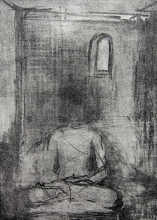
Painting post: Sandhya Ragam


Excerpted from the American Association of Homes and Services for the Aging (aahsa)

- By 2026, the population of Americans ages 65 and older will double to 71.5 million and about 12 million older Americans will need long-term care.
- In the next 8 years, the number of Americans ages 85 and older will increase by 40%.
- Among people turning 65 today, 69 percent will need some form of long-term care
- There are more than 1.9 million nursing home residents in the United States. This represents less than 6% of the total number of Americans over the age of 65. It suggests that the vast majority of elderly will most likely spend their final years in their community residence.


I did not want to do a Debbie, but sometimes statistics wake us up to reality…

I am sure that I will see a lot of colleagues in my generation go through the assisted living / nursing home circuit. Sometimes I think that the term assisted living makes fun of old people the same way some refer euphemistically to short people as vertically challenged...

Luckily the oldest member in our family does not need to go through the assisted living route. Various members of our extended family take turns looking after her. She may be the last of a breed that have the privilege to be taken care of by their families. I painted this from a color photograph that I took of her after she had kindly agreed to pose for me.

Title: “Sandhya Ragam”*
Size: 2.5 ft X 2 ft (30 inches X 24 inches)
Medium: Oil on canvas

*'Sandhya Ragam' literally translated is a Malayalam word for evening melody.

Tuesday, April 10, 2007

2007 Science and Engineering Visualization Challenge:


About a month and a half remain before time runs out (May 31st 2007) for submissions to the 2007 Science and Engineering Visualization Challenge jointly hosted by the National Science Foundation (NSF) and journal Science.

From the blurb on their site:
You can do science without graphics. But it’s very difficult to communicate it in the absence of pictures. Indeed, some insights can only be made widely comprehensible as images. How many people would have heard of fractal geometry or the double helix or solar flares or synaptic morphology or the cosmic microwave background, if they had been described solely in words? Judges appointed by the NSF and the journal Science will select winners in each of five categories: photographs, illustrations, informational graphics, interactive media and non-interactive media. The winners will be published in a special section of the Sept. 28, 2007 issue of the journal Science and Science Online and on the NSF Web site.

I really enjoyed their previous years submissions (2006 here and 2005 here)

Image above: 'The Synapse Revealed'
Credit: Graham Johnson, Graham Johnson Medical Media (I very much liked his portfolio)
Description: Deep inside the brain, a neuron prepares to transmit a signal to its target. To capture that expectant, fleeting moment with painstaking detail, science illustrator Graham Johnson based his elegant, highly accurate drawing on ultra-thin micrographs of sequential brain slices. The brain contains billions of neurons, whose network of chemical messages form the basis of all thought, movement and behavior. Johnson’s illustration tells the story of one such signal, a synaptic millisecond that is both eye-catching and accurate in scale and shape.

Sunday, April 08, 2007

Grim visions?? - the world 30 years from now:


An interesting report worth a close read was released last week by England's Defense Ministry that talks about the world in about 30 years time from now...

Among the predictions:

-By 2035, an implantable "information chip" could be wired directly to the brain. A growing pervasiveness of communications technology will enable states, terrorists or criminals, to mobilize "flashmobs", with an ability to concentrate forces quickly in a small area.

-An electromagnetic pulse will probably become operational by 2035 able to destroy all communications systems in a selected area or be used against a "world city" such as an international business service hub

-The middle classes could become a revolutionary class, taking the role envisaged for the proletariat by Marx.
"The world's middle classes might unite, using access to knowledge, resources and skills to shape transnational processes in their own class interest". Marxism could also be revived, it says, because of global inequality. An increased trend towards moral relativism and pragmatic values will encourage people to seek the "sanctuary provided by more rigid belief systems, including religious orthodoxy and doctrinaire political ideologies, such as popularizm and Marxism".

-By 2010 more than 50% of the world's population will be living in urban rather than rural environments, leading to social deprivation and "new instability risks", and the growth of shanty towns. By 2035, that figure will rise to 60%.

-The global population is likely to grow to 8.5 billion in 2035, with less developed countries accounting for 98% of that.

-The massive population growth will mean the Middle East, and to a lesser extent north Africa, will remain highly unstable

-Tension between the Islamic world and the west will remain, and may increasingly be targeted at China "whose new-found materialism, economic vibrancy, and institutionalized atheism, will be an anathema to orthodox Islam".

-Iran will steadily grow in economic and demographic strength and its energy reserves and geographic location will give it substantial strategic leverage to turn "into a vibrant democracy".

-Acts of extreme violence, supported by elements within Islamist states, with media exploitation to maximize the impact of the "theatre of violence" will persist

-Climate change could lead to a reduction in north Atlantic salinity by increasing the freshwater runoff from the Arctic. "The drop in temperature might exceed that of the miniature ice age of the 17th and 18th centuries."

It also talks about the growing economic importance of India and China, the militarization of space, and even what it calls "declining news quality" with the rise of "internet-enabled, citizen-journalists" and pressure to release stories "at the expense of facts".
Yes, the Marxism and the Iran thing caught me a bit by surprise... Climate if not added is sacrilege, terrorist, population and violence related blurbs are fairly easily predicted. I liked the one about the chip in the brain bit...

Friday, April 06, 2007

Posts on Art and Perception (A&P):
My latest posts on A&P are here and here. One of them deals with the increased role that museums and curators could play engendering societal change whilst the other explores earthly topics like framing artworks.
Left: Sculpture by a contemporary artist: Title: ‘Domination’ Materials: Railway track, wax apple, plastic crocodile and glue.
PS: I believe this was created as a parody on the apparent
meaninglessness of some pieces of current art.

Tuesday, April 03, 2007

Rationalizing abrupt change and Chautauquas:
A friend asked me recently on what my favorite book was and I remember telling him that among others, a book that was one of my favorites but least understood was the one by Douglas Hofstadter (a physics Ph.D who won the 1980 Pulitzer Prize), the author of Gödel, Escher, Bach: an Eternal Golden Braid.

From a Time magazine article:
The book was called ‘Gödel, Escher, Bach: An Eternal Golden Braid’ -- Gödel being the Austrian mathematician Kurt Gödel; Escher, the fantastical Dutch artist M.C. Escher; and Bach, the Baroque composer Johann Sebastian Bach. It was a very odd book, a rattlebag of art, mathematics, music, philosophy, symbolic logic, computers, genetics, paradoxes, palindromes and Zen koans among many, many other things.

Hofstadter's unique intellectual makeup is rooted in his childhood. His father was Robert Hofstadter, who won the Nobel Prize for Physics in 1961. Hofstadter might have grown up to be a straight-up physicist like his dad if it hadn't been for his younger sister Molly. When Hofstadter was 12, it became clear that she had grave neurological problems--she never learned to speak or understand language. "When Molly's unfortunate plight became apparent, it all started getting connected to the physical world. It really made you think about the brain and the self, and how the brain determines who the person is." says Hofstadter


I also know just from reading about Douglas and the thoughts expressed in this book that he is a hard nosed realist/pragmatist with his feet firmly in the ground as regards the validity and veracity of the truth as expressed in the formalisms set out in music theory, art and mathematics. Imagine my surprise when I read that after his wife's death (Carol Hofstadter) he now believes that she continues to live on in him, with her mind persisting in his brain like software running on his hardware. I was equally shocked to read that Robert M. Pirsig author of Zen and the Art of Motorcycle Maintenance, (that cult classic that spawned so many metaphysical journeys into the definition of the word ‘quality’) recently came to believe his murdered son was reincarnated and lives as his daughter who was born later.

It is surprising to think that some of the cornerstones (pragmatism, reason, logic) by which these people live their lives are suddenly turned 180 degrees around when intense personal loss affects them. On a similar vein, people who are deeply religious have been known to eschew their gods when they lose something that is deeply deeply personal. It is almost as if people believe in a doctrine as long as the good times continue. At the instant the favorable times end, they tend to rationalize the abrupt change with a complete rearrangement of their most basic tenets. All this seems inexplicable now, but I am sure that brian research of the future will have an answer, but for now it does remain fascinating...

Hofstadter sees in Gödel's work a structural parallel to the mystery that is the human mind. The brain, which is merely a squishy agglomeration of madly firing neurons, shouldn't by rights be able to think--it shouldn't be able to wake up, twist around, become aware of itself, and in doing so become an "I," but it does. Just like Gödel's mathematics, the mind is a strange, self-referential loop--it's a mirage, Hofstadter writes, but "a very peculiar kind of mirage ... a mirage that perceived itself, and of course it didn't believe that it perceived a mirage, but no matter--it still was a mirage."

Hofstadter has written a new book (out last week titled "I am a strange loop") that expands upon the theory of the self and the mind and also the contributions that Carol (his late wife) lent him emotionally. Time magazine called it not just a work of rigorous thinking but also an extraordinary tribute to the memory of romantic love.
Sobering sign of the times:
Last week I read a pretty sobering essay in the New York Times that neatly laid out the fact that for the first time, the income earned by the top 300 thousand in our country was equal to the income earned by the bottom 150 million.

Tuesday, March 27, 2007

Painting post of a tangata whenua:


Thomas Hobbes, the English philosopher referred to them variously as ‘savages’, ‘aboriginal’ and ‘primitives’. A prevailing Hobbesian view tended to believe that the early colonizers of new worlds had a duty to civilize and modernize the indigenes or the local populace that they encountered. This story of conquest, subjugation and partial recognition has been repeated multiple times around the world. The story rings true from the Tuaregs of West Africa to the Inuit of North America to the Ādivāsīs of India to the Chukchi of the Arctic (among others).
This painting that I completed of an unknown indigenous person represents just that - the product of an environment that partly recognizes them, yet keeps on the fringes in settlements and reservations designed so that the ‘indigenous’ cause minimal disruptions to our daily lives.

Title: ‘Tangata whenua’
Size: 4 feet high X 3 feet wide
Medium: Oil on canvas

Tangata whenua is a Māori word for original people belonging to a place, local people, hosts

Saturday, March 24, 2007

Posts on Art and Perception (A&P):
My previous posts on A&P are here and here. Both were really digressions on strong symbology that we are confronted with in our daily lives...

Thursday, March 22, 2007

Sign of the times...?
If a 250 pound off-duty male police officer savagely beats up a frail female bartender publicly for not serving him because he was too drunk, we can only imagine what a person like that would do to people behind closed doors... I was shocked on reading this...
Dr. Kinga Araya - Performance artist:

Oftentimes art tries to send a message through shocking people visually. Performance art is one that is august in this category. Dr. Kinga Araya - a Polish born artist currently doing a post-doctoral fellowship at the University of Pennsylvania in Philadelphia opened her new exhibition titled Paroxysms, at Art-Image in La Maison de la culture de Gatineau as part of the National Arts Centre's wide-ranging Quebec Scene festival.
The photographs are a little painful to watch (and to make I suppose)..

She seems to have photographed herself in strange positions in her apartment, hanging from a door, worming her way inside a kitchen cabinet and other like impressions..
The images are powerful and at the same time open to interpretations of abuse, discomfort in domestic roles or even the feeling of being left alone in a foreign country. You could view more of them and a collection of her other photographs here...

I have lifted one of the images from her website (the images actually come in diptychs with her and without her...)

I think her photographs are very interesting and she has quite an expansive repertoire...

Wednesday, March 21, 2007

Space exploration - Off topic - but exciting:

Having worked as a scientist at the Indian Space Research Organization for about four years, I know a little bit about the difficulty when it comes to launching satellites into space (let alone get a rocket to fly properly). It is with a mixture of trepidation and awe that I now follow the adventures of a rocket launching company SpaceX (a small one founded by the previous owner of Internet startup Paypal) in putting their rockets into space. Yesterday one of their rockets lifted off from the Kwajalein Atoll in the Pacific Ocean’s Marshall Islands and fell a bit short of its mission when the launch had to be aborted about 186 miles above the earth...

"The second test launch of Falcon 1 took place today at 6:10 pm California time. The launch was not perfect, but certainly pretty good. Given that the primary objectives were demonstrating responsive launch and gathering test data in advance of our first operational satellite launch later this year, the outcome was great. Operationally responsive (ie fast) launch has become an increasingly important national security objective, so demonstrating rapid loading of propellants and launch in less than an hour, as well as a rapid recycle following the first engine ignition are major accomplishments."

It is nevertheless a story of great courage and foresight that the founders of this company display everyday. Read more about their travails and future travels here. I am sure our children will live in a world where spaceflight will be akin to taking a transatlantic flight, but I hope fledging steps like the ones above will be remembered…

Saturday, March 17, 2007

Painting post:

Title: 'Odi Profanum Vulgus'
Size: 4 feet high X 3 feet wide
Medium: Oil on canvas

This painting is a comment on the process of ivory tower based decision making in vogue in our country... I completed this last night.

Thursday, March 15, 2007

Chuck Close interview:
Chuck Close, one of my favorite living artists talked to Charlie Rose on PBS a couple of nights back and I had to post the link to the video. It is fascinating and it teaches a lot - not just about painting, but his overall philosophy itself. Highly recommended and a classic...
Link to the video here (if for some reason you do not get it there, it is on Charlie Roses' website).

Wednesday, March 14, 2007

Keys to detecting autism - important research areas:

Consider the following statistics from the Autism Society of America about the prevalence of autism in our society:

-Occurs once in 150 births
-Affects 1 to 1.5 million Americans
-During the 1990's U.S. population increase by 13% where cases of autism increased by 172%
-$90 billion annual cost
-90% of costs are in adult services
-Cost of lifelong care can be reduced by 2/3 with early diagnosis and intervention
-In 10 years, the annual cost will be $200-400 billion

I had been working on a ‘autism research list’ sometime back using resources on the internet and have summarized here research areas that require a high degree of innovation (and which bear chances for failure) here. Bear in mind that some of these are of such importance that it would warrant repeated attempts to achieve goals of treating autism effectively.

Over the next 1 - 3 years:
1. Development of biomarkers (e.g. blood tests that produce a gene expression assay of specific marker molecules that could tell us if the individual shows a proclivity to show autistic traits later in her/his life) to provide the biological characterization of autism
2. Develop repeated randomized and controlled studies that document the efficiencies gained out of pharmacological, behavioral and other treatments that target symptoms associated with autism (what works and what does not)

Over the next 4 - 6 years:
1. Studies investigating the benefit of specific treatments and factors that will help explain why certain treatments work for some individuals with autism and not for others.
2. Identification of genes most susceptible to characteristics of autism including the development of animal models of autism (After specific genes are determined that conclusively tell us the individuals susceptibility to autism, researchers can then study the expression of these genes to determine how these genes work at various levels to “turn on” symptoms of autism)
3. Community based studies to identify environmental factors (e.g. viruses, medications, lifestyle factors, environmental chemicals) that contribute to the development of autism and their associated developmental windows identified. This should include studies of the specific mechanisms by which environmental factors work to contribute to specific neurodevelopment difficulties

Long term (7 - 10 years)
1. Development of criteria and methods to improve the number of young children with autism that develop meaningful, functional speech by the time of entry into elementary school.
2. Genetic and non-genetic causes of autism and their interactions identified (genes that increase vulnerability to autism will need to be identified, and environmental factors will need to be determined, along with findings that indicate the increased risk and mechanisms of each of these identified determinants.)
3. Molecular neurobiology and neurochemistry research that will help inform scientists about brain molecules that may be appropriate targets for drug therapies (this will include multi disciplinary research into involving other research areas like targeted drug delivery and disrupted neuron network identification using techniques like diffusion tensor imaging).

Of most importance, if there was some magic bullet by which we could detect signs of impending autism in our children (specifically in the one to three year olds), it would mean a whole lot to compensating for the disabilities that are manifested later in life. This can be very effectively done by taking advantage of the growing brain’s plasticity. It is very well known that neurological insults suffered during very early years can virtually be erased if the insult occurs during early formative years of age one to three. Researchers like David Amaral Ph.D at the U.C. Davis's Medical Investigation of Neurodevelopment Disorders Institute are doing precisely some of these things. Dr. Amaral seems to think that not all individuals who have autism are 'doomed at birth' (as is commonly believed), in fact he believes that certain hidden vulnerabilities (like an abnormal gene) could trigger the disorder due to specific environmental occurrences that the child must have been subjected to earlier.

Read about some of his research here and here and here.

Friday, March 09, 2007

Post on Art and Perception:
I got some very interesting feedback on my recent contribution to Art and Perception..
Here is a link...

Tuesday, March 06, 2007

Painting post: Exploitation in Rwanda


Statistics are sobering but none caught my attention more so than when I ran into a website called the Sisters of Rwanda here (http://sistersofrwanda.org/). This is an NGO run out of Rwanda by Jared N Miller (a partner in The Incubator Group, a private equity firm out of Nashville) and Joseph Ayienga (Pastor from Kenya).
The NGO is actively involved in helping prostitutes (former and current) on the streets of Kigali, Rwanda lead better lives by teaching them about better opportunities and slowly but surely convincing them to stay off the streets.

The numbers that caught my eye were the results of this group interviewing random samplings of women in and around Kigali. Some averages taken from interviewing groups of 50 women were as follows: (from their website)

-5 Men per day
-7 Days per week
-3 Weeks off per year
-A condom was used less than half of the time
-If a man pays 5,000 RWF ($9.00 USD) he doesn’t have to use a condom. If a man pays 1,000 RWF – 3,000 RWF ($1.80 USD - $5.40 USD), the girl has some bargaining power and can get them to use one about half the time. The more the man pays, the less likely he is to use a condom.

They had images of women on their site that bespoke a kind of suffering that I could hardly imagine and I decided to paint one of them. This is what I have created and I decided to call it "5 Men a day 7 days a week 49 weeks a year". The painting is 3 feet wide and 4 feet high.


Thursday, March 01, 2007

Ancient Art principles: Redux

I was recently reading a book by neuroscientist V.S. Ramachandran where he argues that Chola bronzes from ancient India were mocked at by the Victorian Englishmen as artistically primitive and unrealistic. They were unrealistic in the sense that the waist was too narrow, hips too wide and their breasts too large. They in fact decided that art like this was not art at all and labeled it primitive art. Professor Ramachandran goes on to say that some of the Victorians labeled the art thus based on prevailing standards of Western art (some of which was rooted in realism and stemmed from classical Greek and Renaissance art).

Today most people will readily tell you that most expressions of art is not really about realism and is not about creating a replica about what is out there in the world - rather it is a figurative way of communicating message(s) in an appropriate way to the viewer. He makes the assertion (a bit specious in my view) that the ancient Cholas really knew about this dictum long ago and that was the reason why they did not create ‘realistic’ statues but accentuated the hips and breasts of the goddesses such that they could abstractly communicate beauty of the female form (one among the many such subjects they tackled) to the common people.

On a related note, a finding by scientists at Harvard and Princeton shows that intricate decorative tile-work found in medieval architecture across the Islamic world appears to exhibit advanced decagonal quasicrystal geometry (mathematical concepts discovered by mathematicians and physicists just 30 years back). (Reported in the current issue of the journal Science)
“In their journal report, Mr. Lu and Dr. Steinhardt concluded that by the 15th century, Islamic designers and artisans had developed techniques to construct nearly perfect quasi-crystalline Penrose patterns, five centuries before discovery in the West. Some of the most complex patterns, called “girih” in Persian, consist of sets of contiguous polygons fitted together with little distortion and no gaps. Running through each polygon (a decagon, pentagon, diamond, bowtie or hexagon) is a decorative line. Mr. Lu found that the interlocking tiles were arranged in predictable ways to create a pattern that never repeats — that is, quasi crystals.” - excerpt from the New York Times (02/27)

This has oftentimes led me to wonder how many of our prevailing art movements could have roots in techniques practiced by our ancient ancestors. Have you come across any examples of this kind?
PS: The picture above is of Parvati, consort of Lord Shiva, circa 1000 AD, Tamil Nadu, India

Friday, February 23, 2007

A brief post on savants and the savant syndrome:
The other day my wife called me excitedly and told me to listen to a show on NPR about a man named Daniel Tammet and his amazing feats of memory (which included the recitation of irrational numbers - non-repeating non-terminating decimal numbers like pi to 22,000 places). I had not heard of him before this, but I knew that she was talking about a savant.

Although the formal meaning of the word is "a learned person or a scholar", it is more commonly engaged to refer to people who possess astonishing islands of ability, brilliance or talent (like exactly remembering the day of the week and the weather of any given day of their lives). In many cases it is manifested due to various beural developmental disorders, including autistic disorder.

It is one thing to read about stuff like this and be amazed, but I was astounded to run into the following documentary on the web that talks about this man abilities. If you have about an hour, please do not miss out on.

Excerpt from a book by Daniel Tammet:
I was born on January 31, 1979—a Wednesday. I know it was a Wednesday, because the date is blue in my mind and Wednesdays are always blue, like the number 9 or the sound of loud voices arguing. I like my birth date, because of the way I’m able to visualize most of the numbers in it as smooth and round shapes, similar to pebbles on a beach. That’s because they are prime numbers: 31, 19, 197, 97, 79 and 1979 are all divisible only by themselves and 1. I can recognize every prime up to 9,973 by their “pebble-like” quality. It’s just the way my brain works. I have a rare condition known as savant syndrome, little known before its portrayal by actor Dustin Hoffman in the Oscar-winning 1988 film Rain Man.

Commonly the savant syndrome has been associated with people who have undergone some kind of a traumatic change in their brains (be it an epileptic seizure or a blow to certain parts of the cranium or in some cases be born with symptoms of synesthesia or autism), but it is also strongly argued by some researchers like Professor Alan Snyder at the Centre for the Mind in Sydney who state that it is not only savants who have these extraordinary abilities, but that everyone does. However, he suggests that in normal people it is suppressed by the other natural forces involved in the brain’s operation.

Snyder uses Transcranial Magnetic Stimulation to try to recreate the same brain state in normal individuals that is observed in autistic savants and so stimulate the same type of creativity. (I am personally a little dubious, but whatever type of research it takes for us to understand this phenomenon better is fine with me).

It is still unclear on the exact neurobiology behind manifestations like this in individuals but people like Daniel offer modern day scientists a great opportunity to study the inner workings of our brains and how aberrations in the neural circuitry can positively effect our mental capabilities.

PS: There is a theory that some of this happens when there is damage to the left hemisphere at some stage in the individuals life that is compensated by right hemispheric activities coupled with damage to cognitive memory circuits compensated by larger takeup of circuits involved I the formation and manifestation of habit based memory (taken from “Islands of Genius” by Darold Treflert.

I found some very good research material on the web mainly in the form of papers and it might be worth taking a look at some of this if you wish to understand this phenomenon better

We are all savants – Diane Powell

The cognitive neuroscience of creativity Arne Dietrich American University of Beirut, Beirut, Lebanon

Savant-like numerosity skills revealed in normal people by magnetic pulses - Snyder et. al. Perception, 2006, volume 35, pages 837 ^ 845

Savant like skills exposed in normal people by suppressing the left fronto-temporal lobe - Snyder et. al. (Journal of Integrative Neuroscience, Vol 2, No. 2, 149-158 (2003))

The uncanny abilities of Idiot savants - Donald K. Snyder

Commentary on Michael Winkelman, ‘Shamanism and cognitive evolution’ Cambridge Archaeological Journal, 12, 91-3, 2002

Blue Nines and Red Words – Daniel Tammet

New Art City:
If you are not careful walking around in the city this weekend, chances of tripping and falling on an art fair are fairly high (and some good fairs at that). I could not resist scanning this collection of art fairs ongoing this weekend. Do visit some if you have the time (and the money)...
(Click on the image to make it readable)

Thursday, February 22, 2007

My post on Art and Perception:
Since I did not want to repost stuff that I had already posted on Art and Perception, here is a link to a one pager that I had written explaining the technique behind my artwork.

Tuesday, February 20, 2007

Painting Post: Of Bollywood and its denizens


This painting took quite some time to complete as I wanted to make sure that I captured the whimsical expression behind my intent in painting the same. Most of my paintings have a bit of a ‘significant intent’ behind the face that represents my intent. This painting portrays a random face among the multitude of young ladies who leave the suburbs with star crossed eyes hoping to make it big in Bollywood (India’s Hollywood). A very small percentage of them actually make it up the grinding road to stardom (sometimes to be knocked off the pedestal with their very next venture). A large percentage of them do not make it anywhere near the top instead languishing in the alleyways of Bombay as second hands and pass-me-downs. A lot of these ladies have the right ‘stuff’, but sadly they were not the right people at the right place at the right time – ingredients that go into making all of our careers a bit more successful in these random times.
This painting is 48 inches high and 36 inches wide and is titled ‘Bollywood Broodings’.

Friday, February 09, 2007

A most remarkable picture

Wounded US Marine returns home from Iraq to marry.
Finding out beforehand what the intentions in our brains are:
Every working day, we make decisions that guide us through our daily lives. Each of these decisions are the products of emotional, cognitive and motivational dispositions acting out their neural concerts in specified regions of our brain. Most (not all) of these decisions are carried out based on pre-planned intentions that may sometimes be voiced aloud and sometimes not. John-Dylan Haynes from the Max Planck Institute for Human Cognitive and Brain Sciences (in cooperation with researchers from London and Tokyo) were able to isolate how and where the brain stores these intentions (the full paper is online here). Most of our secret intentions remain hidden in our brains and in our thoughts until we actually decide to carry them out at which point it becomes an action.

The researchers using a combination of functional magnetic resonance imaging (fMRI) and algorithms that inferred the intentions from patterns of neural activity obtained from the fMRI were able to decode the intention that the volunteers had in their heads without them uttering their inner thoughts. They also confirmed the long standing view that actions are not encoded in single neurons but in a whole spatial pattern of brain activity.

"They let subjects freely and covertly choose between two possible tasks - to either add or subtract two numbers. They were then asked to hold in mind their intention for a while until the relevant numbers were presented on a screen. The researchers were able to recognize the subjects intentions with 70% accuracy based alone on their brain activity - even before the participants had seen the numbers and had started to perform the calculation.
Participants made their choice covertly and initially did not know the two numbers they were supposed to add or subtract. Only a few seconds later the numbers appeared on a screen and the participants could perform the calculation. This ensured that the intention itself was being read out, rather than brain activity related to performing the calculation or pressing the buttons to indicate the response. "It has been previously assumed that freely selected plans might be stored in the middle regions of the prefrontal cortex, whereas plans following external instructions could be stored on the surface of the brain. We were able to confirm this theory in our experiments", Haynes explained.


The work of Haynes and his colleagues goes far beyond simply confirming previous theories. It has never before been possible to read out of brain activity how a person has decided to act in the future. The trick by which the invisible is made visible lies in a new method called "
multivariate pattern recognition". A computer is programmed to recognize characteristic activation patterns in the brain that typically occur in association with specific thoughts. Once this computer has been "trained" it can be used to predict the decisions of subjects from their brain activity alone. An important technical innovation also lies in combining information across extended regions of the brain to strongly increase sensitivity."

“Taken together, our results extend previous studies on the processing of goals in prefrontal cortex in several important ways. They reveal for the first time that spatial response patterns in medial and lateral prefrontal cortex encode a subject's covert intentions in a highly specific fashion. They also demonstrate a functional separation in
medial prefrontal cortex, where more anterior regions encode the intention prior to its execution and more posterior regions encode the intention during task execution. These findings have important implications not only for the neural models of executive control, but also for technical and clinical applications, such as the further development of brain-computer interfaces, that might now be able to decode intentions that go beyond simple movements and extend to high-level cognitive processes”

I am sure that this research will help improve the lives of paralyzed patients currently using brain computer interfaces (BMIs). Imagine a time when a BMI helping a paralyzed patient with motor deficiency would be able to read a complex intention like “I would like to go to the bedroom and rest awhile – robot can you make the bed for me?”…

I also remember reading somewhere (unfortunately I am not able to link to that paper, but will do so as soon as I ferret it out) that there is a time gap between the instant that an intention is formed in our brains and the time that we become consciously aware of the same. In fact I remember being a little perturbed by this fact. Imagine that neural patterns in the brain form an intention based on pre-existing dispositions that you have towards the subject and then you become aware of it - almost like a inner homunculus (albeit a diffuse one) making up decisions and revealing them to you later…

Papers of interest:

Reading hidden intentions in the human brain - John-Dylan Haynes et al.

Brain reading” with fMRI: Decoding of conscious and unconscious information processing
John-Dylan Haynes

Predicting the orientation of invisible stimuli from activity in the human primary visual cortex - Geraint Rees and John-Dylan Haynes; Nature neuroscience Volume 8 Number 5, May 2005

Predicting the Stream of Consciousness from Activity in Human Visual Cortex - Geraint Rees and John-Dylan Haynes; Current Biology, Vol. 15, 1301–1307, July 26, 2005

The cognitive neuroscience of individual differences - new perspectives

Thursday, February 08, 2007

Art and Perception has a guest post by me:
Art and Perception (coordinated primarily by Karl Zipser) is a site that brings together some very talented artists who write and discuss art criticism, art technique, and dialectics on other interesting artistic expressions (like photography for instance). Many of the posts tend more towards being artistic essays than regular blog-type posts... Not too sure how many noticed, but this site has remained a permanent fixture on my 'Links of Interest' for some time now. I have been a regular visitor for some time and a commenter for a little while now. Karl asked me to write a guest post about my artistic tendencies and I was happy to write one out for the site. Here is a link to the same. Hope you like it. Of course, if you are bored by my post, fret not, be sure to check out some great posts by other gifted artists on this.

PS: In addition to being an artist, Karl also has an interest in neuroscience and has a doctorate in the neural sciences from MIT.

Wednesday, February 07, 2007

'Feeling alone' as opposed to 'being alone' and the increased risk for Alzheimers in the former.

In a study published in the February issue of Archives of General Psychiatry, Dr. Robert S. Wilson and his colleagues have found evidence from an experimental study that loneliness is a risk factor for Alzheimer’s disease. Little is actually known about feeling alone rather than being alone - like between a person who could feel ‘alone’ even when surrounded by lots of people around as opposed to ‘being alone’ experienced by a lot of older age individuals who have lost their significant others.

Humans are very social creatures. We need healthy interactions with others to maintain our health,” said Wilson. “The results of our study suggest that people who are persistently lonely may be more vulnerable to the deleterious effects of age-related neuropathology.”
If loneliness is causing changes in the brain, it is quite possible that medications or changes in behavior could lessen the effects of these negative emotions and reduce the risk of Alzheimer’s disease,” said Wilson.

They analyzed the association between loneliness and Alzheimer’s disease in 823 older adults over a four year period and included questionnaires to assess loneliness, classifications of dementia and Alzheimer’s disease, and testing of their thinking, learning and memory abilities. Loneliness was measured on a scale of one to five, with higher scores indicating more loneliness.
Risk for developing Alzheimer’s disease increased approximately 51 percent for each point on the loneliness score, so that a person with a high loneliness score (3.2) had about double the risk of developing Alzheimer’s disease than a person with a low score (1.4).

Previous studies have shown the effects of social isolation and the risk for dementia and cognitive decline (like that suffered by prisoners undergoing long term incarceration), but this study was one of the first to focus on the effects of emotional isolation when the person has it in their minds that they FEEL alone. A very instructive study and I will be eager to find out more on this as and when additional results come out of this group.

Loneliness and Risk of Alzheimer Disease by Robert S. Wilson, PhD et. al - Arch Gen Psychiatry. 2007;64:234-240

Supermax Prisons: Their Rise, Current Practices, and Effect on Inmates Jesenia Pizarro and Vanja M. K. Stenius; Rutgers University

Women in Prison: A Fact Sheet The Issue: Sexual Assault and Misconduct Against Women in Prison

Monday, February 05, 2007

Stress and its pernicious effects on our lives...

I was reading an excellent book by Joseph LeDoux (Synaptic Self – How our brains become who we are) and came across a remarkably succinct definition of stress and stress related damage on our brains and thought that I should draw a diagram to better understand it. I posted it here so that we could later refer to some of the flows involved (I plan to write a follow up post on some of the latest discoveries regarding stress). Please click on the image for a detailed view.
What is fascinating is that a behavior (stress response) that was evolved and fine tuned by our ancestors for use in one-off occasions to protect ourselves from impending attacks of wild beasts is now being experienced by all of us on a regular basis because of the pace of lives that we live out (the effects of this on our brains is far removed than what evolution had planned).

Well, there is clear evidence that the stress related changes in our bodies could directly effect our capacity to remember things and to a larger extent, have long term destructive effects on some of the most important structures within our brains. I hope you find this diagram useful. It is not as dense as it looks…

Some relevant definitions:
Hormone: Is a chemical messenger from one cell (or group of cells) to another. Hormones are produced by nearly every organ system and tissue type in an animal body. Hormone molecules are secreted (released) directly into the bloodstream.
Amygdala: It is a set of subcortical mass of neuronal cells that is important for perceiving in others and having in oneself emotional or affective behaviors and feelings (e.g. fear, anger). It got its name from its shape - like an 'almond'.
Peptides: Family of short molecules formed from the linking, in a defined order, of various amino acids (similar to proteins). Used for signalling among a host of other functions. Hormones are made of protein/peptides.
Hippocampus: Part of the brain located inside the temporal lobe (humans and other mammals have two hippocampi, one in each side of the brain). It plays a major part in memory and spatial navigation. The name derives from its curved shape in coronal sections of the brain, which resembles a seahorse (Greek: hippos = horse, kampi = curve).

Tuesday, January 30, 2007

Painting Post:
I remember being struck by a picture of Isabella Rossellini in which she holds her impossibly long neck proudly to the camera and also remember deciding immediately to capture this pose in oil. It took about 20 days to finish this one mainly because I was agonizing over the right colors to use for the hair. I finally decided on a combination between alizarin crimson hue, cadmium yellow pale, umber and shades of flesh for the hair. The face was mostly mixing white with a pale yellow hue contrasted with lemon yellow shade. I was happy for the most part with the results achieved mainly because it did capture the pose in the original picture (I think...). I decided to call it ‘Long neck and adornments’. The size is 48 inches by 36 inches.

A bit of trivia: Isabella's real name is Isabella Fiorella Elettra Giovanna Rossellini (that's quite a mouthful).

Friday, January 26, 2007

Damage to a brain structure called the Insula disrupts addiction to cigarette smoking:

Scientists have reported recently that damage to a portion of the brain called the insula kills the urge to smoke. The insula is a region that lies underneath the cerebral cortex behind the upper lobes of our ears. It is a deep brain structure and is thought to the implicated in the intermeshing of physical activity and emotion and the translation of one to the other (including the attendant effects of motivation and craving for the ‘fix’). This may be the first time that scientists have obtained definitive proof that the insula may be the seat and originator for cravings that develop within all of us. Of course we cannot go ahead and damage a person’s insula in the hope that the person may quit smoking, but we could develop alternative therapies like selective ablation of certain portions of the insula or stem cell based mediated growth (or death) to relevant portions of the insula to stop the urge to smoke. All of that is conjecture at this point in time and only a lot more concentrated research in this field will prove to us the viability of technologies outlined above...

Dr. Antoine Bechara of the University of Southern California who led the research said that he was initially puzzled when a patient with stroke related damage to the insula suddenly gave up the smoking habit. This prompted him to look at stroke registries for correlation between location of the stroke related injuries in the brain and the predilection of the person to go back to smoking. This led to the ultimate pinpointing of the region on the brain that kills the urge in an individual to smoke. The rest they say is concentrated research and history... He has published his results in today’s issue of the science magazine... Unfortunately I have not been able to get my hands on the paper.

In light of the enormous amount of research that needs to be carried out in this area, it may be a while until we see troops of smokers heading to the operating table for brain surgery to quit smoking... Meanwhile if you want to quit smoking, I would say, just drop the bad habit.

Wednesday, January 24, 2007

Off topic but relevant to our lives:
Listening to the 'State of the Union', the rebuttal and the 'pre-rebuttal', I was struck by the seemingly lackadaisical attitude towards securing healthcare - especially for the indigent population.

Imagine this scenario: You belong to the middle to lower income rung of the society where you make a living from paycheck to paycheck. You are relaxing inside your home enjoying a good family get-together when you decide to get up and help yourself to some more water from the refrigerator. On your way you happen to trip on the furniture and fell down hard on your knees and double up in excruciating pain. You decide the pain is too much for you to bear and it almost seems like a broken kneecap. Your significant other manages to reach the phone, call 911 and the ambulance comes along. As you are loaded onto the ambulance they ask you about the insurance and you tell them that you are uninsured. They give you disapproving looks, but haul you off to the nearest hospital. Once in the hospital, they say that they cannot start treatment on you until you present them with a major credit card such that they could bill you for expenses. You tell them that in addition to having no health insurance (because your employer did not provide for it); you really do not have any major credit cards. They tell you to sign a few forms that will give you a credit card account immediately. You reluctantly sign and head off into the ER to be treated for a broken kneecap.

Although this scenario is made up - times are coming upon us where we would begin to see this as a form of reality among the more indigent among us. A report released this week titled "Borrowing to stay healthy" compiled by Demos (a public policy group in New York) stated that about 29% of low and middle income families with credit card debt reported using their credit cards to pay for medical expenses for major medical problems. This additional indebtedness tacked onto late fees and interest payments only adds to the suffering endured by the patient and their families.

I was also deeply struck by the following lines from the New York Times op-ed page that talked about this report:

"Its one thing to reach for your Visa or MasterCard to pay for a Barbie doll or a flat-screen TV. It’s way different to pull out the plastic because you have just learned you have cancer or heart disease, and you don’t have any other way to pay for treatment that would prevent a premature trip to the great beyond. A society is seriously out of whack when legalized loan sharks are encouraged to close in on those who are broke and desperately ill"

The report cites the following policy recommendations:
-Differentiate Medical Debt from Consumer Debt
-Limit the Entry of Medical Providers into Financial Services
-Increase Oversight of Lines of Credit Attached to Health Savings Account Products
-Improve screening for eligibility in public or private financial assistance programs
-Enact a Borrower’s Security Act

The report is a little dense reading and may not serve your light reading needs, but is nonetheless an urgent wake up call...
Read it here if time permits...

Emma Lazarus' ditty to the Statue of Liberty is worth remembering here (actually these are the last four lines of her poem 'The New Colossus' :

"Give me your tired, your poor,
Your huddled masses yearning to breathe free,
The wretched refuse of your teeming shore.
Send these, the homeless, tempest-tost to me,
I lift my lamp beside the golden door!"

Friday, January 19, 2007

The dynamics of concussion


As I was driving home last night I happened to listen to a program on NPR that talked about the suicide of former National Football League player Andre Waters (he killed himself in November of last year). After examining remains of the player’s brain, a neuropathologist in Pittsburgh is claiming that Mr. Waters sustained brain damage from concussion related injuries while playing football and says that these injuries lead to depression and ultimate death.

Dr. Bennet Omalu (the neuropathologist on the case) of the University of Pittsburgh, has determined that Mr. Waters’s brain tissue degenerated into a brain that had characteristics of an 85-year-old man with early-stage Alzheimer’s disease. A lot of credit should be given to Mr. Chris Nowinski, a former Harvard football player and professional wrestler whose repeated concussions ended his career. These injuries also left him with severe migraines and depression. It also pushed him into exposing the dangers behind concussions to the brain tissue suffered from contact sports that often go unattended because in most cases the player just runs back into the field in response to cheers of heroism.

All of this got me thinking a bit more about the exact neurology behind concussion.. I would be interested in the exact neurobiology behind brain concussion, could not find too much on the web, but here is a little theory behind the sequence of events that might occur:

Our brain is suspended within our skull in a fluid medium called the cerebrospinal fluid (in fact our brain actually floats in this fluid and would our brains would limply lie on its sides without this support from the cerebrospinal fluid and the surrounding skull to give it shape and support). A concussion is trauma suffered to brain tissue usually as a result of a very sharp blow to some part of the skull that could cause temporary cognitive deficits. Sharp blows essentially translate to forces on our brain that propel the brain-mass to impact the inside of our skulls with very high velocities. High velocity brain matter can’t really go anywhere; it is abruptly stopped in its tracks by the inner surface of our skulls. In being stopped, very high impact forces are transferred from the hard dura that covers the inner surface of our skulls to the cerebral surface of the brain tissue. Sudden buildup of pressure in a localized area of the brain translates to even higher pressures inside the miniature capillaries that snake and find their way through the cerebral tissue. As brain tissue (neurons and glia) squeezes on the capillary, the blood really has no place to go but rupture the capillary and flow out in multiple minute locations (all of this might be happening at the level of minutest capillary – but nonetheless is a possibility). Of course, the sum effects of this are so small that normally nothing really happens. But repeated injuries taking place over a period of time (say over a players career), could lead to multiple blood vessel ruptures in various areas of the brain (doctors tend to call these vascular infarcts). Over time, decreased blood supplies (albeit in small quantities) and microscopic ruptures compromise the individual cells that make up our brain – the neurons. In fact necrotizing tissue could also be formed in small pockets all over the brain from the minute ruptures. Large scale cognitive deficits start to show on the individual’s personality as multiple areas involved in sensory processing and higher order executive functions start to function at decreased processing power. Some of this could be manifested as depression, migraines, headaches, listlessness etc. Maybe this is what killed Mr. Waters - we will never know for sure, but the time has come for us to look closely at the business of sending our kids off to play football or other contact sports.

I am not saying that contact sports is a bad thing, but better research needs to be dedicated to protecting the soft matter that we implicate for the development of our 'selves' within our heads.

Some of the research that I managed to dig up in this regard is here:
PROLONGED EFFECTS OF CONCUSSION IN HIGH SCHOOL ATHLETES

Traumatic brain injury and concussion in sports - James P. Kelly MD JAMA Sept 8 1999 Volume 282 No 10 Page 989

The nature of concussion: a speculative hypothesis - Paul McCrory (Br. J. Sports Med. 2001;35;146-147)

Attentional deficits in concussion - P. VAN DONKELAAR, J. LANGAN, E. RODRIGUEZ, A. DREW, C. HALTERMAN, L. R. OSTERNIG, & L.-S. CHOU Department of Human Physiology and Institute of Neuroscience, University of Oregon, Eugene, OR, USA

Essential Information for Athletes, Parents, and Coaches

Wednesday, January 17, 2007

Off topic but nevertheless relevant - Faces on Meth:

It is always difficult to see the aftermath of drugs on human beings. The following site lists the faces of people after they have been on methamphetamine for months or a couple of years. The effect of this quiet and silent killer is stark on these faces and is being played out in a lot of homes and communities all over the United States.

  • Some papers of interest:
Structural Abnormalities in the Brains of Human SubjectsWho Use Methamphetamine by Paul M. Thompson, Kiralee M. Hayashi, Sara L. Simon, Jennifer A. Geaga, Michael S. Hong, Yihong Sui,Jessica Y. Lee, Arthur W. Toga, Walter Ling, and Edythe D. London

The brains response to Methamphetamine - article

Methamphetamine dependence and HIV infection - article

Implications of research for treatment : Methamphtamine - article

Methamphetamine Dependence Is Associated With NeurocognitiveImpairment in the Initial Phases of Abstinence by Ari D. Kalechstein, Ph.D. Thomas F. Newton, M.D. Michael Green, Ph.D.

Neuropsychological Effects of Chronic Methamphetamine Useon Neurotransmitters and Cognition: A Review by Thomas E. Nordahl, M.D., Ph.D. Ruth Salo, Ph.D. Martin Leamon, M.D.

Saturday, January 13, 2007

Painting post - deviation from usual:
My first painting on hard wood board - was fairly difficult as finished board does not have the coarseness of canvas and hence had to play around a bit with the consistency of the oil paint. I think it came out to be all right in the end. This painting titled 'Classic Torso - I', is my first painting for this year and is quite a bit of a deviation from my usual theme : faces (I really did not have the requisite sized canvas to paint a face and was too lazy to go out and get one in time). This is about 60 inches high by 28 inches wide and took quite some time to complete...

Friday, January 12, 2007

A personal recollection and some neurological ruminations on glossolalia

When we were children growing up in Bangalore, India, my parents would pack my brother, sister and me down to our ‘native-place’ (a small town in Kerala, the place where my parents grew up) to spend time with our grand parents, uncles and aunts. These trips were a mixture of discovery, exploring nature, wide grassy lands with intrusive coconut trees and great food prepared from produce grown in and around our home. Every once in a while, I would venture out to the boundaries of the large tracts of land that was part of my mothers ancestral property. On occasions, I used to distinctly remember hearing a distant rhythmic wailing of human voices sounding very eerie, intriguing and somewhat painful. I resolved to ask my cousin about the origin of these mysterious voices. On querying, he explained to me that they were a denominational sect of Pentecostal Christians praying and seemingly in a trance. I was intrigued. I decided in all my infinite wisdom that this was a pretty strange way to pray… so, I decide to explore the boundaries a little more and find out more about this ‘prayer’. I remember being frightened and brave at the same time – frightened as to what I was going to uncover and brave because I was doing this all by myself. Presently I crossed the boundaries of our lands and followed the direction of the chanting sounds until I came upon a clearing with a stark white stucco house with barred windows and a large shut wooden door. At this time I remember the voices being very loud, incoherent, and rhythmic but making no sense whatsoever. I noticed that if I tried hard enough, I could venture out and peep through a tiny slit in one of the closed windows. I decide that this was my chance. I crept up to the window and peered inside. It took some time for me to adjust to the dim kerosene lamp based lighting inside, but I saw about 20 -25 locals sitting in a group, arms and bodies flailing, chanting a strange language that made no sense to me. Some of the women in the group had their hair loose and it added to the eeriness of the spectacle. I decided that if I stayed on and spied on this strange group any longer, I may be caught and transformed into one of the members of the group (which was a prospect I definitely was not relishing). Quietly and quickly I ran away and remember not be able to sleep well that night with all kinds of strange images floating around in my head.


I am sure that it made quite an impression in my head for me to remember in this detail what happened roughly 25 years ago, but I what I described above is now termed as ‘glossolalia’. There is nothing strange or mystical about glossolalia – in fact some people say it has therapeutic properties (I am not so sure of that). I decided to write on glossolalia because of the fact that something as unreasonable or irrational as this can now be explained through neuroscience.

Glossolalia or ‘speaking in tongues’ is an unusual mental state associated with certain religious orders where the subject goes into a trance like state and produces speech that is not semantically linked and not part of the normal language repertoire of the individual. In most cases this can be described as religious singing state where the words of the songs have no structure, syntax, morphology, semantics or known language origins. It is now known that Glossolalia has been practiced by Christian as well as non-Christian denominations for thousands of years (some examples are Shamans of Sudan, the aborigines of South America and Australia and Tibetan monks). For an extensive list see here.

It is also known that certain neurological deficits like Wernicke’s aphasia, epileptic seizures of the temporal lobe and cataphasia also produce glossolalia like symptoms (although present studies have shown that most of the religious practitioners show no known neurological deficits).
Researchers at UPenn have published a neuro-imaging study on glossolalia, and have found the following:

1. Decreased activity in the frontal lobes (entirely in line with the experience – the frontal lobes maintain our sense of conscious control and thinking and the phenomenon of glossolalia shows a marked reduction of intentional control leading to low levels of activity in these lobes )

2. Decreased activity in the left hemispheric structures (our left lateral hemisphere specifically the left temporal lobe behind your ears is dominant in about 90% of individuals as they go about the mechanics of meaningful language construction, but in a ‘glossolaliac’s’ case the language is really not produced, the sounds are non-structured and non-semantic and hence lesser activity in the left lateral hemisphere)

3. The studies also showed a dip in the activity of a region called the left caudate. The caudate area is involved in motor and emotional control, so it may be that practitioners, while mindful of their circumstances, cede some control over their bodies and emotions.

4. They also noticed a shift in thalamic activity when the subject changed from a normal singing mode to a glossolaliac phase. The thalamus is responsible for relaying large amounts of cortical and cortical-subcortical neuronal information. This shift might be indicative of the sense of control alteration in which practitioners no longer feel as if they are willfully making the vocalization.

Of course this is just the first imaging study of glossolalia, but studies like this once again demonstrate that what looked like seemingly bizarre behavior could be fairly easily explained when they are looked at from a scientific perspective.

It is also interesting to note the following from this paper (more of a psychiatric treatment to this phenomena) :
The experience of glossolalia is always connected with the feeling of euphoria, relaxation and altered state of consciousness. An explanation of the positive neuropsychological relaxing effect of glossolalia could be derived by looking at the activity of limbic system and anterior hypothalamus. This activity is mediated by acetylcholine, which activates parasympathetic pathways, leading to the reduction in autonomous and skeletal-muscular tension and metabolic activities that protect the organism from the stress and decrease the cerebral cortical activity.

Please see this paper for some more interesting related stuff:
Meditation States and Traits: EEG, ERP, and Neuroimaging Studies by B. Rael Cahn and John Polich

Thursday, January 11, 2007

Helping the blind see (device nearing end of clinical trials):
I have always wondered, what if a device were invented that could input visual stimuli and multiplex it into appropriate signals and feed this as input into the optic nerve of a blind person? After the signals travel down their visual pathways into the visual areas of the brain would the blind person start to 'see'?
Well, it turns out that a company in Europe is nearing the end of clinical trials into exactly such a device (albeit a simpler version) and would be applying for licenses to commercially sell such a device in the market in early 2008.

The company is Intelligent Medical Implants AG, based in Zug, Switzerland--with its subsidiaries IIP-Technologies GmbH and Intelligent Medical Implants Ltd. (collectively referred to as "IMI Group") and is developing the Learning Retinal Implant System(TM), the first product of its developing neuro-prosthetics technology platform.

About the Learning Retinal Implant System(TM)

IMI's Learning Retinal Implant System(TM) replaces the signal-processing functions of a healthy retina and provides input to the retinal nerve cells (the ganglion cells) that, in turn, provide input to the optic nerve and the brain. The System comprises three main components: (1) an implant, "The Retinal Stimulator", which is surgically placed into the eye of a patient, who wears (2) a pair of spectacles containing an integrated mini-camera and transmitter components for wireless signal and energy transmission ("The Visual Interface"). Via a cable, the spectacles are connected to (3) "The Pocket Processor" worn at the patient's waist. This device replaces the information processing function of the formally healthy retina. The use of a high-speed digital signal processor allows the provision of "intelligent information" to the implant (and the nerve cells) by using tuneable software to approximate the information processing normally carried out by the healthy retina. The entire process enables patients to optimize their visual perception during the learning phase. Indeed, using the patient's feedback on perception as an input for the tuning of The Pocket Processor is the unique, patent-protected feature of the System and constitutes the 'learning' capability of the Learning Retinal Implant System(TM).

"The provoked visual perceptions were pleasant, according to the patients, and this was the first time they had seen something in many years-- in one case, several decades. Understandably, they reacted emotionally to their visual experience."

Looks like the Science magazine had a report on this some time back.

Monday, January 08, 2007

Here we go on a reiteration of the glorious wedding between nanotechnology and neuroscience:


I did my masters in nanotechnology and every once in a while I go on the net to see what is current out there I am pleasantly surprised. I was happy to run into an article that sits at the intersection of nanotechnology and neuroscience.

Well, maybe I should backtrack and explain what nanotechnology is all about... Fortunately, I do not have to recite in detail all of the copious amount of information that is available on the net about nanotechnology, but the following article in The New Atlantis gives a very good account of what nanotechnology is all about.. (In a sentence, the human hair is about 80000 nanometers thick - we are talking about devices of the range of 10-20 nanometers thick whereas a red blood cell is vast in comparison: about 5,000 nm in diameter). At this ‘nanoscopic’ level, most of our body cells start to look like giant hot air balloons and a lot of work can be accomplished if we load the right scientific instruments at the end of nanometer sized problems that can then be inserted into our cells.

OK, this is precisely what is happening:
As you know, our brain is richly impregnated by millions of blood vessels whose diameter range from 5 millimeters (the larger junctions) to 10 microns (at the smallest levels). In fact we have about 25 kilometers of blood vessels that have a diameter of less than 10 microns.

" The basic idea consists of a set of nano-wires tethered to electronics in the main catheter such that they will spread out in a “bouquet” arrangement into a particular portion of the brain’s vascular system. Such arrangement could support a very large number of probes (in the millions). Each n-wire would be used to record, very securely, electrical activity of a single or small group of neurons without invading the brain parenchyma. Obviously, the advantage of such system is that it would not interfere with either the blood flow exchange of gases or produce any type of disruption of brain activity, due to the tiny space occupied in the vascular bed.

A catheter is introduced into the femoral carotid or the sub-clavial artery and is pushed up to one of the vascular territories to be addressed. Such procedure is, in principle, similar to interventional neuro-radiology techniques where catheters are guided to any portion of the central nervous system. The number of 0.5 micron diameter wires (recording points) that could be introduced in a one-millimeter catheter is staggeringly large (in the range of few million). Once the areas to be recorded or stimulated are reached, a set of leads held inside the catheter head would be allowed to be extended and randomly distributed into the brain’s circulatory system. Since a catheter can be placed in any major brain vessels, the maximum length of nano-wire electrodes required to reach any capillary bed is of the order 2 to 3 cm. Hence, a large number of electrodes would cover any region of the central nervous system from the parent vessels harboring the stem catheters. "

This means that most of the brain can be 'reached' using this technique and signals from the 'signal ensemble in our brains' can be dynamically read to yield information on malfunctions, malformations or aberrations. This is extremely exciting and shows yet another way in which new technologies are helping us reach and probe into the deepest parts of the brain without interfering with too much of the inherent functions.

I see a future whereby patients can go a suitably equipped clinic, get this nano wire inserted into her/his femoral carotid and let the vascular system do its work of pulling the wire through all of the arteries that interlace our brains. Once the blood 'pulls' the fibers into the deepest parts of the brain, non-integrated dynamic signals from various parts of the brain can then be mixed and integrated to yield useful information helping us pinpoint tumors, clots, infarcts or damaged brain cells at a microscopic level. A neuro-surgeon can then use the same nano wire apparatus only this time turning on the ablative laser at the end of the nano-wire, find the cells that constitute the tumor/glioma and proceed to vaporize it. At the end of the procedure the nanowires are extracted out of the patients femoral carotid and the patient walks back home. No skull splitting brain surgery or no post operative recuperation... Of course this is me dreaming in the New Year...


That said, I would also urge you to refer to the following words of caution:
Release of nano-particles should be restricted due to the potential effects on environment and human health.” – Nanotechnology and Regulation within the framework of the Precautionary Principle. Final Report for ITRE Committee of the European Parliament, February 2004.

Until more is known about their environmental impact we are keen that the release of nanoparticles and nanotubes in the environment is avoided as far as possible. Specifically we recommend as a precautionary measure that factories and research laboratories treat manufactured nanoparticles and nanotubes as if they were hazardous waster streams and that the use of free nanoparticles in environmental applications such as remediation of groundwater by prohibited.” – Royal Society and Royal Academy of Engineering, “Nanoscience and Nanotechnologies: Opportunities and uncertainties,” July 2004.

Some papers of interest:

Inferring the Dynamics of “Hidden” Neurons from Electrophysiological Recordings by Valeri A. Makarov and Nazareth P. Castellanos

Fabrication of nanoelectrodes for neurophysiology: cathodic electrophoretic paint insulation and focused ion beam milling by Yi Qiao, JieChen, Xiaoli Guo, Donald Cantrell, Rodney Ruoff
and John Troy

Wiring the Brain at the Nanoscale

It Binds, Therefore I Am! by Rüdiger Vaas a review of Rodolfo Llinás’ ‘I of the Vortex’

Neuro-vascular central nervous recording/stimulating system: Using nanotechnology probes
by Rodolfo R. Llinás1 , Kerry D. Walton, Masayuki Nakao, Ian Hunter and Patrick A. Anquetil
Risk governance for nanotechnology by M.C. Roco - some very good slides on what to expect in the next generation