
Acid has become a common weapon – partly because it is cheap, a bottle costs about 60 cents and partly because conviction rates are low. The reasons for the attack are varied - from going out without the husband's permission, neglecting the house or children, to cooking a bad meal....Although most victims of acid attacks are 25-35 year old women, more than 5 per cent are babies. Mr Hiles of the Acid Survivors Foundation saw one-month-old Durjoy when he was brought to the clinic with his mouth so badly burnt that his chin had melted down onto to his chest. His lips were almost closed, and he cried as he wheezed in and out. He had been force fed acid by his aunt, who was later found to be mentally ill. Although he desperately needed surgery, the baby was so weak from not being able to swallow his food that doctors had to put him on a high-protein diet and wait until he was stronger.
Showing posts with label subjugation of women. Show all posts
Showing posts with label subjugation of women. Show all posts
Monday, June 29, 2009
Men on Acid
A story and video on reconstructing faces after acid attacks...

Wednesday, April 01, 2009
Stipulating that men can expect to have sex with his wife at least "once every four nights"
The laws coming out of Karzai's Afghanistan seem bizarre even by Taliban standards. Here are some new rules to abide by... No, this is not an April Fool's joke.
One has got to love the logic behind some of this warped thinking...
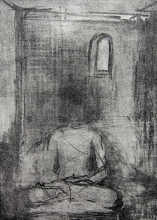
 A digital appropriation of Piet van den Boog's oil paintings at Mike Weiss
- Women can only seek work, education or doctor's appointments with their husband's permission.
- Article 132 requires women to obey their husband's sexual demands and stipulates that a man can expect to have sex with his wife at least "once every four nights" when traveling, unless they are ill. This in effect is said to legalize rape within a marriage negating any need for sexual consent between married couples.
- Only fathers and grandfathers are granted custody of children.
One has got to love the logic behind some of this warped thinking...
"Men and women have equal rights under Islam but there are differences in the way men and women are created. Men are stronger and women are a little bit weaker; even in the west you do not see women working as firefighters."- Ustad Mohammad Akbari, an MP and the leader of a Hazara political party. The Hazara party is being courted by Mr. Karzai in a bid to win the upcoming elections. From here.
 A digital appropriation of Piet van den Boog's oil paintings at Mike Weiss
Tuesday, February 24, 2009
Swat Sharia
A short documentary profiling an 11-year-old Pakistani girl on the last day before the Taliban close down her school in the Swat valley, once known as the "Switzerland of Pakistan".
It is poignant yet powerful. Made me feel helpless.
It is poignant yet powerful. Made me feel helpless.
Friday, February 06, 2009
Women - the primary one
According to a new report, due to the current economic meltdown women are finding themselves not only labeled as the primary care-giver for their children, they also find they are the primary bread winners in the family (with most of the men out of jobs).
While it is commendable that the numbers of women in the workplace will increase relative to men, it is indeed sad that it takes an economic meltdown to achieve that statistic.
The report also highlighted the following fun facts about men out of work:
While it is commendable that the numbers of women in the workplace will increase relative to men, it is indeed sad that it takes an economic meltdown to achieve that statistic.
The report also highlighted the following fun facts about men out of work:
When women are unemployed and looking for a job, the time they spend daily taking care of children nearly doubles. Unemployed men’s child care duties, by contrast, are virtually identical to those of their working counterparts, and they instead spend more time sleeping, watching TV and looking for a job, along with other domestic activities.
Friday, November 14, 2008
Friday Quotable
“Who are we as men to say that we are called by God to the ministry of priesthood, but women are not? That our call is valid, but theirs is not? We profess as Catholics that the invitation to the priesthood comes from God, and it seems to me that we are tampering with the sacred.” - Rev. Roy Bourgeois.Rev. Roy Bourgeois, 69 is a Roman Catholic priest whom the Vatican is considering excommunicating next week for participating in a ceremony it considers illicit and invalid: the ordination of a woman as a priest.
 Andres Serrano, 'Heaven and Hell', 1984, Cibachrome Photograph, 27.5" X 40" (ripped from the Artnet site)
Friday, November 07, 2008
Comment on Obama considering Summers for Treasury
The Times is agog with the news that Mr. Lawrence Summers is in the short list to be the next Treasury Secretary. It is commendable that President elect Obama is looking to allay jittery markets and appoint someone as quickly as possible at the Treasury who can project an image of stability, values and infuse continuity at the Treasury.
The only problem is that Mr. Lawrence Summers is not that man.
From his speech to the National Bureau of Economic Research:
That he was the President of Harvard University when he made that comment was another thing... Now he is being considered by President elect Obama to be the Treasury Secretary. No way. Now how. Not ever.
Obama can do better than that. Geithner is the right individual for this job.
The only problem is that Mr. Lawrence Summers is not that man.
From his speech to the National Bureau of Economic Research:
Women often don’t want to work the hours needed to get to the top and that girls are socialized toward nursing while boys are socialized toward building bridges. In the special case of science and engineering, there are issues of intrinsic aptitude, and particularly of the variability of aptitude, and that those considerations are reinforced by what are, in fact, lesser factors involving socialization and continuing iscrimination.In other words, this man was telling us that women were intrinsically inferior to men when it came to math and sciences.
That he was the President of Harvard University when he made that comment was another thing... Now he is being considered by President elect Obama to be the Treasury Secretary. No way. Now how. Not ever.
Obama can do better than that. Geithner is the right individual for this job.
Monday, October 06, 2008
Painting Post

'Moksha II', Oil on canvas, 88" X 84", 2008

Continuing the series of paintings started here, I completed this last night. This took about three weeks to complete. I used a deep cadmium red hue and it seemed to contrast and overlay well over the un-stretched, non-gessoed canvas. I liked it.
Saturday, April 12, 2008
Yemeni memo
This was to talk a bit about articles in obscure newspapers from countries other than ours. Now, one might ask, what is the point of reading articles in newspapers from other countries when one does not have the time to keep up with the latest Lindsay Lohan narrative here. Well, the thing is that newspapers with stilted reporting help in the development of stilted perceptions in their readers minds. These perceptions collate to create biases toward social and cultural situations. Biases reinforced over large groups of people manifest in the development and strengthening of stereotypes and mores of behavior directly influencing social actions and contracts…
A friend alerted me to a couple of articles in the Yemeni Times (no, I do not read the Yemeni times on a daily basis, in fact it was the first time I had been to this site, but the articles I looked at showed aspects of cultural reporting different from our own and blurb on the site indicates that this was Yemen’s most widely read newspaper).
In one article, the reporter takes a cozy,' let me reason this out to you over tea' kind of attitude and coolly develops an argument that centers around why beating up women might actually be good for the overall society and then goes on to talk about advantages inherent in violence against women. What really got to me was the campy attitude with which this person pulls off the narrative.
If a man and woman are husband and wife, the Qur’an provides solutions, firstly reaffirming any logical and acceptable reasons for such punishment. These solutions are in gradual phases and not just for women, but for men also.
For men, it begins with abandoning the marital bed, by opting to sleep elsewhere in the house. After this, they may discuss the matter with any respected person for the husband’s or the wife’s family, who could be in a position to advise the wife. If this also does not work, then the husband yields to beating the wife slightly. They do this because of a misunderstanding in the Quran, as the word says Darban, which is commonly understood today as beating. However, in Classic Arabic it means to set examples or to announce and proclaim. The more accurate meaning of this last one is that the husband finally has to set forth, to make a clear statement or proclamation, and if these measures fail, then divorce is preferable.
Fathers are responsible for their daughters’ behavior, but human rights organizations deny this too. Brothers also should take action regarding their sisters’ behavior, especially if their parents are too old or dead. If a daughter or sister makes a mistake – especially a moral one – that negatively affects the entire family and its reputation, what’s the solution by such organizations?
However, things are not as dire as enunciated. The same newspaper also reports that an 8 year old girl has finally resorted to end her marriage by going to court and filing for divorce from her 30 year old husband. No, I did not get the age of the girl wrong.
“My father beat me and told me that I must marry this man, and if I did not, I would be raped and no law and no sheikh in this country would help me. I refused but I couldn’t stop the marriage,” Nojoud Nasser told the Yemen Times. “I asked and begged my mother, father, and aunt to help me to get divorced. They answered, ‘We can do nothing. If you want you can go to court by yourself.’ So this is what I have done,” she said.
Shatha Ali Nasser, lawyer in the Supreme Court confirmed that item number 15 in Yemeni civil law reads that “no girl or boy can get married before the age of 15." However, this item was amended in 1998 so parents could make a contract of marriage between their children even if they are under the age of 15
Every once in a while, it does help to see what is talked about in newspapers around us.
 Sunil, 'Abuse', Computer Art
A friend alerted me to a couple of articles in the Yemeni Times (no, I do not read the Yemeni times on a daily basis, in fact it was the first time I had been to this site, but the articles I looked at showed aspects of cultural reporting different from our own and blurb on the site indicates that this was Yemen’s most widely read newspaper).
In one article, the reporter takes a cozy,' let me reason this out to you over tea' kind of attitude and coolly develops an argument that centers around why beating up women might actually be good for the overall society and then goes on to talk about advantages inherent in violence against women. What really got to me was the campy attitude with which this person pulls off the narrative.
If a man and woman are husband and wife, the Qur’an provides solutions, firstly reaffirming any logical and acceptable reasons for such punishment. These solutions are in gradual phases and not just for women, but for men also.
For men, it begins with abandoning the marital bed, by opting to sleep elsewhere in the house. After this, they may discuss the matter with any respected person for the husband’s or the wife’s family, who could be in a position to advise the wife. If this also does not work, then the husband yields to beating the wife slightly. They do this because of a misunderstanding in the Quran, as the word says Darban, which is commonly understood today as beating. However, in Classic Arabic it means to set examples or to announce and proclaim. The more accurate meaning of this last one is that the husband finally has to set forth, to make a clear statement or proclamation, and if these measures fail, then divorce is preferable.
Fathers are responsible for their daughters’ behavior, but human rights organizations deny this too. Brothers also should take action regarding their sisters’ behavior, especially if their parents are too old or dead. If a daughter or sister makes a mistake – especially a moral one – that negatively affects the entire family and its reputation, what’s the solution by such organizations?
However, things are not as dire as enunciated. The same newspaper also reports that an 8 year old girl has finally resorted to end her marriage by going to court and filing for divorce from her 30 year old husband. No, I did not get the age of the girl wrong.
“My father beat me and told me that I must marry this man, and if I did not, I would be raped and no law and no sheikh in this country would help me. I refused but I couldn’t stop the marriage,” Nojoud Nasser told the Yemen Times. “I asked and begged my mother, father, and aunt to help me to get divorced. They answered, ‘We can do nothing. If you want you can go to court by yourself.’ So this is what I have done,” she said.
Shatha Ali Nasser, lawyer in the Supreme Court confirmed that item number 15 in Yemeni civil law reads that “no girl or boy can get married before the age of 15." However, this item was amended in 1998 so parents could make a contract of marriage between their children even if they are under the age of 15
Every once in a while, it does help to see what is talked about in newspapers around us.
 Sunil, 'Abuse', Computer Art
Thursday, October 11, 2007
Fazal Sheikh at Princeton University Art Museum
 Kalyani Ghosh: Husband commits suicide in a drunken stupor - she was 23 - went to live with her mother in law - forced out - now lives in Vrindavan age 78
 Renuka: Home alone - neighbour rapes her - husband can no longer accept her as his wife - cast out of house - went off to Vrindavan.
 Jaida: Kidnapped at six and given hormone injections for premature growth of her breasts. Put to work as a prostitute when she was 11.
 Kavitha: Mostly lives on the streets of Delhi. For about $17 / month, performs gymnastics on the road for passers by.
----------------------------------------------------------------------
I had the good fortune of running into an excellent exhibition underway at the Princeton University Art Museum this weekend. Fazal Sheikh, an artist-activist who uses photography to create portraits of communities and in turn helps reflect the underlying economic, social and societal problems and mores that the community faces is quite a show to behold.
The show entitled 'Our beloved daughters' showcases two themes concerning the effects of societal mores on Indian women and their corresponding after-effects on society;
The first theme is Moksha. It focuses on an obnoxious five hundred year old practice played out in the holy city of Vrindavan in northern India. Vrindavan is a magnet for India’s dispossessed widows who are cast out by their families and condemned by strict marital laws, denying them legal, economic, and in some extreme cases their human rights. Due to circumstances that they could not control (like the death of their husbands), they now have to eke out their lives by the banks of the river, worshipping the god Krishna, helping them to cast off memories from their past life and prepare for a new and better life to come. Their ultimate dream is to reach moksha (salvation in heaven) where they will find freedom from the cycle of death and rebirth and live surrounded by their gods forever (apparently).
The second theme is Ladli (young girl), where he explores the devastating effects of enduring prejudices against girls and women in the Indian society. For all of the progress made by India, portrayals like Ladli reveal the hidden aspects of caste system, dowry, female infanticide and in some cases Sati. Longstanding custom in certain families/sects makes for girl brides being a drain on the family fortunes at the time of their marriage (the bride’s family would have to pay a dowry to the bridegroom’s family in return for ‘taking/accepting’ their daughters hand). Once married off, the same woman is further ridiculed in the event of their offspring being a girl - for the same reasons stated above, It is a vicious cycle that a lot of these women live in - in the fringes of their households in constant fear of their husbands - males who completely dominate the household ensuring that even a sliver of protest will be beaten back to the corner with ruthless force.
Fazal Sheikh’s photographs capture the city and his portraits of the women convey their sense of acceptance of life in a way that defines common sense and logic. He has spent time with his subjects, listening to their stories, which reveal the suffering caused by the traditions that still govern Indian society.
The show entitled 'Our beloved daughters' showcases two themes concerning the effects of societal mores on Indian women and their corresponding after-effects on society;
The first theme is Moksha. It focuses on an obnoxious five hundred year old practice played out in the holy city of Vrindavan in northern India. Vrindavan is a magnet for India’s dispossessed widows who are cast out by their families and condemned by strict marital laws, denying them legal, economic, and in some extreme cases their human rights. Due to circumstances that they could not control (like the death of their husbands), they now have to eke out their lives by the banks of the river, worshipping the god Krishna, helping them to cast off memories from their past life and prepare for a new and better life to come. Their ultimate dream is to reach moksha (salvation in heaven) where they will find freedom from the cycle of death and rebirth and live surrounded by their gods forever (apparently).
The second theme is Ladli (young girl), where he explores the devastating effects of enduring prejudices against girls and women in the Indian society. For all of the progress made by India, portrayals like Ladli reveal the hidden aspects of caste system, dowry, female infanticide and in some cases Sati. Longstanding custom in certain families/sects makes for girl brides being a drain on the family fortunes at the time of their marriage (the bride’s family would have to pay a dowry to the bridegroom’s family in return for ‘taking/accepting’ their daughters hand). Once married off, the same woman is further ridiculed in the event of their offspring being a girl - for the same reasons stated above, It is a vicious cycle that a lot of these women live in - in the fringes of their households in constant fear of their husbands - males who completely dominate the household ensuring that even a sliver of protest will be beaten back to the corner with ruthless force.
Fazal Sheikh’s photographs capture the city and his portraits of the women convey their sense of acceptance of life in a way that defines common sense and logic. He has spent time with his subjects, listening to their stories, which reveal the suffering caused by the traditions that still govern Indian society.
Subscribe to:
Posts (Atom)