
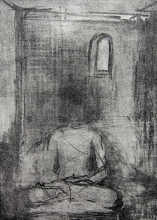
If the Obama administration is serious about stimulating the economy and creating as many new jobs as possible, one choice is clear: it should announce a massive increase in federal arts funding. Artists are among the very poorest citizens. When they get cash, they spend it both quickly and carefully. That’s not what most recipients of federal largesse do, but it happens to be exactly what economists look for in any stimulus package. Arts spending is fantastic at creating employment: for every $30,000 or so spent on the arts, one more person gets a job, compared with about $1 million if you’re building a road or hospital. And such spending has a truly lasting benefit: the Works Progress Administration didn’t just create murals, it subsidized enormous leaps in graphic design, in theater (including America’s first all-black production of Macbeth), and in fine art. One painter lived off the WPA’s Federal Art Project for eight years before finally getting his first solo show in 1943. Maybe a similar program today could produce America’s next Jackson Pollock.
Showing posts with label Appropriate artwork for the age. Show all posts
Showing posts with label Appropriate artwork for the age. Show all posts
Monday, June 29, 2009
The case for paying artists...
Another idea to stimulate the economy - and this one involving artists...

Saturday, April 25, 2009
Pragmatic decision-making department
The new buyers of art are a little more circumspect...
Gone are the new rich — the Russian oligarchs and oil-rich Middle Easterners, as well as the American hedge fund magnates — who in flush times were willing to pay any price. Gone too are the Europeans who were active when the weak dollar made their purchases seem cheap. Today’s buyers tend to be older collectors who bowed out of the market when prices began escalating several years ago. These patrons have far more conservative tastes, preferring works by tried-and-true names like Alexander Calder or Robert Ryman rather than those by younger artists like Takashi Murakami or Damien Hirst who were snapped up by speculators and have now lost some 50 percent of their value.What is selling, said Brett Gorvy, a co-head of Christie’s postwar and contemporary-art department, is “the right artist and the right work.”

Friday, April 24, 2009
Art. Fail. Completely.
From yesterday's NY Times... an exercise in cheapskate, wannabe solutions to having art on one's walls. On the other hand, it begs the question - what is art?

From here: Juan Montoya created a piece of “art” by hanging a canvas he painted with Benjamin Moore’s Big Country Blue over an ample sofa. One visitor to the room asked if the painting was by Barnett Newman,” he said. Nobody knows it didn’t come from a gallery.” Mr. Montoya used a 6 by 12 foot canvas; a 24 by 48 inch canvas, sized to fit a less cavernous room, is about $36 at dickblick.com.
Thursday, October 25, 2007
Sepulchral - a gallery visit
Perhaps appropriate in an age of permanent global wars, market meltdowns and post Katrina traumatic stress is an exhibition underway at Cheim and Read that features the skeleton as the subject of artwork/artists. Creatively titled 'I am as you will be', the show draws upon a variety of artists from Hirst to Picasso in an eclectic mix of pieces that has one pondering on our calcium framework. Munch and Ensor - the two artists who dealt very closely in morbidity, mortality and our perceptions to the same are appropriately represented here. Maybe because skeletons are simultaneously morbid (our ultimate fate) and banal (used and appropriated everywhere from horror movies to the skull & crossbones), I remember not being affected too much by the subject. Was it a case of my somewhat dour disposition towards this subject or was it because of a mild odor of formaldehyde permeating the gallery (my fevered suspicion given all the bones in close proximity), I am not too sure, but I walked out of the gallery not too depressed and not too happy. Maybe that was what the curator of this show (James Ensor scholar Xavier Tricot) had in mind - reflection.
Some photos I took of the show are below.
 Jenny Holzer 'LUSTMORD TABLE', 1994, 149 bones, 17 with engraved silver bands, 50 teeth, drop leaf wooden table ca. 1800, 34" x 70" x 44"
 Kris Martin, 'I AM STILL ALIVE', 2006, Bronze, 7" x 5" x 4"
 Tony Matelli, 'SAD SKULLS', 2003, Polysterene, Dimensions variable
 Jenny Holzer and Lady Pink, 'TEAR DUCTS SEEM TO BE A GRIEF PROVISION', 1983-84, Spray paint on canvas, 90" x 115"
 Jan Van Oost, 'SALOME', 1990, Cast silver, 5" x 5" x 11"
 Angelo Filomeno, 'THE PHILOSOPHER'S WOMAN', 2007, Embroidery on silk, stretched over linen with crystals, hematite and stainless steel, 117" x 42"
 Andy Warhol (1928 - 1987), 'UNTITLED (SKELETONS)', 1976-1986, Stitched gelatin silver prints, 27" x 31"
Some photos I took of the show are below.
 Jenny Holzer 'LUSTMORD TABLE', 1994, 149 bones, 17 with engraved silver bands, 50 teeth, drop leaf wooden table ca. 1800, 34" x 70" x 44"
 Kris Martin, 'I AM STILL ALIVE', 2006, Bronze, 7" x 5" x 4"
 Tony Matelli, 'SAD SKULLS', 2003, Polysterene, Dimensions variable
 Jenny Holzer and Lady Pink, 'TEAR DUCTS SEEM TO BE A GRIEF PROVISION', 1983-84, Spray paint on canvas, 90" x 115"
 Jan Van Oost, 'SALOME', 1990, Cast silver, 5" x 5" x 11"
 Angelo Filomeno, 'THE PHILOSOPHER'S WOMAN', 2007, Embroidery on silk, stretched over linen with crystals, hematite and stainless steel, 117" x 42"
  Andy Warhol (1928 - 1987), 'UNTITLED (SKELETONS)', 1976-1986, Stitched gelatin silver prints, 27" x 31"
Subscribe to:
Posts (Atom)