
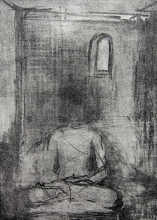
There is a young man, different from other young men. Ancient prophecies foretell his coming, and he performs miraculous feats. Eventually, confronted by his enemies, he must sacrifice his own life—an act that saves mankind from calamity—but in a mystery as great as that of his origin, he is reborn, to preside in glory over a world redeemed. Tell this story to one of the world’s 2 billion Christians, and he’ll recognize it instantly. Tell it to a science-fiction and fantasy fan, and he’ll ask why you’re making minor alterations to the plot of The Matrix or Superman Returns. For reasons that have as much to do with global politics as with our cultural moment, some of this generation’s most successful sci-fi and fantasy movie franchises follow an essentially Christian plotline.
Showing posts with label Christianity. Show all posts
Showing posts with label Christianity. Show all posts
Thursday, March 26, 2009
Religion and science fiction
The religious angles behind major science fiction movie productions:

Tuesday, February 24, 2009
Comment on a recent incident of domestic abuse
Recently, a Muslim man committed a 'honor killing' in upstate New York. The method chosen to dispose of his victim, his wife, was death by beheading.
A prominent Muslim cleric Imam Shaykh Hamza Yusuf has spoken out against such killings (see video here) and is rightly shining a light on domestic abuse amongst minority groups across America. I am glad. However, it irks me that he nonchalantly refers and compares to incidents of domestic abuse in Jewish and Christians families in the following words while making the case that domestic abuse is prevalent across many religious denominations:
A prominent Muslim cleric Imam Shaykh Hamza Yusuf has spoken out against such killings (see video here) and is rightly shining a light on domestic abuse amongst minority groups across America. I am glad. However, it irks me that he nonchalantly refers and compares to incidents of domestic abuse in Jewish and Christians families in the following words while making the case that domestic abuse is prevalent across many religious denominations:
If a Christian beats his wife up, it's not Christian violence, if a Jew beats his wife up (from what the statistics show, it does not happen very often), but if they do then it is not Jewish violence - if a Muslim should do something to his wife, suddenly it has something to do with the religion of Islam.Dear Mr. Hamza Yusuf, there definitely is a difference between beating and beheading. I really do not remember the last time we saw the words 'domestic abuse' and 'beheading' used in the same sentence and the latter being used as a vehicle to propagate the former. Yes, speaking out against domestic abuse is a good and a much needed thing, but comparing beating and beheading are poles apart...
Tuesday, December 23, 2008
Papal Bullpoop
The Pope cannot get any funnier than this latest pronouncement yesterday. I remember actually laughing out loud the first time I heard it on the radio... He must have figured that a little levity on Christmas eve might actually be good given the general downer spirits that have attended this year...
Pope Benedict said on Monday that saving humanity from homosexual or transsexual behaviour was just as important as saving the rainforest from destruction.No, I refuse to believe that he was being serious...
Wednesday, December 10, 2008
Mumbai Jihad - theories in religion
The Mumbai attacks seems to have focused attention on religions prevalent in India, their perceived origins and how they seem to have played out over the millenia... This piece was written a couple of months before the attacks took place. The author is jingoistic, but compelling at times.
To understand Christianity, we need to learn the features of Semitic religions. They are also called Prophetic religions. It means that these religions were established by a prophet each. The roots lie in the Jewish religion established by Prophet Abraham. Christianity, established by Jesus Christ, is a modified form of Judaism. Later, Prophet Mohammed established Islam borrowing various tenets of Abraham’s Judaism. The message common to these religions is that ‘God is not directly accessible to Man. You are, fundamentally, Sinners. God is exceptionally terrible and cruel and punishes without qualms. You will have to believe me, your Messiah, and follow my preaching to obtain an opportunity to avoid burning in hell. If you do not pay heed, you are sure to end up in hell. You will have to place faith in this religion. You will have to convert others to this faith. You will have to spread this message and convert people wherever you go, even if it necessitates the use of force. That is Religion; that is the code.’ Prophet Mohammed taught methods of torturing, killing and enslaving those who did not believe in Islam. These teachings are an integral part of Quran and have been highlighted in several places in the text. Prophets are intolerant towards Gods of other religions. Jesus Christ was one such Prophet.
These three Prophetic Religions born out of the desert and the religions born in India have one fundamental difference. All these Prophets claimed that their word was the ultimate truth and that God’s word has been sent through them. They demanded absolute submission and the alternative they offered was hell. They also propounded that God’s word, as pronounced by them, ought to be spread across the world as a message using violence if needed. Prophetic religions are basically blind-faiths. Indian faiths that derive their roots from the Vedas state: ekam sat viprAh bahudha vadanti (There is only one truth- the learned men explain it in different ways). This free thought has found echo in several Indian religious channels. In Jain philosophy syadvAda (syat = possibility; existence) holds prime position. It delineates that there is nothing that can claim to be absolute truth – including what I say. There is every possibility that the exact opposite may be true or both could coexist. Jains identify the possibility of existence of up to seven truths at one time. This is an expression of the previously stated Vedic philosophy of One Truth. All Indian religious testaments agree on this basic philosophy. They encourage debate. This is perhaps what differentiates Indian religions that encourage exploration of truth from Prophetic Religions that command unflinching obedience to the Gospel. The Sages (Rishis) behind Vedas (texts outlining the basic tenets of what evolved to become the Hindu way of life) and Upanishads (texts containing the essence of Vedas) were not Prophets. Koenraad Elst, a Belgian Scholar on Religious Evaluation, states in his book : “Prophets talk a great deal about themselves. They ascribe special powers to themselves and state that they have a special connection with the Creator of the World. Sages, on the other hand, talk about Universal Truths and that these truths can be divined in a state of awareness which can be achieved through practice”. The Buddha was not a Prophet but a Sage who indulged in the study of treatise belonging to the age of Upanishads. His insights are not contrary to the ones presented in the Upanishads. Vedic Religions, Jainism and Buddhism use the term Dharma (Way of Life) and not the term Religion, employed by Prophetic Religions.
Subscribe to:
Posts (Atom)